
Capture Trust

Identy.io provides biometric authentication on mobile phones, for secure and user-friendly identity verification, enabling government and corporate customers to grow operations with a cost-effective suite of products.

What is digital proof of identity and how to apply it in KYC

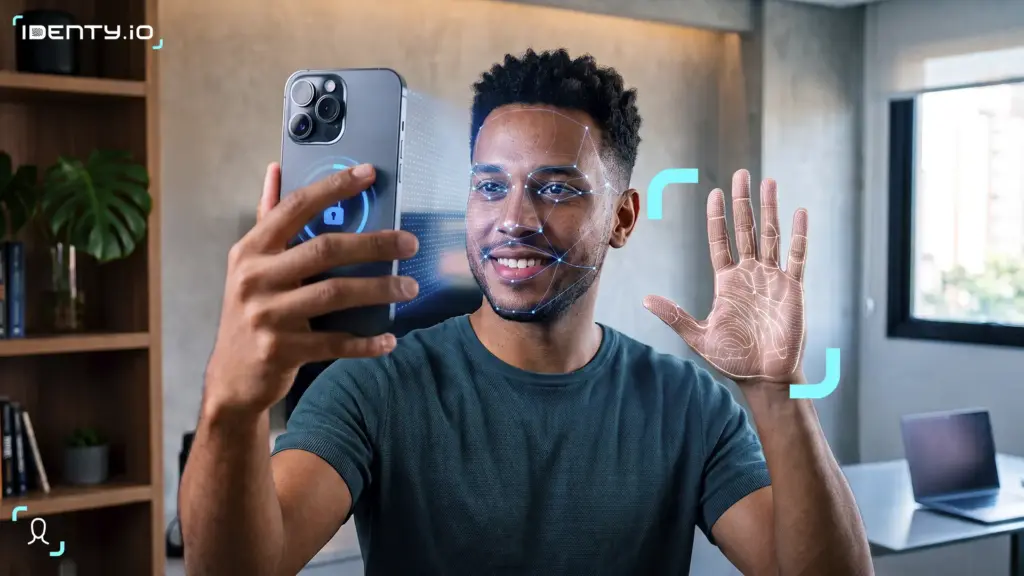
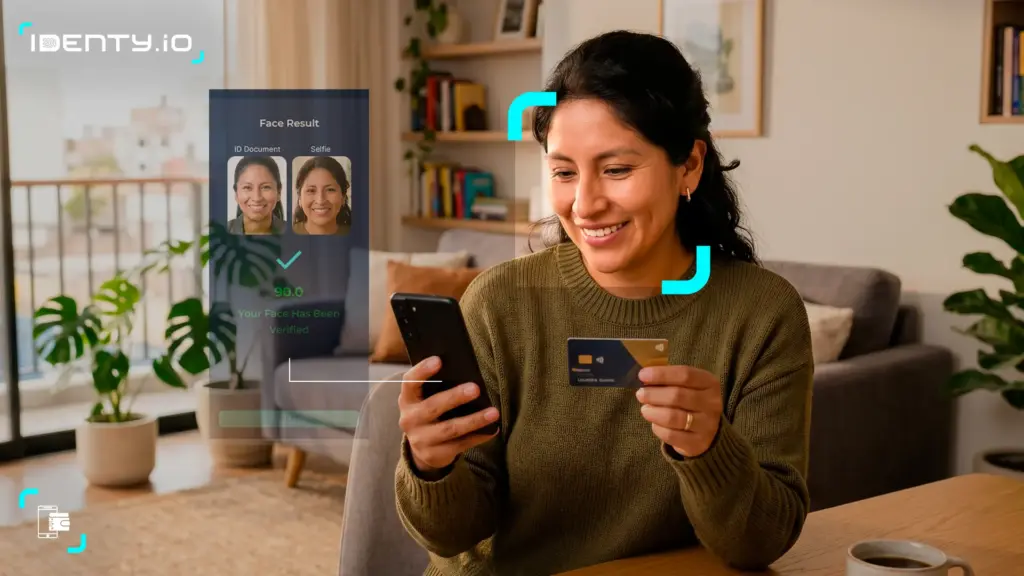
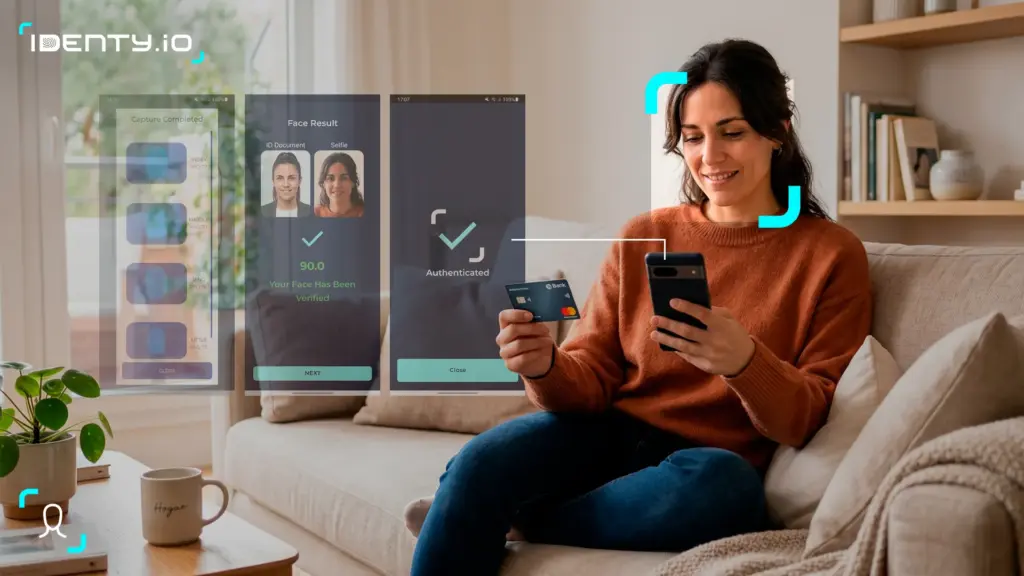
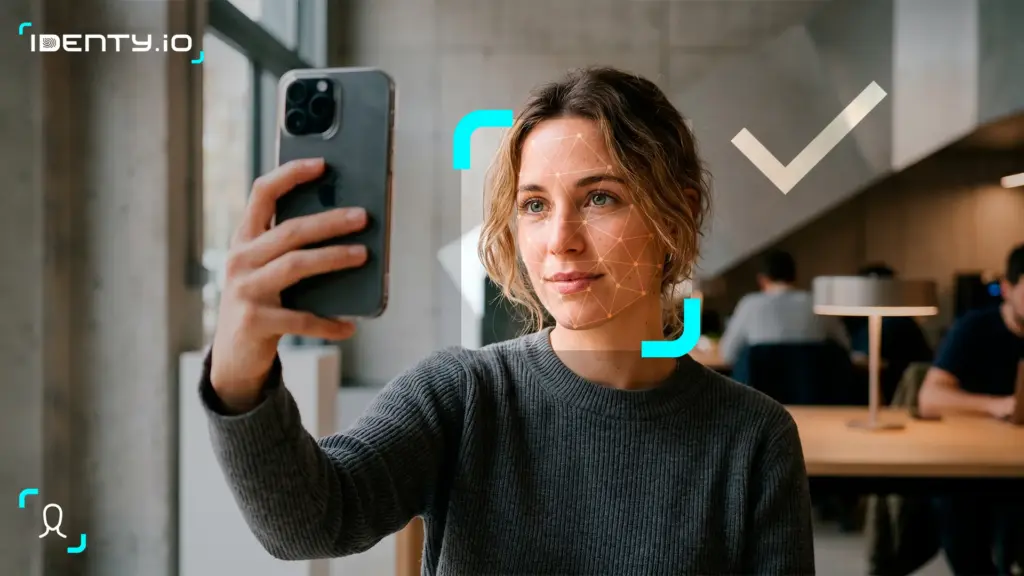
In an increasingly digital environment, verifying users’ identities remotely has become essential to prevent fraud and ensure regulatory compliance. What is digital proof of identity? Digital proof of identity is a method used to confirm a person’s identity through digital means. In practice, the user submits digital copies of identity documents so automated systems can verify their validity and authenticity. At the same time, document data is matched to the individual through biometrics: the photo on the document is compared with a recent selfie, and a liveness test (such as blinking,  smiling, or turning their head) is performed to confirm the

When machines see too much: protecting emotions in face recognition

Our faces are becoming digital keys. They unlock phones, let us board planes, and grant us access to secure spaces. Facial recognition is fast becoming central to how we prove who we are in the digital age. But there’s a hidden twist: modern systems don’t just recognize identity—they can also infer emotions. A smile, a frown, or a tense jaw can all be classified into categories like “happy,” “angry,” or “nervous.” For humans, these signals are fleeting and often ambiguous. For machines, they risk becoming permanent data points, stored and analyzed without context. That’s where the work of Dr. Alejandro Peña—PhD

Fingerprint biometric capture

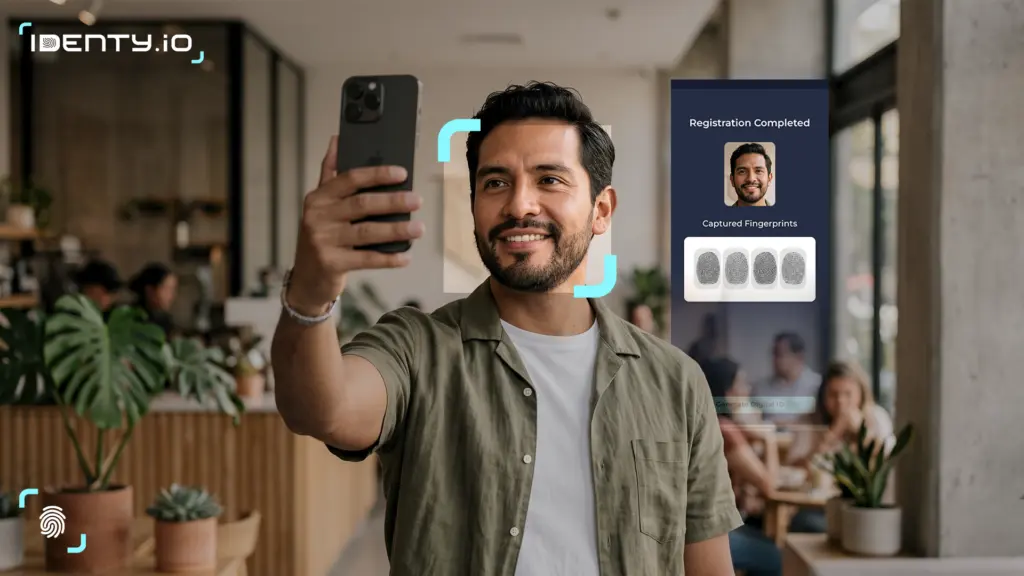
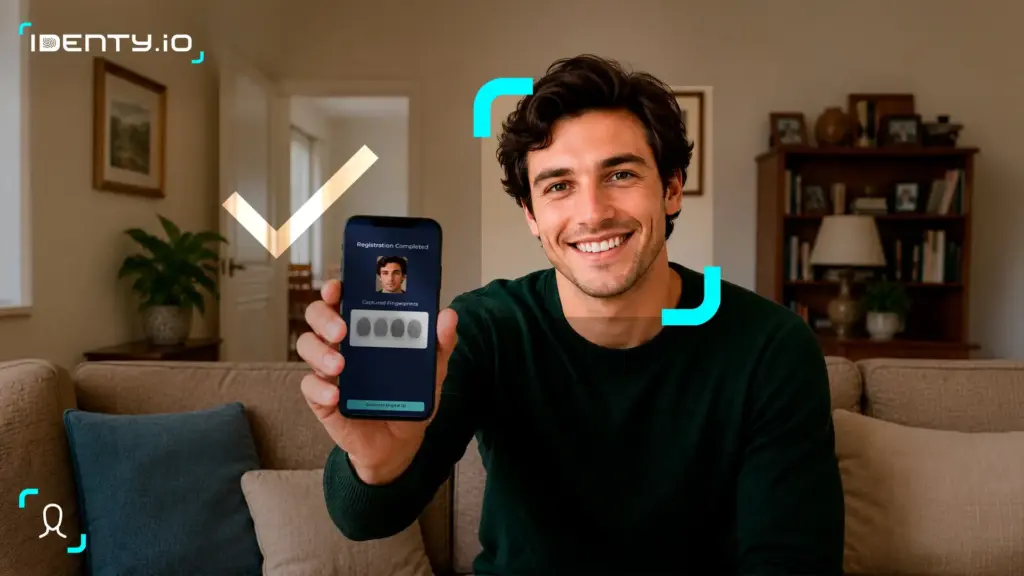
Fingerprint biometrics identify people by the unique patterns of ridges and minutiae on their fingers. When a fingerprint is scanned, software converts the ridges and valleys into a digital image and then extracts distinctive features (minutiae) to form a biometric template. Later, a new fingerprint sample is compared against this template: a “1:1” match (verification) confirms identity, while a “1:N” match (identification) searches a database. The system’s accuracy is often measured by its false-accept and false-reject rates. In practice, fingerprint matching is extremely reliable because no two fingerprints are alike, making this one of the most mature biometric technologies. Hardware integration

Accurate fingerprint biometrics solution

Fingerprint biometrics rely on capturing a person’s unique fingerprint ridge patterns for identity verification. This method is highly reliable and widely trusted. In fact, NIST’s testing found top fingerprint-matching algorithms achieved about 98.6% accuracy with a single finger and ~99.9% with four or more fingers. In practice, adding more fingers greatly boosts overall precision. These figures show why fingerprints are a robust identity factor: the more finger data used, the higher the matching accuracy. Evaluating matching accuracy When we implement fingerprint systems, we focus on two key metrics: false-accept rate (FAR) and false-reject rate (FRR). FAR measures how often an impostor

Identy.io achieves top NIST biometric certification results

Cases of fraud caused by identity theft continue to grow worldwide. In the US alone, detected cases of identity theft increased by 148% between April 2024 and March 2025, according to the “2025 Trends in Identity Report” published by the Identity Theft Resource Center (ITRC).  This study also reveals that in 53% of cases involving identity theft, control was taken directly over existing accounts, both bank and social media, while in 36% of attacks, the stolen information was used to create new accounts, for example, by issuing new credit cards linked to the victims. In a context where technological advancement has

Face liveness detection: how it works and how it prevents biometric fraud

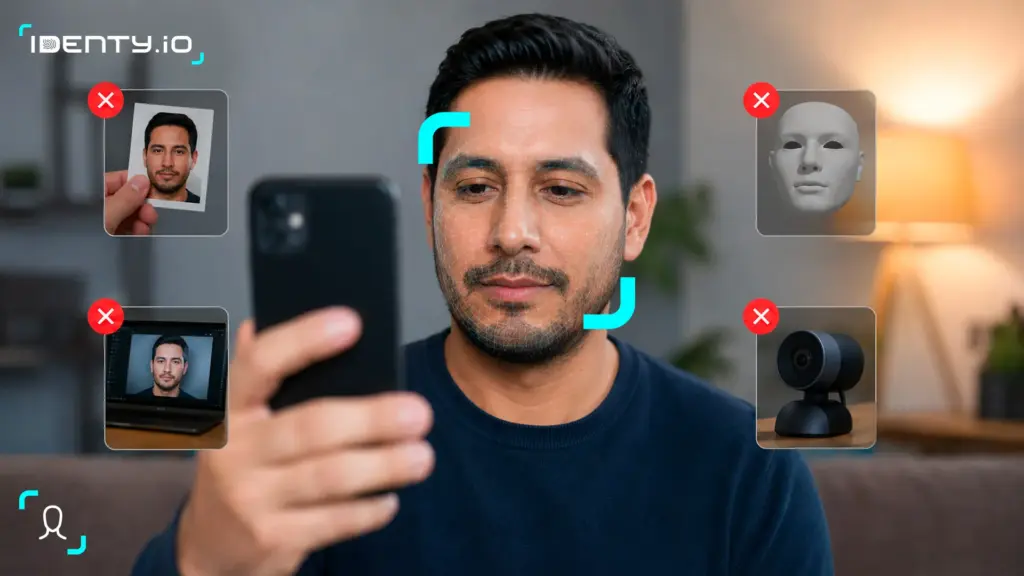
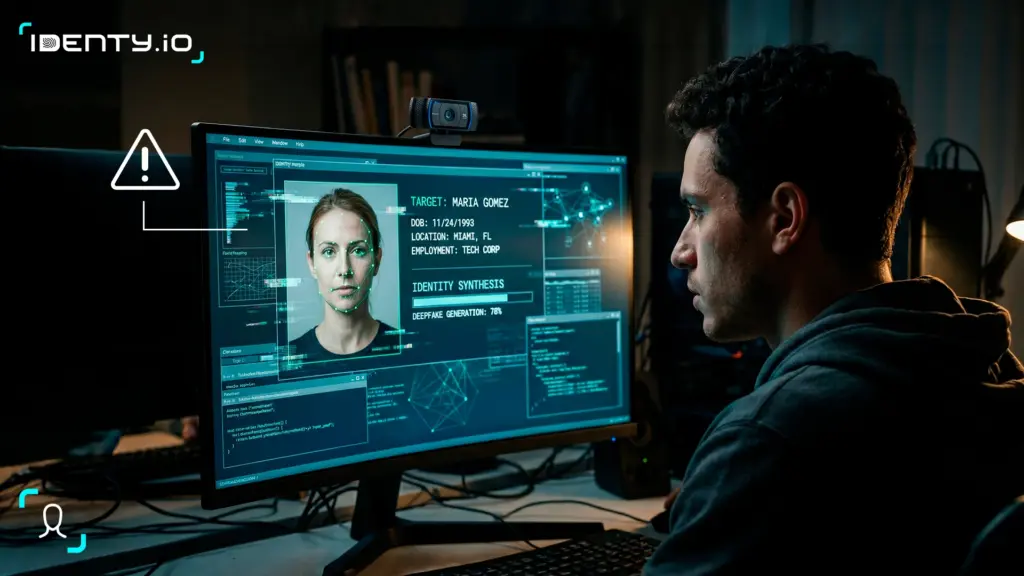
In a world where digital onboarding, banking, and authentication are rapidly becoming facially driven, ensuring that the face presented during biometric verification belongs to a live person, not a photo, video, or deepfake, is critical. This is the role of face liveness detection. It confirms that the camera is capturing a real human being in real time, helping prevent identity fraud, account takeovers, and regulatory breaches. Liveness detection has become a standard part of face recognition workflows, particularly in sectors where trust and compliance are essential. Fraudulent attacks on biometric solutions are growing more advanced, using high-resolution printouts, AI-generated media, and

Multimodal Biometrics

Multimodal biometrics: the future of digital authentication

In an age of data breaches and identity theft, traditional passwords no longer provide enough protection. As digital security evolves, multimodal biometrics, the use of two or more biometric identifiers, are emerging as the future of secure authentication. What are multimodal biometrics? Unlike unimodal systems that rely on a single identifier (like a fingerprint or face), multimodal biometric systems combine multiple forms of biometric data, such as: Fingerprint biometrics Facial recognition software Palm biometrics Behavioral patterns (typing rhythm, gait, etc.) By requiring more than one form of identification, these systems drastically reduce the chances of identity fraud or unauthorized access. Why

Face and fingerprint Identification in Banking and Fintech

Biometric identification in banking and fintech has become one of the most secure and efficient tools. Face and fingerprint recognition technologies are reshaping how financial institutions verify identities, prevent fraud, and authenticate users bringing convenience and compliance together. For companies like Identy.io, which in 2024 deployed its fingerprint biometric solution to eliminate branch visits during onboarding, this shift marks a milestone toward fully digital and secure financial services. Biometric identification in customer onboarding Remote KYC and digital identity verification Banks and fintechs are transforming Know Your Customer (KYC) procedures through biometric onboarding. Instead of requiring in-branch visits, customers can now upload

How face detection works

How face detection works: principles and applications

Face detection is the foundation of modern biometric systems. It allows software like Identy.io to automatically identify and locate human faces in images or video streams. While face recognition determines who a person is, face detection answers whether a face is present and where. Today, this technology powers everything from smartphone authentication to digital onboarding processes and AI-driven marketing. Understanding its principles helps explain why it has become essential to security and user experience. Banco Popular Dominicano Success Case Learn how Identy.io strengthened mobile security in the banking sector with advanced fingerprint biometrics and seamless user experience. Download the case study

Facial Recognition Software

Main differences between Face ID vs facial recognition software

Facial recognition has become central to modern digital security but not all systems work the same way. The most familiar example, Apple’s Face ID, is designed for personal device authentication. In contrast, facial recognition software such as Identy.io serves a much broader purpose: verifying users’ identities in banking, government, and online services. Understanding the difference between these technologies helps clarify how biometric identity verification works and why Identy.io’s approach is transforming digital onboarding and security. Face ID: personal device authentication Apple’s Face ID was introduced to replace passwords and fingerprints with a simple glance. It’s a one-to-one verification system that confirms

What is a liveness check

What is a liveness check and why it matters in facial biometrics

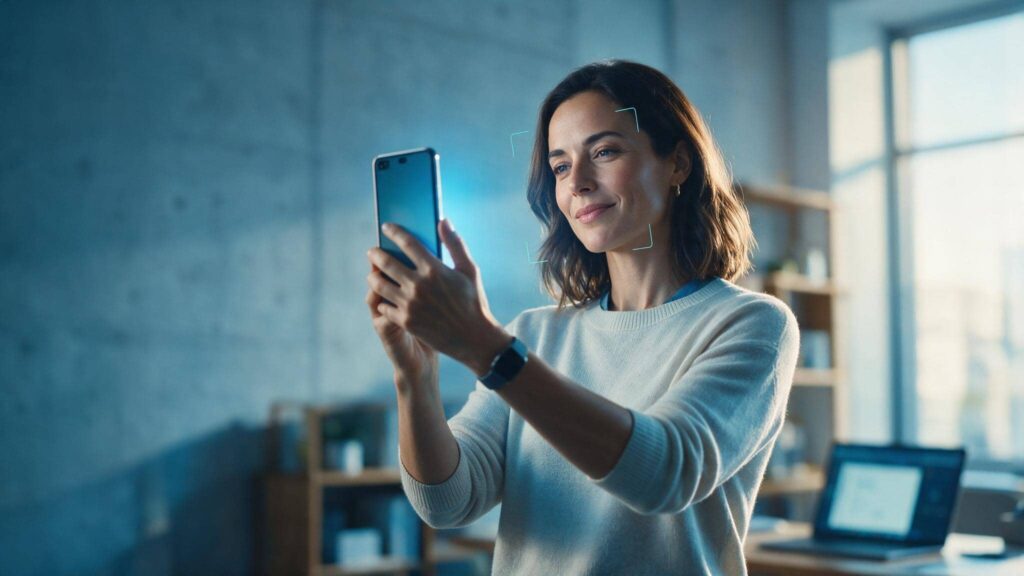
Facial and finger biometrics are transforming how we unlock phones, open bank accounts, and verify identities online. Yet, as these systems expand, so do attempts to deceive them. The most effective defense against fake faces, photos, or deepfakes is a liveness check – the invisible step that confirms a real person is standing in front of the camera. Banco Popular Dominicano Success Case Learn how Identy.io strengthened mobile security in the banking sector with advanced fingerprint biometrics and seamless user experience. Download the case study What is a liveness check? A liveness check (also called liveness detection) is a process that

Border controls and airports

Identy.io’s mobile-first biometrics as a driver for increased security and cost savings at border controls and airports

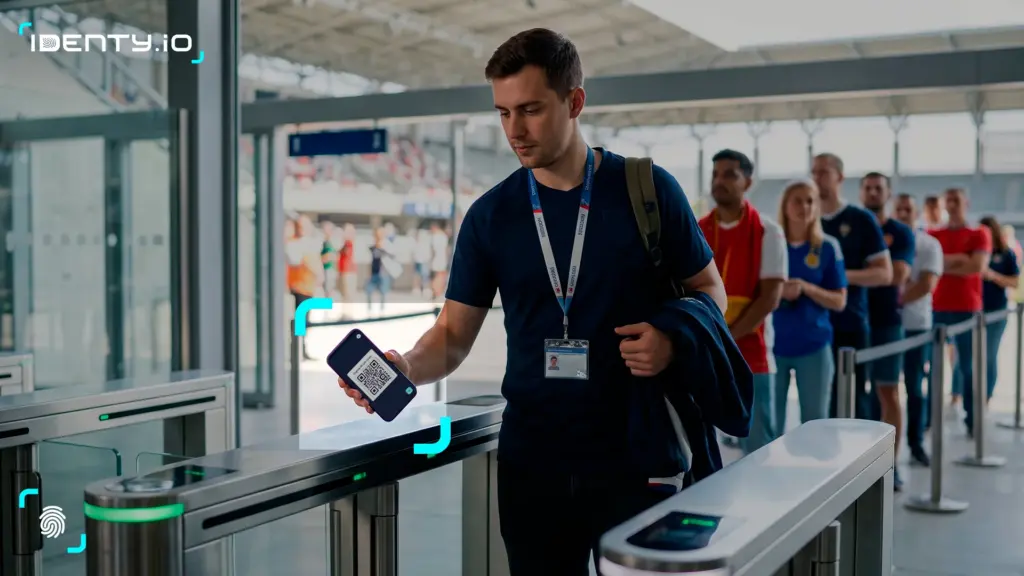
Why airports and border controls face a security crisis Record passenger volumes across Latin America In an increasingly globalized world, where travel is on the rise for both tourism and business purposes, airports and border controls are faced with the challenge of managing the constant flow of passengers efficiently, while taking strict security measures. For example, Mexico recorded more than 119 million passengers, of which 57.9 million were international travelers, an increase of 5.8% over the previous year, according to data from the Federal Civil Aviation Agency (AFAC). Its main airport, Mexico City International Airport (AICM), handled 45 million passengers, making

COPYRIGHT © 2026 IDENTY.IO