
Table of Contents
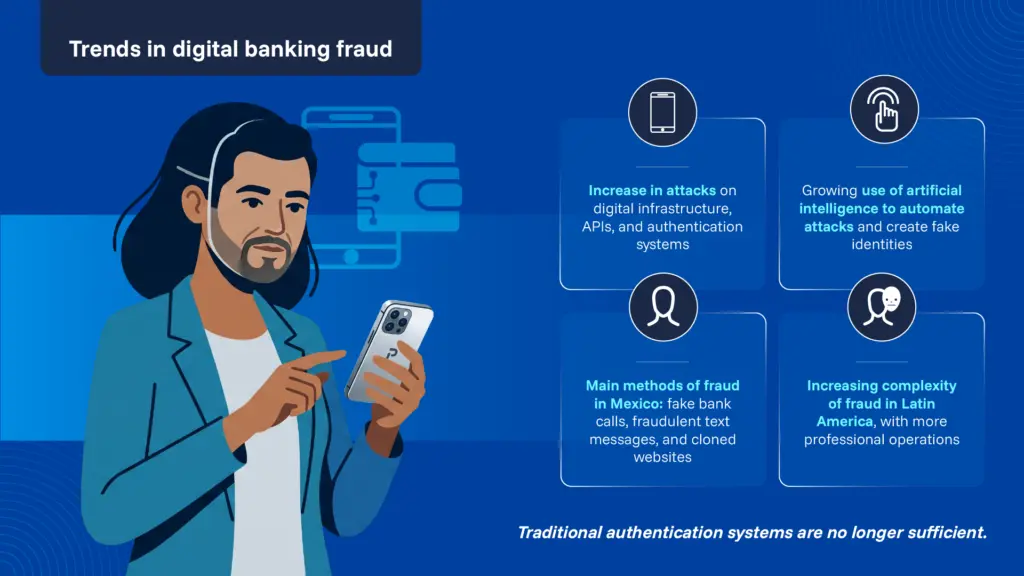
ToggleThe global financial system is currently facing mounting pressure due to the rise of digital fraud. According to recent data from the Central Bank of Brazil, in less than five months of 2026, 25 fraud incidents have already been recorded out of 33 security events reported by the agency—the highest figure ever recorded for this period. The rapid growth of tools like Pix and Openfinance, which currently handle billions of monthly transactions, has also expanded the attack surface for cybercriminals, who are increasingly operating with more sophisticated and professional structures. This trend is also reflected in other regional markets, such as Mexico, where around 14,000 complaints regarding banking-related fraud are recorded daily, according to the Bureau of Financial Entities (BEF).
This scenario has highlighted the need to strengthen user authentication and identification mechanisms within the digital financial ecosystem through the use of biometric authentication software. The Central Bank of Brazil itself warned about the increase in attacks targeting technological infrastructures, APIs, and authentication systems, in a context where many institutions still show flaws in technological risk management and the adoption of advanced security controls. Meanwhile, in Mexico, CONDUSEF reports that 76.9% of financial fraud in the country is concentrated in three main methods: calls pretending to be from banks, SMS messages about alleged suspicious charges, and fake websites mimicking legitimate financial institutions.
The growing use of artificial intelligence by criminal groups is increasing the complexity of fraud in Latin America, enabling automated attacks, fake apps, and sophisticated social engineering techniques capable of compromising digital identities more easily. In this context, biometrics is increasingly becoming a critical layer of protection to ensure that the person performing a transaction or accessing a financial service is truly who they claim to be.
Multimodal Biometrics as a New Barrier Against Banking Fraud
The accelerated growth of financial scams has exposed the limitations of many traditional authentication systems used by banks and digital platforms until now. Passwords, codes sent via SMS, and even certain facial recognition systems have begun to show vulnerabilities to increasingly sophisticated attacks, especially in a context where deepfakes and video injection techniques allow for the highly accurate replication of a person’s face and voice. This has led the financial sector to start investing in much more robust biometric authentication models based on advanced biometric authentication software.
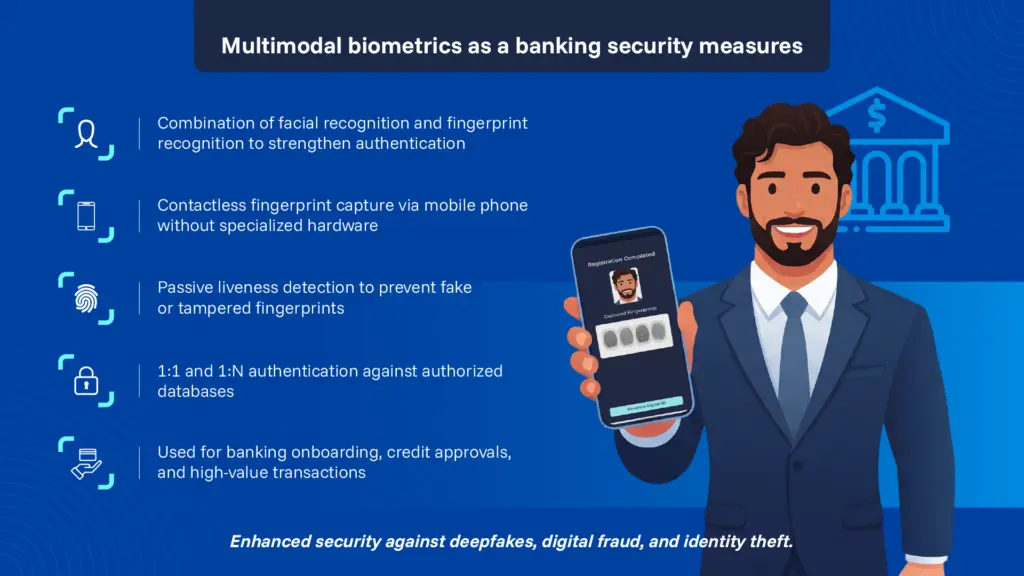
In this scenario, multimodal biometrics—which combines different biometric factors such as facial recognition and fingerprint biometrics—is positioned as one of the most secure alternatives for validating a user’s identity. While facial biometrics can be compromised through advanced image or video manipulation techniques, fingerprint biometrics adds an additional layer that is practically impossible to replicate simultaneously. Combining both factors drastically raises the security level and reduces the risk of identity theft in banking operations, account openings, or the validation of high-value transactions.
Contactless Fingerprint Biometrics: A New Generation of Biometric Security
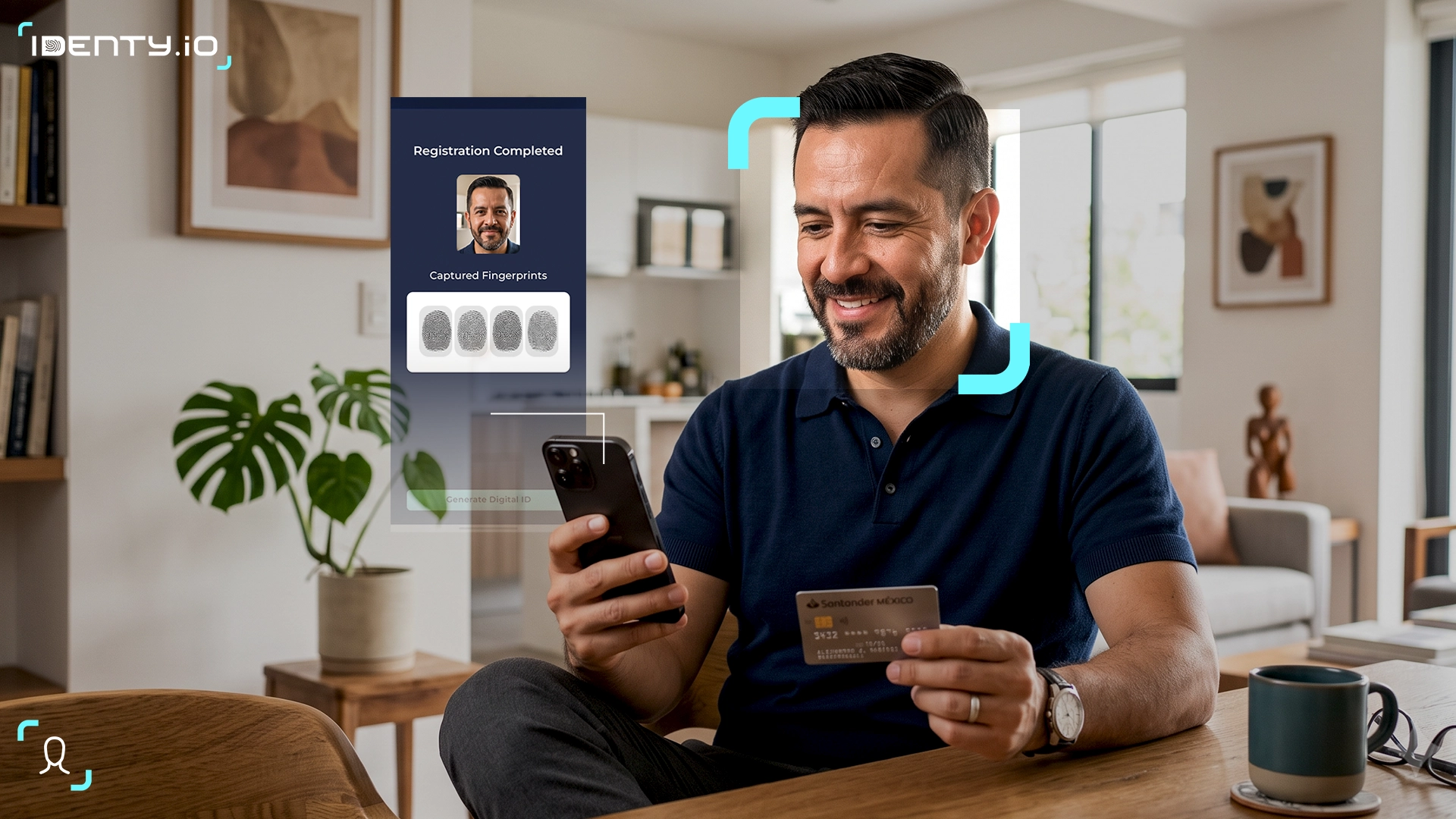
The contactless fingerprint biometric solutions developed by Identy.io have been specifically designed to respond to this new landscape of digital threats. Unlike traditional systems that require specialised physical scanners, this technology allows fingerprint biometrics to be captured directly from the user’s mobile phone camera, without the need for additional hardware. This makes it easy for anyone to authenticate from anywhere at any time using only their smartphone.
Another key differentiator of this technology is the incorporation of advanced passive liveness detection systems within the biometric authentication software. Using artificial intelligence algorithms, the system analyses multiple variables in real-time, such as subtle skin movements, fingerprint texture, or the way light reflects off the finger, allowing it to determine if the print truly belongs to a living person present at that moment. This makes it possible to detect fraud attempts using silicone moulds, artificial reproductions, or biometric forgeries. Consequently, verification can be performed even in complex lighting conditions and using conventional mobile phones, democratising access to advanced biometric authentication without the need for expensive devices or specialised infrastructure.
Furthermore, the combination of facial and fingerprint biometrics allows for the construction of much more solid multimodal authentication models within modern biometric authentication software. Even if an attacker managed to artificially replicate a person’s face using generative AI techniques, they would still need to simultaneously reproduce their real fingerprints, which enormously increases the complexity of the attack and makes authentication a significantly more secure and reliable process for the financial sector.
Privacy, Identity Control, and Secure Authentication from the Mobile Phone
The process of using these solutions begins during digital onboarding, when the user generates their biometric credentials using their own mobile device via biometric authentication software. By capturing all 10 fingerprints and facial recognition, a unique digital identity is created that is unequivocally linked to the user. This information is protected by advanced encryption protocols and stored directly on the user’s device under an on-device architecture, reducing the exposure of sensitive data to potential leaks or attacks on external servers.
Thanks to this model, biometric credentials can later be used for both 1:1 validations (confirming the user is who they say they are) and 1:N processes by comparing them against authorised centralised databases. This strengthens security in critical operations such as opening bank accounts, credit approvals, digital contract signing, or transaction authorisation, drastically minimising the risk of fraud or identity theft.
Identy.io’s solutions also allow for the generation of biometric QR codes, which contain verified user information and can be used to validate identity or share specific credentials securely at any time. Thanks to this system, the user maintains total control over what information they share, when, and with whom, while storing their critical data within a secure digital wallet protected by advanced encryption standards.
Unlike many traditional biometric systems that constantly depend on an internet connection or external infrastructure, Identy.io’s mobile-first and on-device architecture allows much of the processing and validation to be performed directly on the mobile phone via biometric authentication software. This not only improves speed and user experience but also reduces the exposure surface to potential attacks, significantly increasing privacy and security levels.
In an environment where financial fraud is constantly evolving and digital impersonation techniques are becoming increasingly sophisticated, multimodal biometrics is establishing itself as one of the most effective mechanisms for protecting user identity. The combination of facial recognition, contactless fingerprint biometrics, and advanced liveness detection technologies allows for the construction of much more robust, accessible, and secure authentication processes. In this way, biometric authentication software enables the financial sector to move towards more reliable digital banking models, where security, privacy, and user experience are the new industry standard.