
Table of Contents
ToggleIn the age of AI, a single selfie or voice note is enough raw material to build a deepfake. Every photo and video you post quietly feeds a library that fraudsters use to clone your face and your voice. But there’s one biometric they can’t lift from your social feed—the one at your fingertips. This is why fingerprint biometrics resist deepfakes and biometric spoofing in ways that face recognition increasingly can’t.
How deepfakes break face and voice biometrics
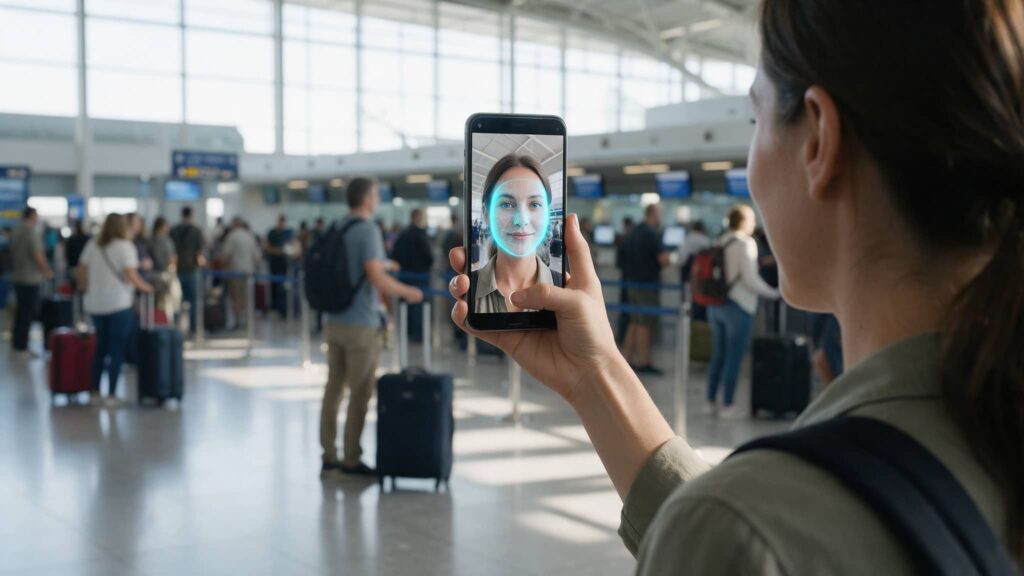
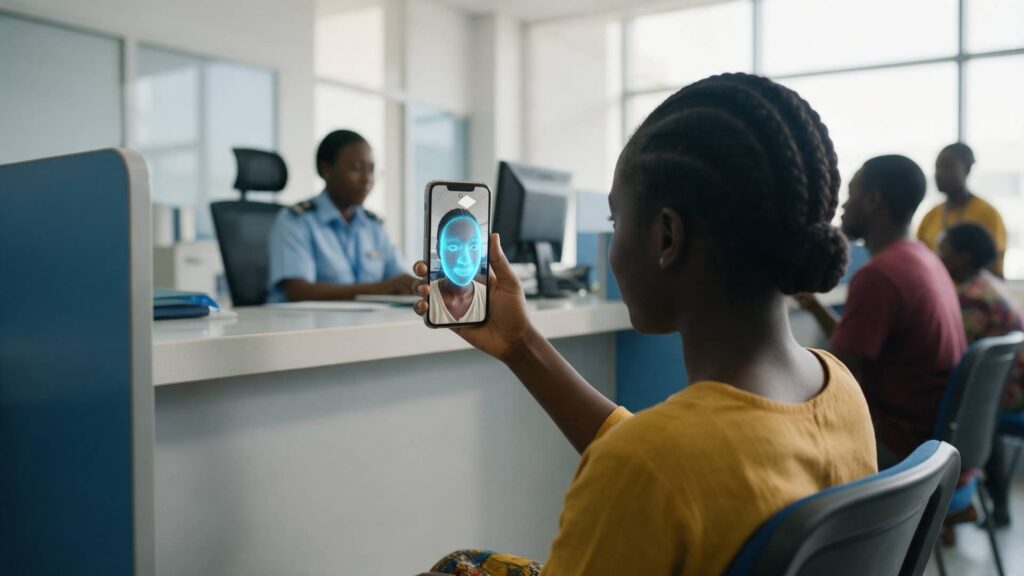
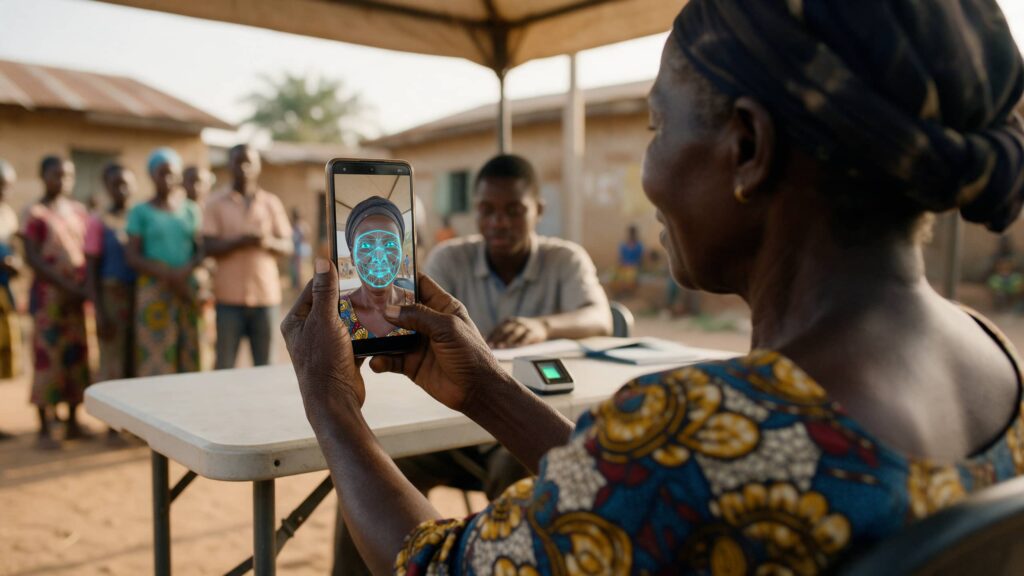
Face and voice are the easiest biometrics to harvest, because we broadcast them constantly. A few seconds of public video is enough to clone a voice; a handful of photos is enough to generate a convincing synthetic face. Fraudsters don’t need to breach a database—they scrape what’s already public.
That turns remote face and voice verification into an open attack surface. The result is a fast-growing category of AI-driven identity fraud, and a whole market of deepfake detection software built to catch it after the fact. Detection helps, but it’s a race against generators that improve every month. The more durable answer is to verify with a trait that can’t be deepfaked in the first place. (For a deeper look at how synthetic media targets verification, see how deepfakes target biometric verification.)
Fingerprint vs face recognition: what fraudsters can't steal
Here’s the decisive difference. Your face and voice are published; your fingerprints are not. You don’t post high-resolution prints the way you post selfies, so there’s no public library for an attacker to scrape and no model to train on.
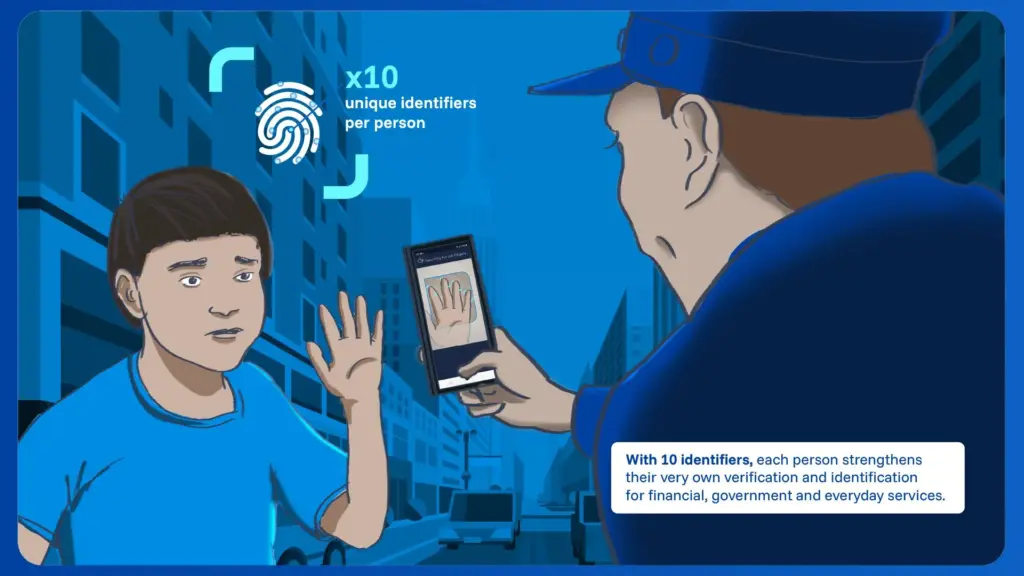
For almost everyone, fingerprints are ten unique identifiers, each strengthening verification across financial, government and everyday services. They’re already a trusted baseline: fingerprints underpin government ID and passport systems worldwide. To attack one, a fraudster needs physical access or a secure-database breach—orders of magnitude harder than generating a synthetic face or a cloned voice from content that’s already online.
What is biometric spoofing—and why fingerprints resist it
Biometric spoofing is presenting a fake trait to fool a system: a printed photo or screen replay for face, a deepfake video, a cloned audio clip for voice, or a lifted print for fingerprint. The attacker’s effort is wildly different across modalities. A face or voice can be spoofed remotely, at scale, from public data. A fingerprint can only be spoofed with a physical artifact created from a print the attacker first has to obtain.
On top of that, touchless fingerprint capture pairs with liveness detection—presentation attack detection (PAD)—that tells a real finger from a spoof. The same principle protects facial systems through face liveness detection, but with fingerprints the remote-attack vector that deepfakes exploit simply isn’t available.
On-device touchless fingerprint: anti-spoofing by design
Identy.io’s touchless fingerprint technology captures clear, high-quality prints with nothing more than a standard smartphone camera and LED flash—no dedicated hardware, no contact. Crucially, it processes all user information on the user’s own device. There’s no central biometric honeypot to breach, and users keep complete control of their personal data.
Security is validated, not asserted: Identy.io solutions meet the standards of the National Institute of Standards and Technology (NIST) and the ISO/IEC 30107-3 standard on liveness. If you’re evaluating vendors on presentation-attack resistance, our ISO/IEC 30107-3 PAD Level 2 buyer guide breaks down what the certification actually means. And because processing happens on-device, the solution works with little or no connectivity—and slots into a broader anti-deepfake identity verification stack.
Biometrics for good: a quick note
The same touchless technology that resists deepfakes also protects the most vulnerable. Through partnerships like My Family ID and The Exodus Road, law enforcement can identify a missing child, a senior, or a victim of trafficking—people often forced to use fake or stolen IDs—using only a smartphone. With more than 50 million people living in trafficking exploitation, that matters. We cover this in depth in how biometrics fights human trafficking.
The Identy.io approach
Fingerprints are the deepfake-resistant foundation for secure digital identity: not published online, hard to spoof physically, and verifiable with liveness on any smartphone. Identy.io captures high-quality data on-device, with no reliance on third-party infrastructure or cloud processing—lowering cost and removing the central database fraudsters target.
If you’re building verification that AI can’t fake, start with the biometric that was never online to begin with. Explore the touchless fingerprint SDK or talk to our team.
Frequently asked questions
Can fingerprints be deepfaked like faces and voices?
No. Deepfakes are built from images and audio scraped online, and you rarely expose high-resolution fingerprints publicly the way you post selfies and videos. To attack a fingerprint, a fraudster needs a physical copy—far harder than generating a synthetic face or cloned voice.
What is biometric spoofing, and how do fingerprints resist it?
Biometric spoofing is presenting a fake trait—a deepfake face, a cloned voice, a lifted print—to fool a system. Touchless fingerprint capture pairs with liveness detection (presentation attack detection) that distinguishes a real finger from a spoof, blocking the physical attacks that deepfakes can’t even attempt.
Is fingerprint authentication more secure than face recognition?
Each has trade-offs, but fingerprints carry one decisive advantage against AI fraud: they aren’t published online, so they can’t be deepfaked at scale. Combined with on-device processing and PAD-certified liveness, fingerprint biometrics close the remote-attack surface that face and voice leave open.
Referencias
- International Labour Organization (ILO), Walk Free & International Organization for Migration (IOM). Global Estimates of Modern Slavery: Forced Labour and Forced Marriage (2022). ilo.org
- ISO/IEC. ISO/IEC 30107-3:2023 — Information technology — Biometric presentation attack detection — Part 3: Testing and reporting. International Organization for Standardization. iso.org
- National Institute of Standards and Technology (NIST). Digital Identity Guidelines (SP 800-63 series). U.S. Department of Commerce. pages.nist.gov