
Table of Contents
ToggleThe Football World Cup is, without a doubt, one of the major sporting and social events of the decade. Until July 19th, 48 national teams will be competing for victory in a tournament which, for the first time in history, is held across three different host countries (Mexico, Canada and the United States). This edition was also one of the most popular in terms of visitor numbers, as more than 5.5 million spectators turned out to watch their favorite teams in action over the course of just three weeks.
Brazil is one of the countries—along with the three host nations—with the most fans in the stands: more than 500,000 Brazilians traveled to the United States, where their group stage matches were played. In the case of Colombia, the 120,000 fans traveled to two countries, as its matches were played in Mexico City and Guadalajara, Mexico, as well as in Miami, United States. This posed a significant logistical challenge for the visitors, who had to travel between venues by plane or by road and faced various border controls during their stay.
From a technological standpoint, this event also brought about significant innovations in the way visitors interact with authorities, in stadium access, and in the check-in process at their accommodations, to name just a few examples. In fact, digital transactions increased considerably during the tournament, which in turn led to a notable rise in fraud attempts. Therefore, it was necessary to verify fans’ identities to prevent fraud or identity theft in a manner that was fast, secure, and convenient enough not to cause any friction that might mar their experience. Biometrics thus became increasingly important as a means of streamlining many of the procedures visitors went through upon arrival in the cities where their national teams’ matches were played.
Biometrics as a tool to improve efficiency across all procedures during the World Cup
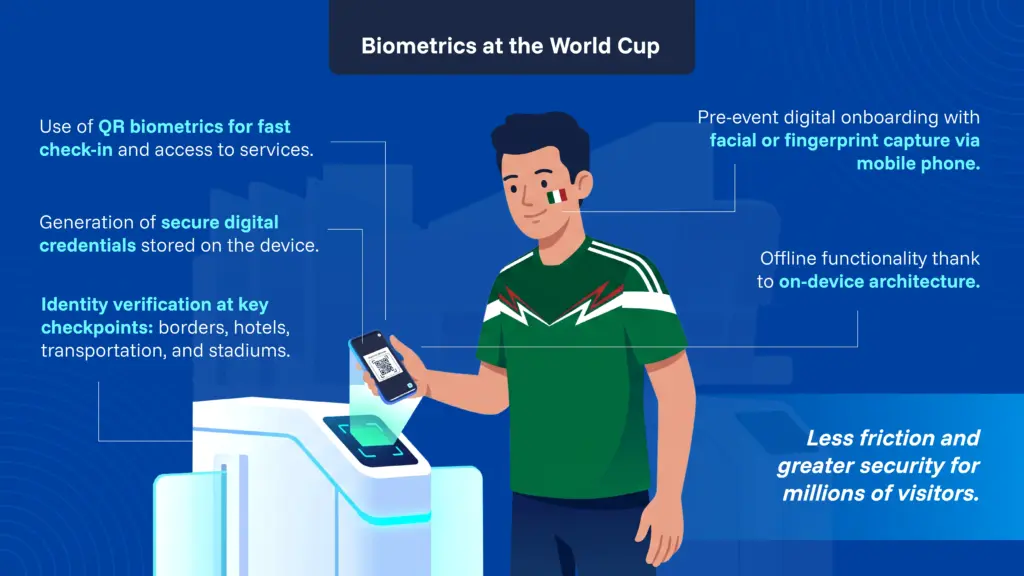
In a tournament that attracts millions of fans, being able to verify the identity of a user booking a room, buying a ticket for a particular match or simply attempting to pass through a border control is essential. In this regard, biometrics has established itself worldwide as a tool that significantly boosts the overall efficiency of all the processes in which it is used, whilst reducing friction and improving the overall user experience.
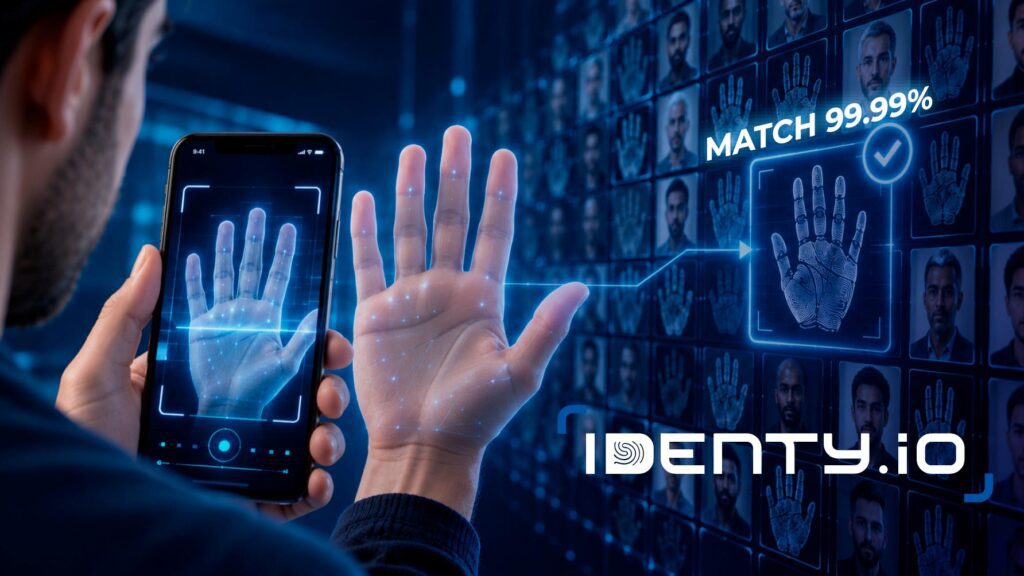
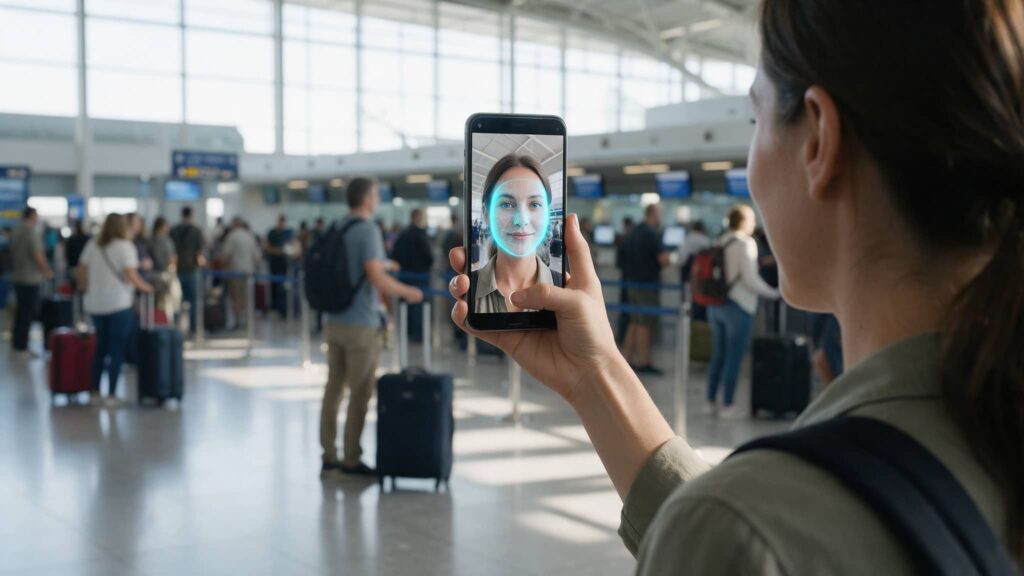
However, for this technology to be truly useful, it is important to carry out a few preliminary steps. The first of these is the onboarding process, through which the user captures their digital credentials – that is, their fingerprints or facial features – so that they can identify themselves correctly or validate their identity when necessary. In the case of the solutions developed by Identy.io, this process takes just a few seconds using the user’s own smartphone, by following the on-screen instructions. It is a simple and quick process in which the user does not need to perform any predefined actions, such as moving their head in a certain direction or blinking a certain number of times; instead, the system itself, thanks to the passive liveness check and its AI algorithms, is able to detect when the person in front of the camera might be a deepfake or a third party using a mask or a high-definition photograph to try to circumvent the system. This information is then cross-checked against centralised databases to verify the user’s identity (1:N identification) and ensure that the person is who they claim to be (1:1). Once it has been verified that the user is indeed who they claim to be, the user’s personal information is stored directly on their device under the strictest encryption protocols available on the market.
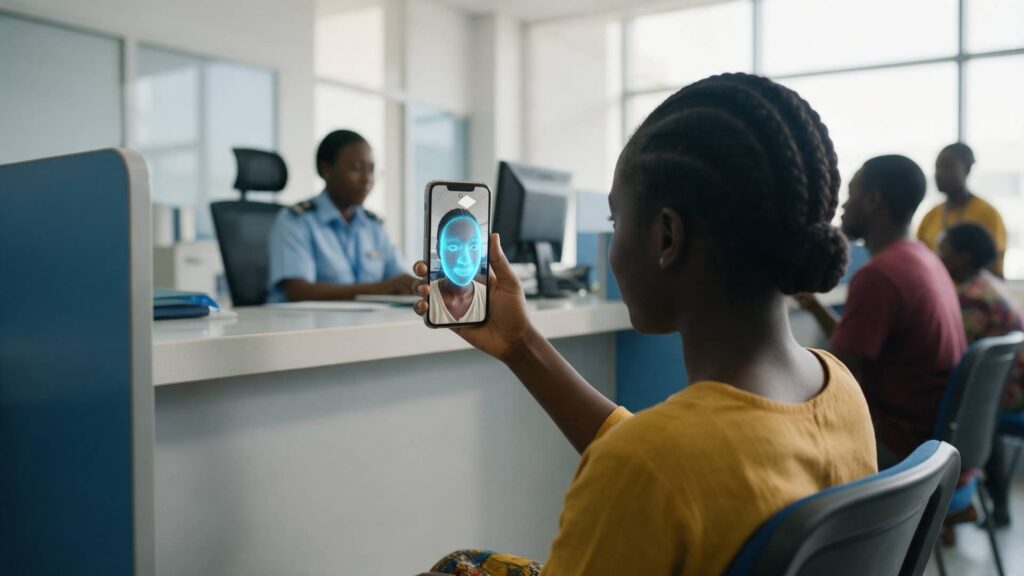
Once these digital credentials have been stored on the visitor’s mobile phone, they can be used for all kinds of digital procedures, even at times when, due to the large number of fans, there may be faults or outages in the connectivity service or the Wi-Fi systems in place. One of the areas where biometrics can prove most effective is in pre-border clearance, which will reduce waiting times for completing formalities and ease congestion at entry points in the countries visited. Government bodies will also benefit directly from the use of this technology, as it will drastically reduce potential cases of theft or identity theft, since it enables them to verify, almost in real time and with great accuracy, the identity of individuals attempting to cross a border or pass through an airport security checkpoint, by validating the user’s digital credentials against their centralised database and thus determining whether the tourist is indeed the person they claim to be.
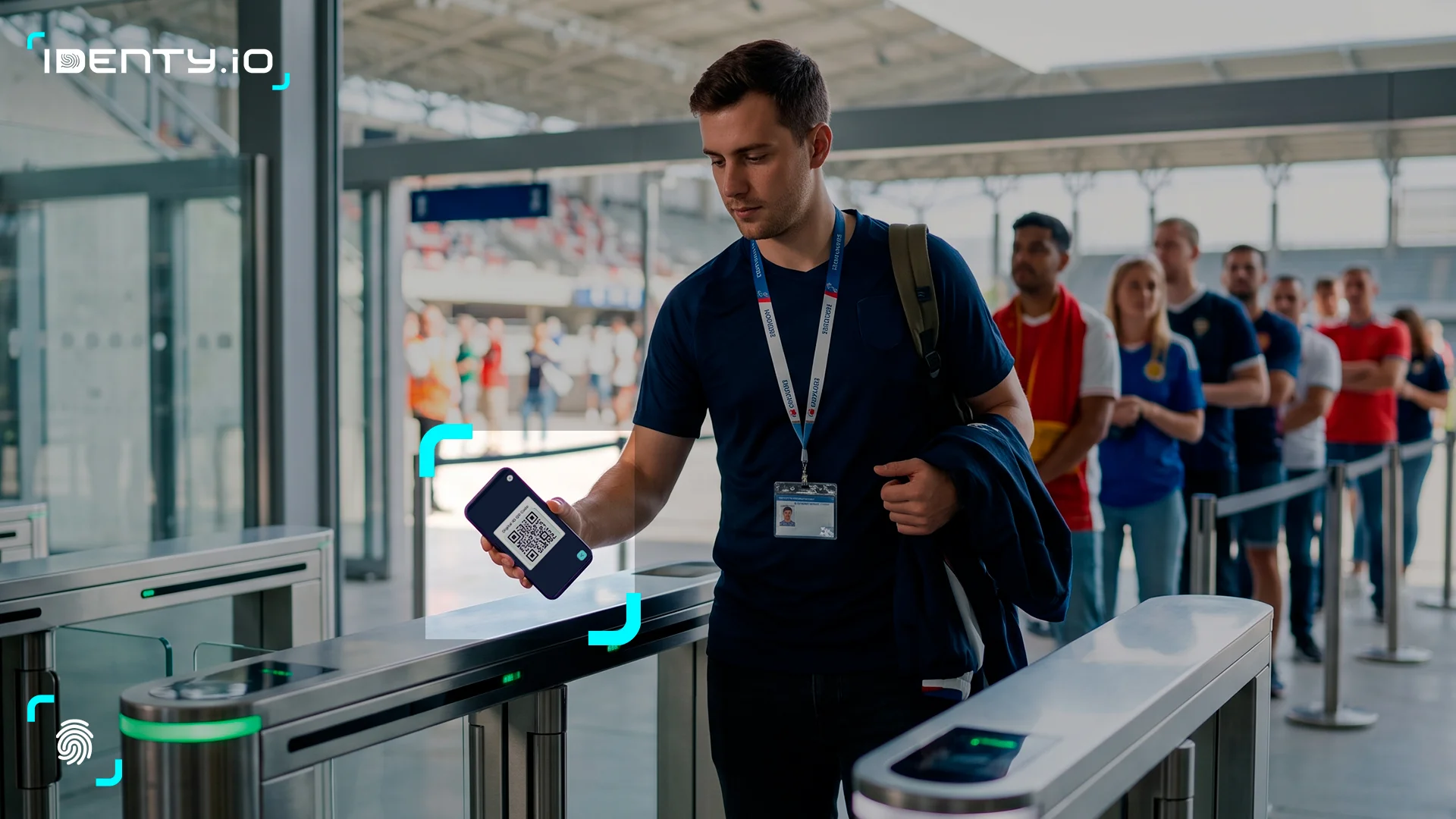
To make it easier to use these digital credentials, visitors can choose to generate, using Identy.io’s solutions, a biometric QR code that embeds all their personal information once it has been validated. This QR code is particularly useful at digital check-in kiosks in hotels, for example, as a way of speeding up the check-in process. Thanks to these codes, visitors can choose which personal information to share, without needing an internet connection at that moment.
Biometrics to combat ticket reselling and as a way of speeding up entry to stadiums
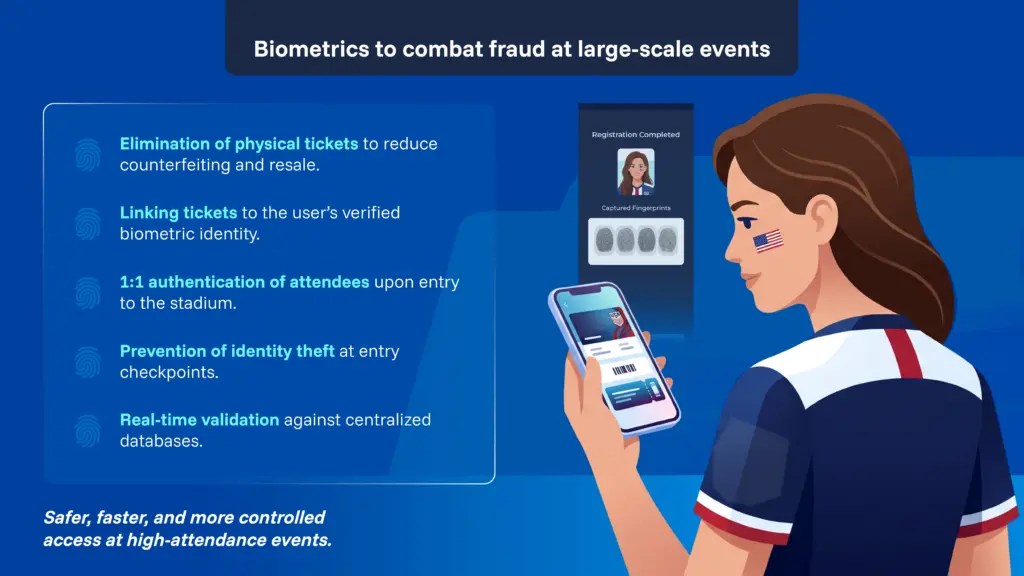
Access to the stadiums where the matches were played also underwent a significant change thanks to biometrics. Until now, it was necessary to purchase physical tickets for each match, which increased the risk of counterfeiting or resale attempts. However, this World Cup pioneered the use of biometrics to streamline security checks at entry points and make them more efficient. When purchasing a ticket, users link their identity to it using their previously registered digital credentials. This way, in addition to being able to present their digital ticket at the stadiums directly from their cell phones, the risk of resale is eliminated, since only properly accredited individuals will be able to enter the stadiums.
In an increasingly digitized environment, and with one of the most heavily attended sporting events in history, ensuring spectator safety, enhancing their overall experience, and, in turn, reducing the incidence of fraud and identity theft are key to ensuring the smooth running of this and future World Cups. And biometrics is already a strategic ally in this regard.