
Table of Contents
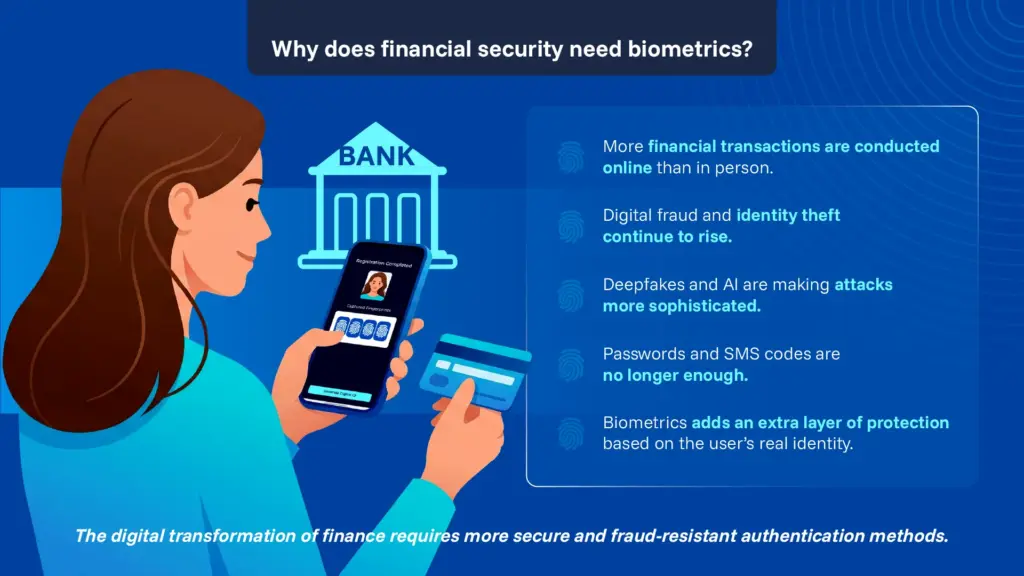
ToggleOver the past few years, the internet has become one of the main tools facilitating financial inclusion. So much so that financial transactions conducted remotely now far outnumber those conducted in person. For example, in Colombia, it is estimated that eight out of ten financial transactions are now conducted online, according to data from the Financial Superintendency.
In Peru, the situation is very similar. At a time of rapid digitalization in the country—driven, among other factors, by more than $80 million in financing from the Inter-American Development Bank to promote inclusion and public participation in the digital economy—it is estimated that nine out of ten users of financial services in Peru already use digital wallets as an everyday tool.
Although this trend toward an increasingly interconnected world has significantly heightened many people’s interest in technology and the myriad possibilities it offers, the reality is that it has also multiplied the risks faced by both users and public and private entities alike. In Colombia alone, for example, so far in 2026 there have already been more than 5,000 cases of fraud and identity theft in the financial sector, in addition to the more than 62,000 reports of cybercrimes from last year.
Although in some cases the end user remains the entry point for these crimes—according to the Superintendency of Banking, Insurance, and Pension Fund Administrators, nearly half of users still store their banking passwords on their mobile phones—the very advancement of technology, particularly artificial intelligence, has multiplied the risks of these crimes occurring. Indeed, due to the exponential growth of cases involving the use of digital doubles or deepfakes, traditional security measures—such as passwords or security codes sent via SMS to the user’s cell phone—are no longer sufficient.
Biometric Technology as an Additional Layer of Security Against Fraud
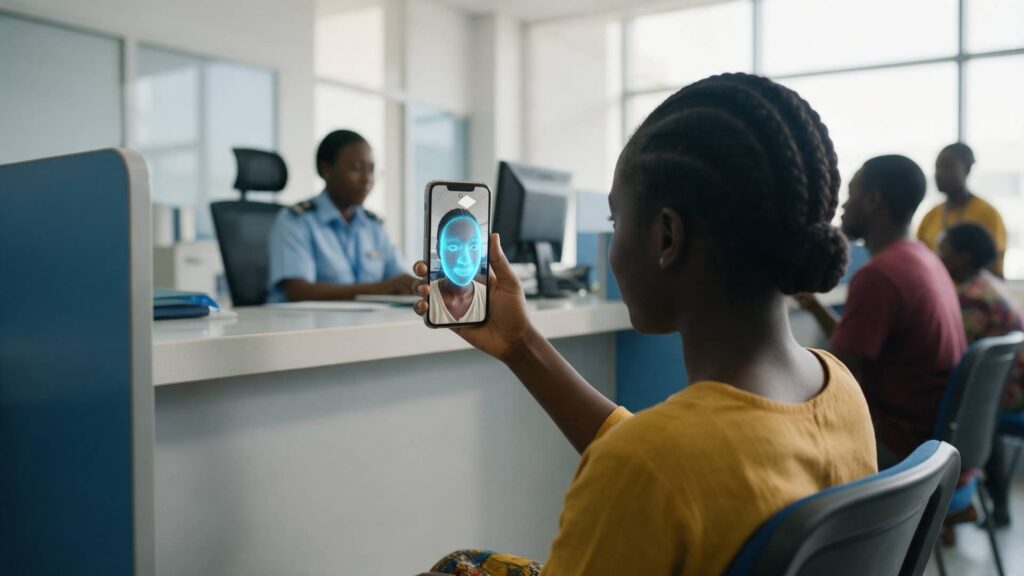
In a context where it is becoming increasingly necessary to verify a user’s identity remotely—and to do so with the highest possible standards of security and efficiency—biometrics is establishing itself as an essential tool for users and both public and private entities. This technology, which quickly and easily captures a user’s fingerprints or facial features, has already become an additional layer of security that complements existing measures and directly helps reduce cases of fraud involving theft or identity theft.
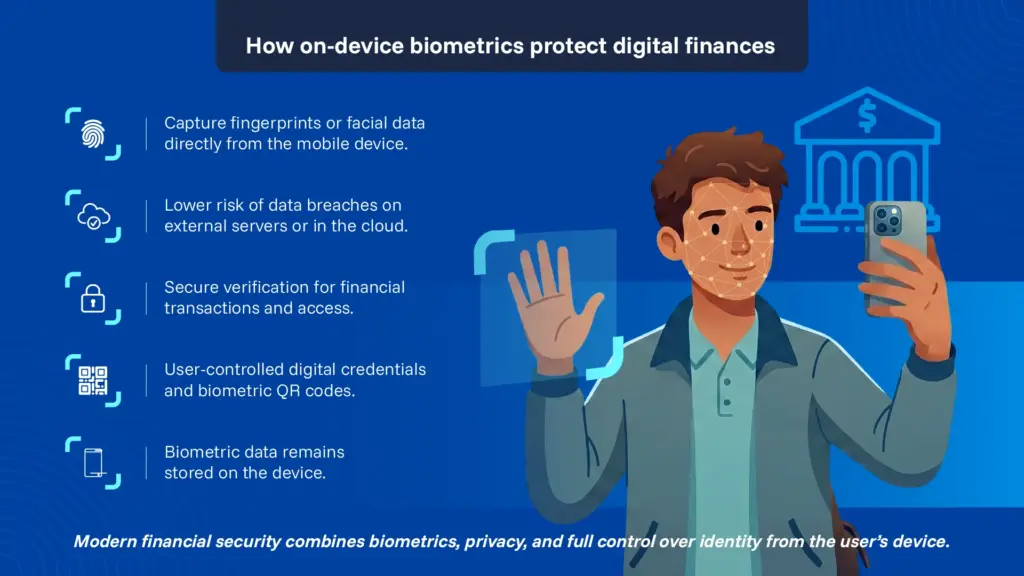
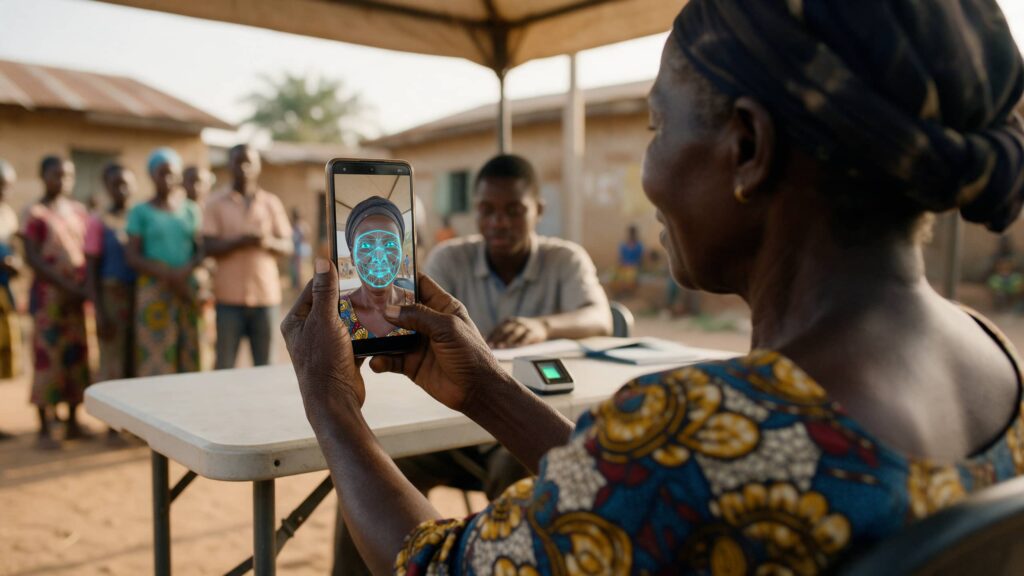
In this regard, Identy.io has opted to develop on-device technology, meaning it uses the user’s own mobile device to capture biometric information, with all data stored on the device itself under the strictest security standards. This not only enhances user security—since users no longer need to visit their bank’s offices, for example, to complete any transactions—but also has a direct impact on financial institutions’ bottom line, as they no longer need to invest large sums of money in third-party servers or cloud infrastructure to store their users’ data. Thanks to this on-device architecture, facial data or fingerprints never leave the user’s phone, making security breaches on servers virtually impossible, while also reducing reliance on constant connectivity—a factor that is particularly relevant in areas where internet access is limited.
The entire biometric validation process begins with the onboarding process, during which your digital credentials are generated. The system captures the user’s fingerprint or facial feature data and stores it on their mobile device using the world’s most stringent security and encryption protocols. From then on, this information can be used to verify your identity by querying a centralized database (1:N) and ensuring that the person carrying out a specific transaction—financial, for example—is who they claim to be (1:1). Additionally, Identy.io’s biometric solutions enable the issuance of QR codes (BioCode), which the user can present as credentials and which contain all their personal information, allowing them to control what data they share, when, and with whom at all times. This critical data can also be stored in a digital wallet (ID Wallet) under the most stringent encryption standards on the market.
At a time when it is increasingly common to access financial services through tools such as digital wallets or mobile apps, it is essential to ensure that there is no unauthorized access to users’ critical information. Only through this additional layer of security can the financial well-being of the population be guaranteed.