

Table of Contents
ToggleIn today’s fintech and digital identity landscape, balancing security with user experience is critical. Fraudsters are constantly trying to spoof online onboarding systems using stolen photos, deepfake videos, or forged IDs, identity fraud cost the U.S. an estimated $43 billion in 2023. At the same time, legitimate customers expect a smooth, quick sign-up process. Passive liveness detection has emerged as a solution to this challenge. It acts as a silent guardian during digital onboarding, stopping fraud in the background without disrupting the user. Identy, a leader in biometric identity verification, champions passive liveness detection as an expert approach to reduce fraud while keeping the user experience frictionless.
What is passive liveness detection?
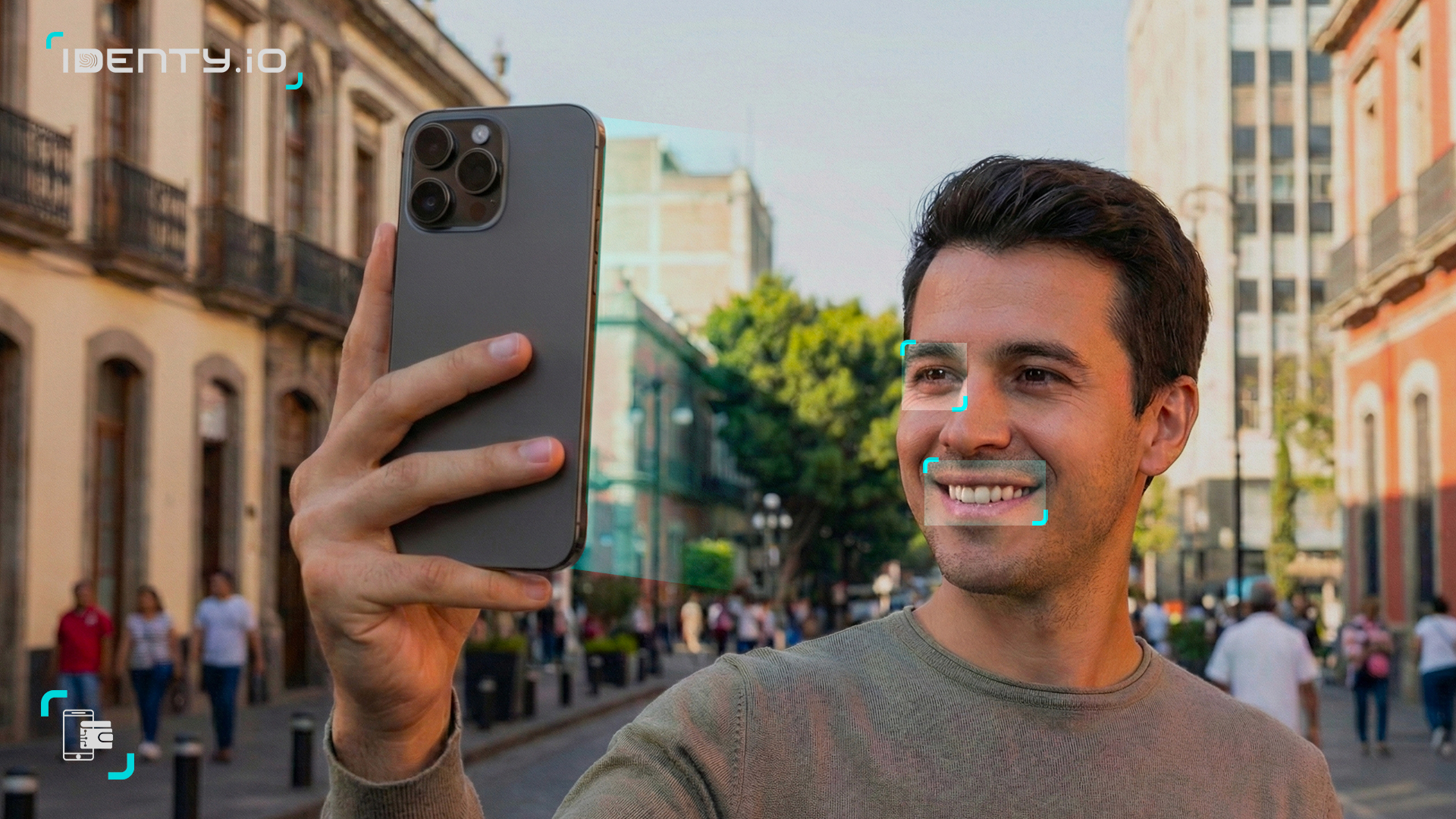
Passive liveness detection is a biometric security technique that confirms a real, live person is present, without requiring any action from the user. Unlike active liveness methods that ask users to blink, turn their head, or perform other tasks (which adds friction and frustration), passive liveness runs invisibly during a selfie or face scan. Advanced AI algorithms analyze subtle signals of life, skin texture, natural lighting reflections, 3D depth, and micro-movements in the face – to ensure the person is real. This happens instantly in the background, with no instructions or interruptions to the user. For example, Identy’s passive liveness detection uses AI to detect tiny facial cues (like micro-blinks or texture differences) and works silently to spot spoofs, delivering a verification decision in under a second with no user effort. The user simply takes a selfie, and the system confirms liveness automatically. This invisible process makes passive liveness extremely user-friendly while still highly secure.
Frictionless onboarding boosts conversion
For CMOs focused on growth, passive liveness detection offers a major advantage: a frictionless user experience that improves conversion rates. Every extra step in onboarding can cause users to drop off. Active liveness checks (e.g. “blink slowly and turn your head”) often irritate or confuse users, if lighting or angles aren’t perfect, legitimate customers may fail the prompt and abandon the sign-up. In fact, some banks found that active liveness prompts led many users to quit mid-verification, hurting conversion. Passive liveness avoids this problem entirely. Because no special actions are required, the identity check feels as easy as taking a normal selfie, with nothing “odd” asked of the user. This seamless flow significantly reduces abandonment. Industry data shows that passive liveness provides a “frictionless experience” that boosts completion rates. One European fintech that switched from active to passive liveness in 2024 saw approval times drop below 30 seconds, a 70% decrease in fraud attempts, and a jump in customer satisfaction, all thanks to a smoother process. By removing unnecessary hurdles, passive liveness helps convert more genuine users, translating to higher onboarding success and revenue opportunities. Identy emphasizes this benefit in its solutions, delivering frictionless verification that keeps honest customers happy while silently weeding out imposters.
Strengthening security and trust without sacrifice
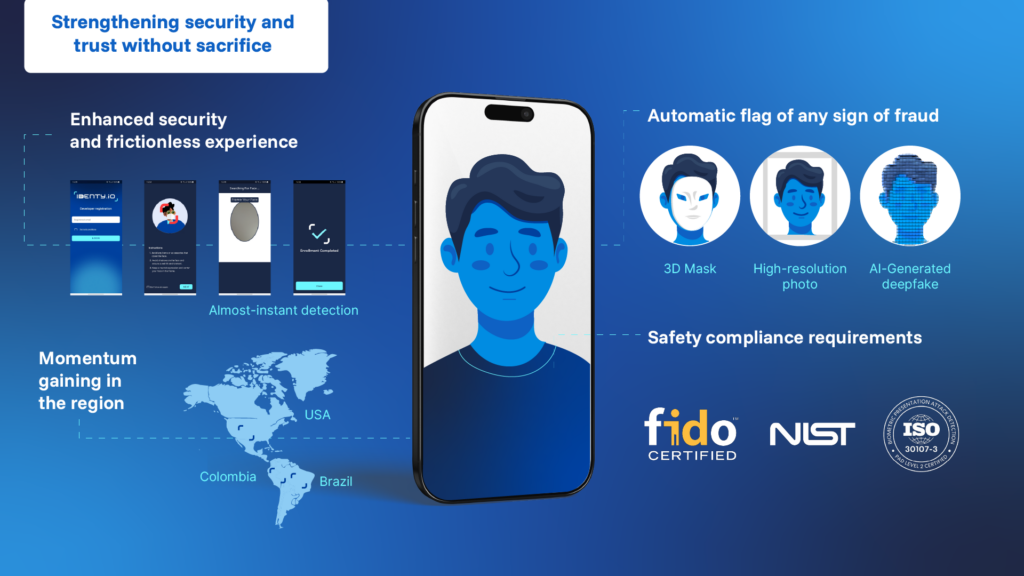
Passive liveness detection also greatly enhances security, a key concern for CTOs and compliance officers, all without sacrificing the user experience. It provides a robust defense against today’s sophisticated fraud tactics. The system automatically flags any sign that the “face” presented is fake or not physically present. For example, passive liveness will detect if someone tries to use a high-resolution photo, a screen replay, a 3D mask, or an AI-generated deepfake, by noticing things a fake can’t mimic. A static image lacks the 3D depth and unpredictable micro-expressions of a live person; even an HD video replay might miss subtle texture and lighting cues from real skin. By catching these discrepancies across hundreds of data points, passive liveness stops fraudulent account openings and identity theft attempts cold. This technology is highly effective at spoof prevention, often more so than manual checks, and continues to improve through AI learning. Crucially, it achieves this without burdening the user. Identy’s platform, for instance, is able to instantly reject presentation attacks (from printed photos to deepfake videos) in real time, keeping identity fraud at bay while the user only notices a quick selfie capture. Such behind-the-scenes security builds trust: customers feel the sign-up was easy, and organizations know that an imposter wasn’t let through. Additionally, passive liveness helps firms meet strict compliance standards. Regulators worldwide (from banking authorities to AML/KYC guidelines) now expect robust liveness checks as part of digital onboarding. By integrating passive liveness, companies like those in finance or government can satisfy compliance requirements (e.g. biometric data checks, audit trails) without adding friction for the end-user. It’s a win-win: strong security and fraud prevention with a seamless experience.
A global trend from the USA to Latin America
The move toward passive liveness detection is gaining momentum globally, especially in markets prioritizing conversion and digital growth. In the United States, faced with rising identity fraud losses, banks, fintechs, and even public agencies are adopting passive liveness to shore up remote verification security. At the same time, emerging markets in Latin America are rapidly embracing this technology as they digitize. In 2023, Latin America saw a 30% jump in digital fraud cases, pressuring businesses and governments to strengthen ID checks. Countries like Brazil and Mexico have introduced stricter KYC and data protection regulations, effectively mandating advanced biometric verification for government services and online banking. This push is driving widespread implementation of passive liveness across the region. Colombia, for example, is investing in e-government digital identity programs that use facial biometrics and liveness to securely onboard citizens. In these markets, organizations recognize that passive liveness detection offers the ideal balance: it fights fraud and meets regulatory obligations, yet remains user-centric for populations coming online. Solutions from experts like Identy are deployed in these countries to provide scalable, on-device liveness detection that works even on low-end smartphones – crucial for broad adoption. The technology has proven it can handle large volumes seamlessly; one leading provider processed over 7 million liveness checks per week in early 2025, illustrating the scalability needed for nations like the USA, Brazil, Mexico, and Colombia. As digital onboarding expands worldwide, passive liveness is becoming the preferred approach for forward-thinking institutions that demand both security and a smooth customer journey.
Reducing fraud with passive liveness detection is not just a tech upgrade, it’s a strategic imperative for organizations that refuse to choose between security and user experience. This silent anti-fraud measure operates with virtually no user friction, making it a game-changer for conversion rates and customer satisfaction. At the same time, it delivers rigorous protection against identity fraud, outperforming older methods in detecting today’s AI-driven spoofing attempts. It’s no surprise that passive liveness is poised to become the industry standard in the coming years; the global liveness detection market is projected to soar past $2 billion by 2026 as more businesses adopt this approach. For companies in finance, fintech, and public digital identity programs, partnering with experts like Identy to implement passive liveness detection is an investment in frictionless security at scale. The result is a safer onboarding process that quietly blocks fraud in the background while welcoming genuine users with open arms, truly the best of both worlds in modern identity verification.
- Identy. “Face liveness detection: how it works and how it prevents biometric fraud.” Identy Blog, 7 Nov 2025.
- Lexenta Lexal Dynamics. “Latin America Liveness Detection Market Size 2026 – Forecast Drivers, AI Trends & Regions 2033.” LinkedIn Pulse, 28 Nov 2025.