

Table of Contents
ToggleThe rapid pace of technological development in recent years has had a profound social impact, particularly in easing remote access to a wide range of services. Today, users can consult their medical history or follow-up treatments from the comfort of their homes. They can even complete social benefit applications without ever stepping foot in a government office. But what happens when that same technology becomes a barrier? What if, instead of fostering social integration, it has the opposite effect?
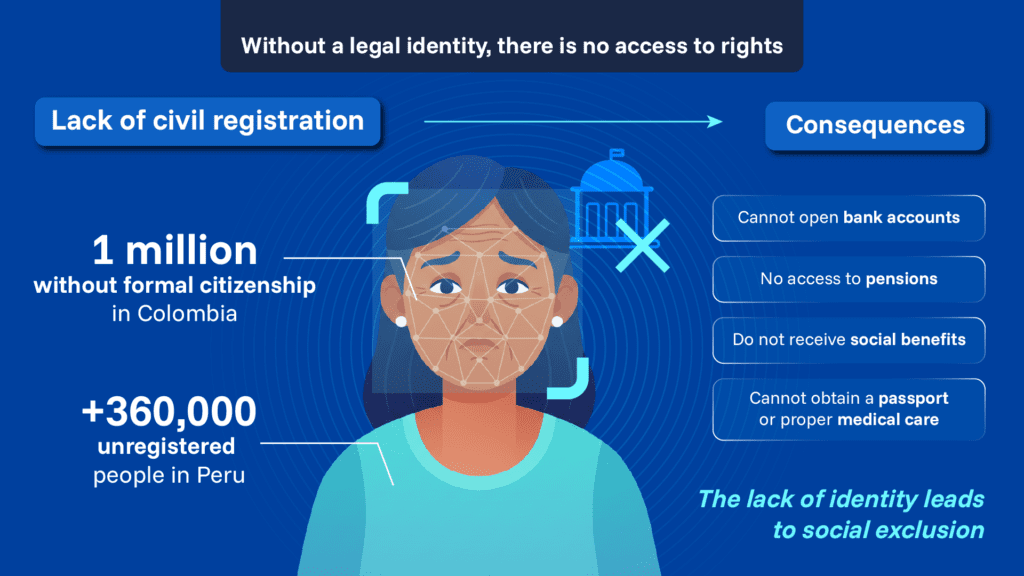
According to Peru’s RENIEC (National Registry of Identification and Civil Status), over 360,000 people are not officially registered and, therefore, lack any form of legal identity. A similar situation exists in Colombia, where more than a million citizens have not completed the procedures to obtain legal citizenship. Without official accreditation, these individuals cannot interact with public administrations, open bank accounts, or apply for old-age pensions. Key reasons for this lack of registration include living in vulnerable, low-income communities or being physically distant—sometimes by hundreds of kilometers—from registration offices.
Biometrics as a Driver for Social Integration
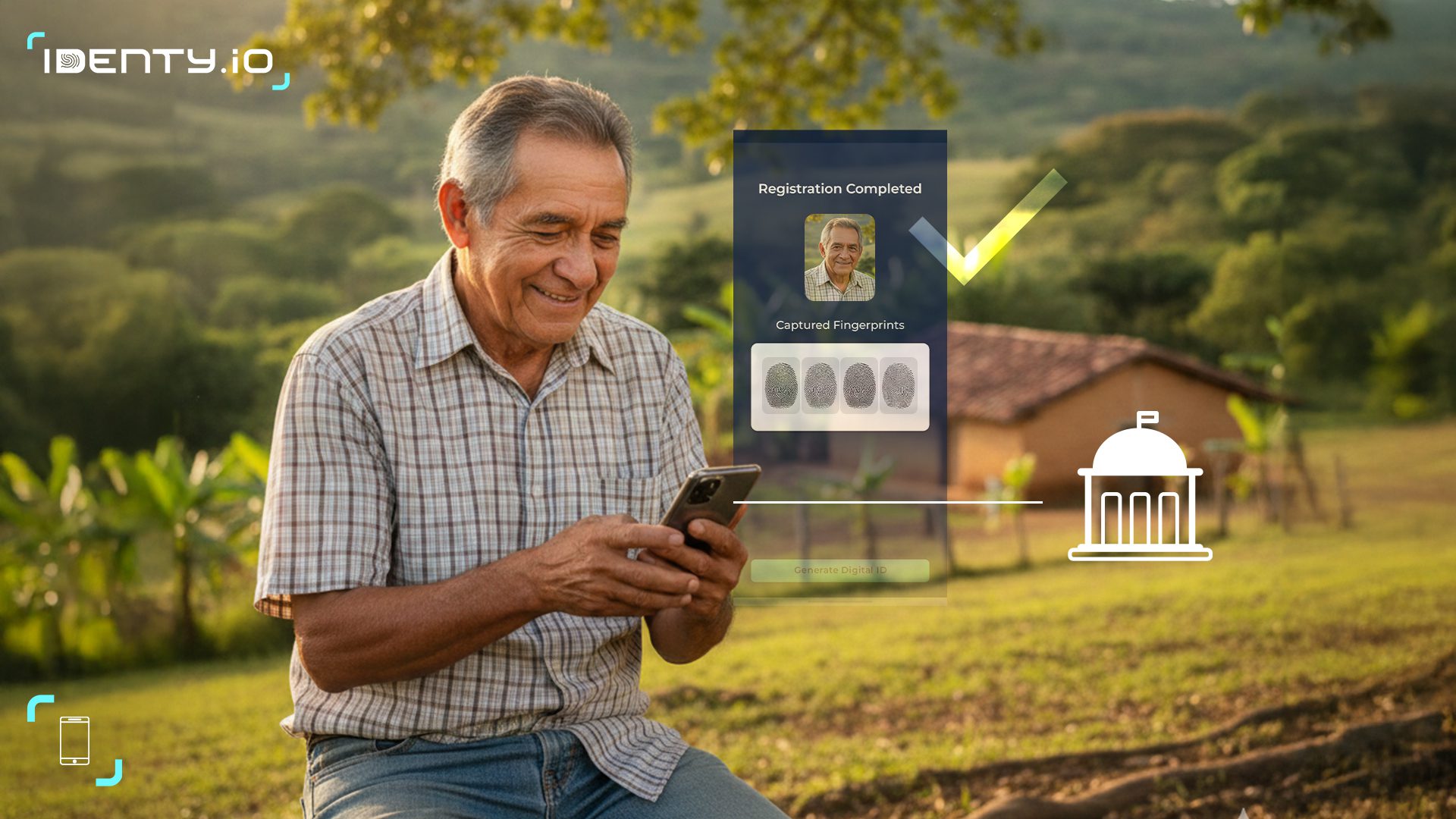
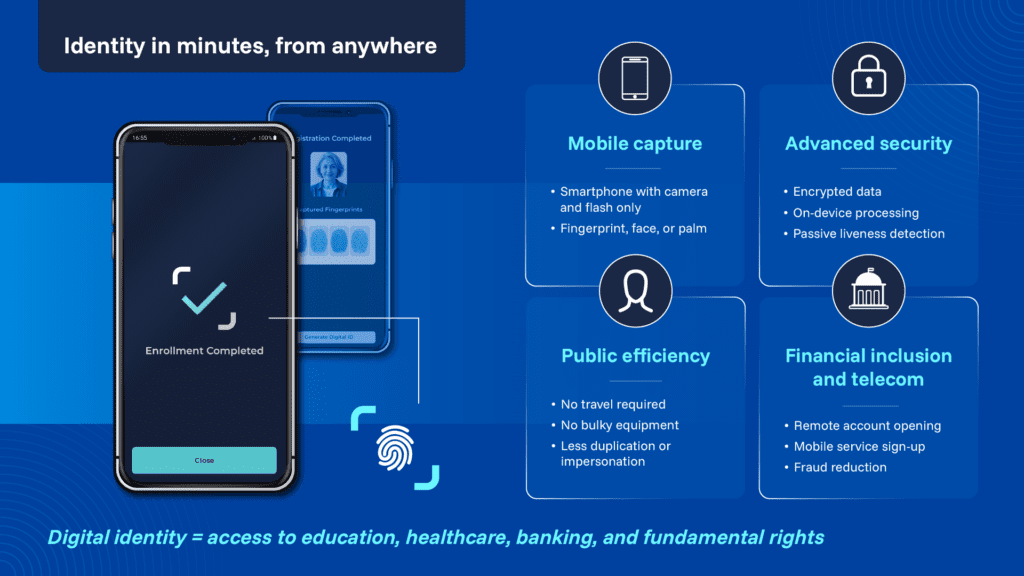
In recent years, biometric technology has established itself as a powerful tool for social inclusion. For citizens who lack identity or for births in vulnerable communities, this technology allows registration procedures to be completed in just minutes from any location. All that is required is a mobile phone—regardless of its generation or model—equipped with a camera and a flash.
Using this device, users can capture their personal credentials: fingerprints, facial features, or, in the case of newborns, palm prints. All this information is stored directly on the user’s device, properly encrypted to protect it from malicious use.
In this way, biometric technology builds bridges. By becoming a new global standard for security and integration, it aids in the inclusion of the most disadvantaged. Specifically, it enables remote identity registration, eliminating the need to physically visit an official office. This ensures that people who otherwise could not obtain a birth certificate or legal ID can finally secure the documentation that proves who they are. Consequently, it guarantees their access to social benefits, educational certificates, passports for travel, and proper medical care.
Financial and Telecommunications Inclusion
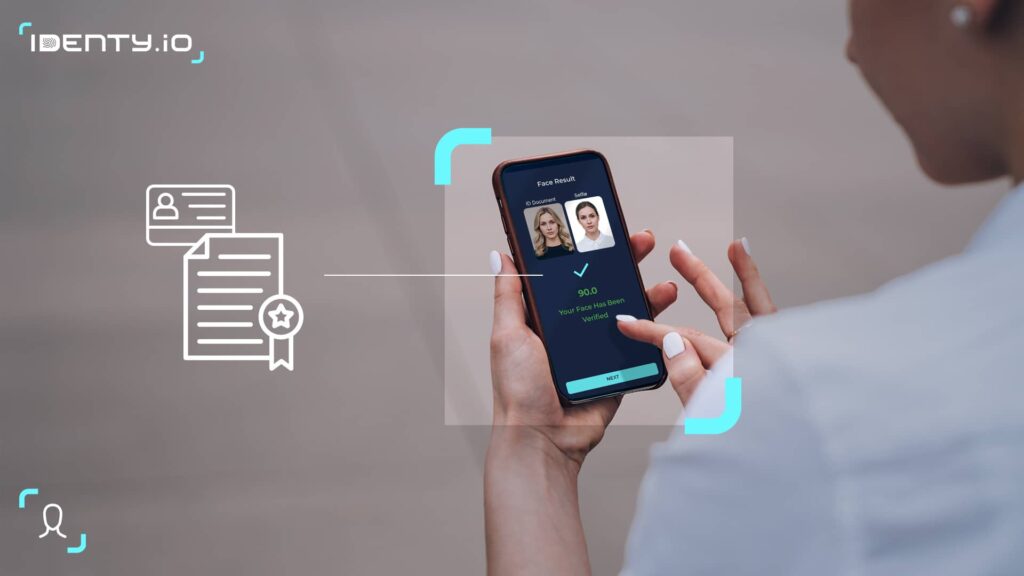
Biometrics is also closely linked to financial integration. In many countries, having a bank account remains essential for receiving monthly wages or setting up direct debits for basic utilities. For thousands of people, traditional registration methods—requiring physical documentation and in-person visits to bank branches—made this nearly impossible. The need for long journeys, sometimes lasting hours or days, was an insurmountable barrier. However, thanks to solutions developed by Identy.io, users can now complete their registration in minutes, securely and comfortably verifying their identity using only their mobile phones.
A similar shift is occurring in telecommunications. The need to verify a user’s identity to prevent fraud or identity theft—which can have a significant economic impact—often hindered those in isolated or vulnerable regions from signing up for services. Biometric technology is now dissolving these barriers.
Biometrics: Technology That Makes Life Easier
While the primary goal of biometrics is to serve as a new global security standard and eradicate fraud, companies like Identy.io have gone a step further. They have ensured this technology is easy for anyone to use, requiring no specialized technical knowledge. For identity verification to be truly useful, it should be as simple as using any other mobile app—hassle-free and designed to make life easier.
A prime example of this is Passive Liveness Detection. One risk of biometric verification is “spoofing”—where a third party attempts to impersonate someone using an AI-generated digital double, a high-definition photo, or a silicone replica of a fingerprint. To prevent this, Identy.io’s technology detects subtle details such as eye movements, blinking, or the way light reflects off human skin to determine with total accuracy if the person is real.
Unlike other solutions on the market, this passive variant does not require the user to perform predefined gestures (such as turning their head at a specific angle). This ensures that elderly users or those with physical limitations can use the system without difficulty. Regardless of tech-savviness, physical condition, or age, any user can navigate these solutions with ease.
Efficiency for Public Administrations
The fact that only a mobile phone is needed to capture digital credentials is also a major leap forward for public sectors. Previously, registration agents had to travel periodically to remote or poorly connected regions, carrying bulky scanners to capture fingerprints. This new resource streamlines the process, reducing the workload for agents and making procedures faster and more efficient. Furthermore, it significantly reduces identity theft, as fingerprints are linked directly to the user’s identity, preventing duplication and fraudulent use.
Technology must continue to guarantee that everyone has proper access to the basic services they are entitled to. Ensuring identity is not just an administrative matter; it is a fundamental factor for inclusion that directly impacts access to education, health, social programs, and human rights—especially for those who need it most.