

Table of Contents
ToggleTechnological advances have had a clear impact on the development of modern society. Its ability to connect people living thousands of miles apart, or the ease with which it has made it possible to carry out multiple activities from the comfort of one’s home, are just some of the key aspects of this impact. However, these same technological advances have also pushed millions of people out of the system by denying them access to the same digital services.
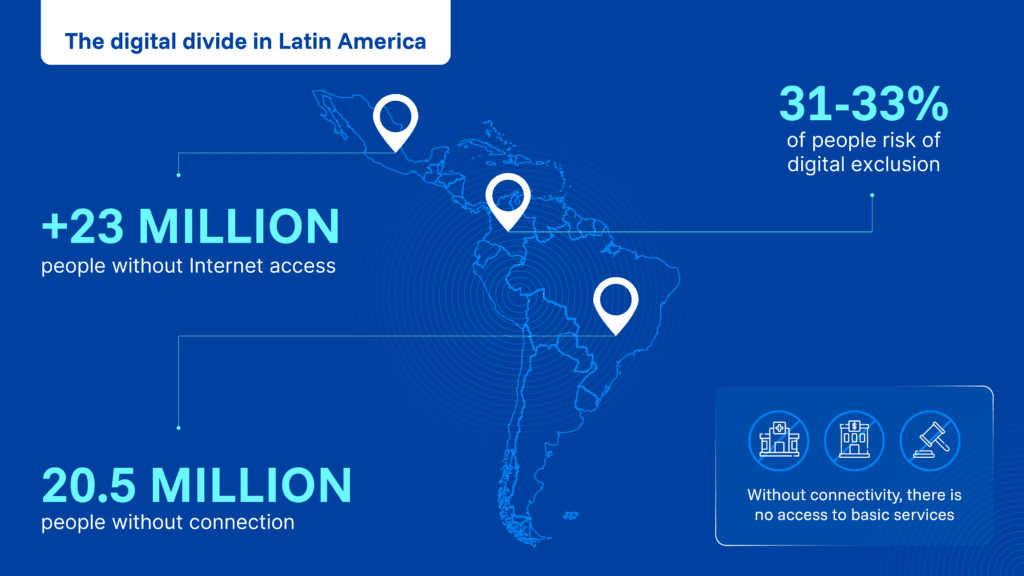
The so-called digital divide is a reality in Latin America. In Mexico alone, more than 23 million people do not have access to the Internet, according to data from ENDUITH (National Survey on the Availability and Use of Information Technologies in Households), especially in rural or marginalized areas. In Brazil, the situation is similar: according to data from the Brazilian Institute of Geography and Statistics (IBGE), in 2024, around 20.5 million Brazilians did not have access to the Internet. And in Colombia, between 31% and 33% of the population—that is, more than 16.5 million people—are at risk of being excluded from digitization because they do not have the possibility of accessing the Internet, or doing so with the necessary knowledge to enjoy its advantages.
Beyond the mere fact of being able to access information in real time or entertainment services, —streaming content or social networks, for example— not having access to the Internet or a smartphone has significant consequences for the integration of millions of people, who cannot carry out seemingly simple tasks such as opening a bank account, completing immigration procedures, or requesting a new phone line without having to go in person. This is sometimes even more difficult when they live in isolated areas, hundreds of kilometers from where they need to go, or when they have mobility issues due to physical problems or advanced age.
Identy.io biometrics as a catalyst for social integration
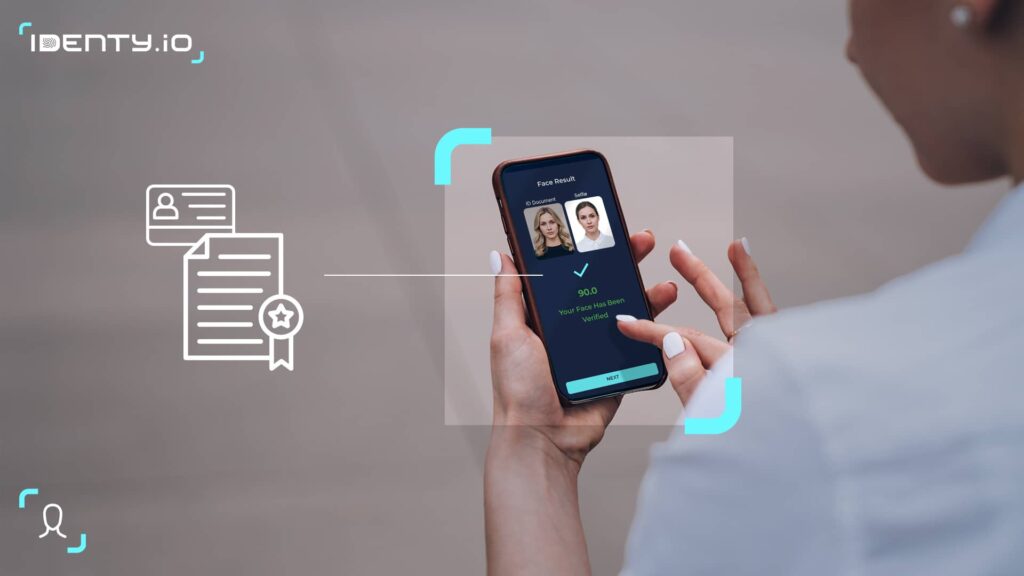
Not having an Internet connection or a smartphone significantly limits anyone’s right to a digital identity. This is especially true at a time when users are increasingly required to prove their identity when accessing their medical records, registering for social programs, or crossing a border. To do so, it is necessary to effectively verify the user’s personal information against increasingly centralized databases, so that this verification can be carried out in just a few seconds. Therefore, not being able to access these databases, or not appearing in them at all because you have not been able to register correctly, would mean not existing, that is, not being able to exercise fundamental rights and thus participate in the modern economy.
In this context, biometrics has become a new security standard, allowing any user to access these databases where their biometric information is stored quickly and securely through any application or service that requires the user to identify themselves. Since 2018, Identy.io has been working with some of the world’s leading banking and financial institutions, as well as border control agencies and telecommunications companies, to develop various solutions that allow users to access multiple digital services that require identity verification.
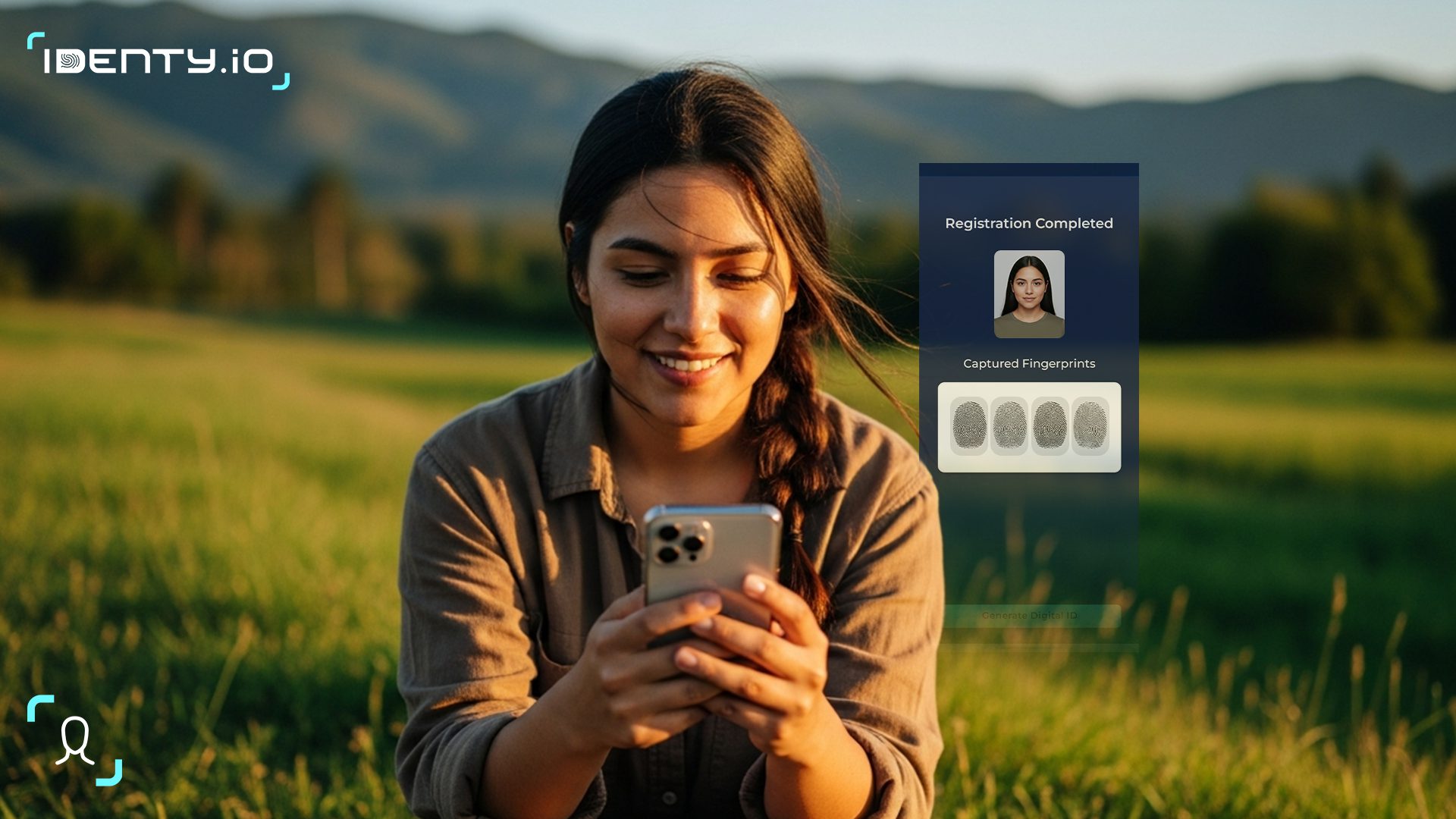
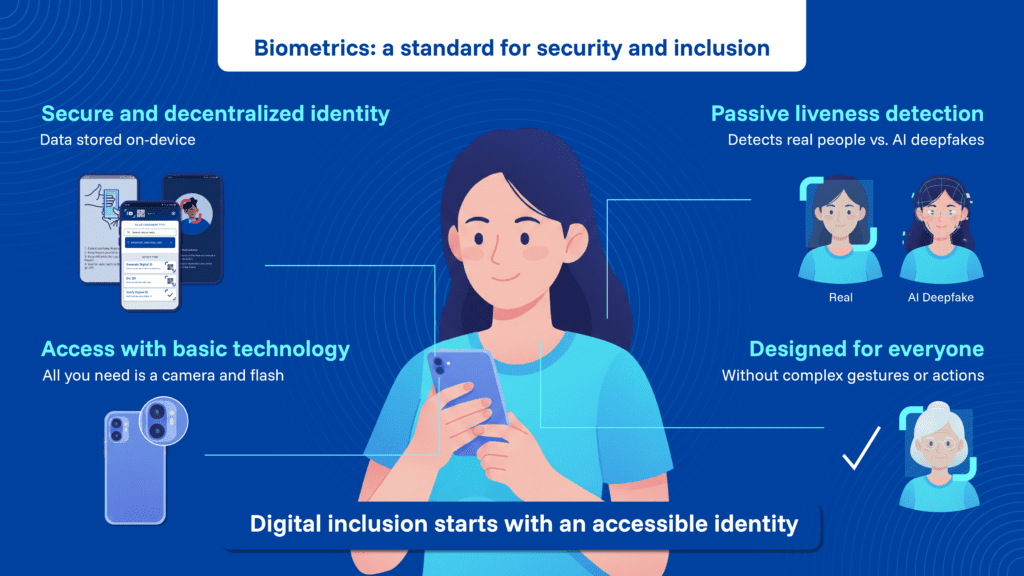
To use these solutions, the user doesn’t need a state-of-the-art mobile phone; all they need is a camera and a flash to capture the user’s biometric information—their fingerprints or facial features—, something that contributes to the democratization of access to digital services. Once this information has been captured, it must be checked against existing data in a centralized database and then stored as a digital credential so that it can be retrieved when necessary. Unlike other alternatives on the market, Identy.io’s solutions do not store this personal user information in the cloud or on third-party servers, but rather on the user’s own device. This means that it is not necessary to reconnect to the Internet to, for example, show your personal information at a border control, which is extremely important when the user does not have connectivity in a given location.
Biometrics, a valid solution for the elderly or socially excluded
But what happens when the user who needs to validate their identity is elderly, socially excluded, or lacks the technological knowledge necessary to use these solutions? Identy.io has developed its technology with the aim of making it useful for everyone, without exception. To this end, it is no longer necessary to perform predefined actions (such as moving your head in a certain way or winking when capturing facial features) for the system to obtain the information it needs. This system, called “passive liveness detection,” is capable of detecting with great precision and reliability when a user is a real person and when it is a digital double generated by artificial intelligence. And it does so in a way that is particularly easy to use, so that anyone, even those with little or no technological training, can carry out their digital interactions without any problems.
At a time when technology has become both a tool that greatly facilitates users’ lives and, at the same time, a factor of exclusion, biometrics can become the catalyst for digital democratization. Technology must be inclusive, it must contribute to providing the population with a digital identity, and in turn, improve the living conditions of the most vulnerable sectors.