

Table of Contents
ToggleAdvancing Touchless Fingerprint Technology: What’s next for NIST FastCAP
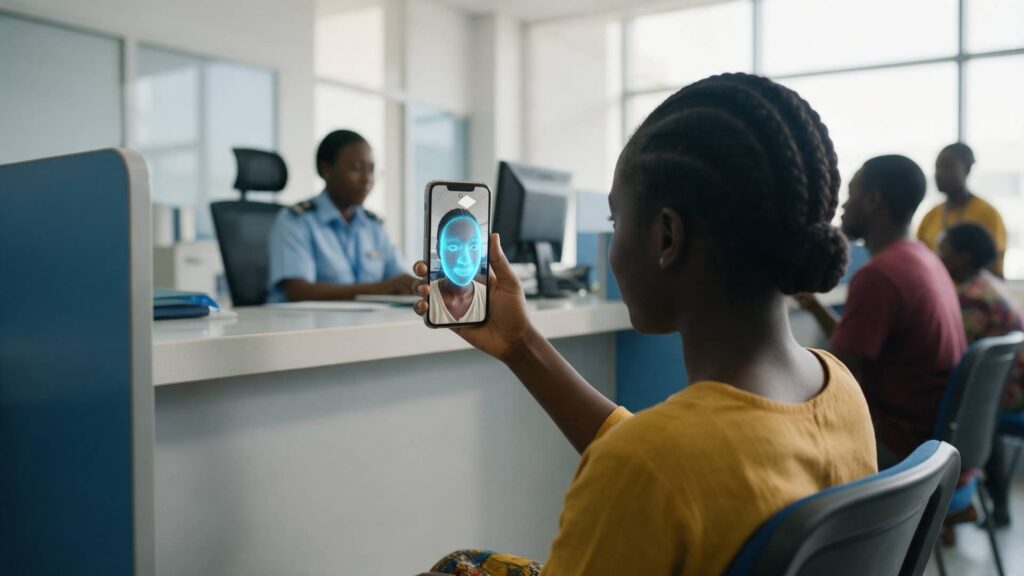
For years, fingerprint capture has depended on specialized scanners and physical contact with a device. Touchless fingerprint technology is changing where and how fingerprints can be captured, bringing the process to commercial mobile devices as well as expanding its potential use across field, remote and established identity environments.
The National Institute of Standards and Technology (NIST) recently completed the first phase of its Fast Capture (FastCAP) program, an initiative focused on evaluating contactless fingerprint technologies for rapid tenprint capture. Of the 18 biometric technology providers participating in the program, Identy.io was among the 12 reported to have met the qualification criteria.
The results define an important qualification benchmark for a touchless fingerprint market that continues to mature. The next step will be on building on that foundation with improved insights into comparative performance, giving government organizations and technology vendors a better understanding of how qualified solutions stack against specific technical and operational standards.
Why Touchless Fingerprint Capture Matters
Fingerprint recognition is widely used across government, law enforcement and border security, but dedicated capture equipment can limit where enrollment and identification take place. Touchless technology offers an alternative, allowing organizations to extend fingerprint capture beyond these traditional environments.
At Identy.io, our technology enables organizations to capture fingerprints using commercial mobile devices without dedicated fingerprint scanners. The mobile-first approach can extend biometric capabilities to field environments, remote enrollment scenarios and locations in which traditional infrastructure may be difficult or expensive to deploy.
Our mobile-first approach can also reduce hardware and infrastructure requirements while supporting deployments within settings with limited connectivity.
FastCAP: A Standard for Contactless Fingerprint Technology
NIST created FastCAP to advance the testing and evaluation of contactless fingerprint acquisition technologies, which capture fingerprints without requiring users to place their fingers against a traditional scanner.
During the first phase, providers joined the program through a Cooperative Research and Development Agreement (CRADA), working with NIST to evaluate biometric acquisition capabilities, refine performance measures and test prototypes for contactless rapid tenprint capture.
Qualification testing was based on NIST Special Publication 500-339, which establishes requirements for certification testing of contactless fingerprint acquisition devices. The framework examines technical characteristics including image entropy, signal-to-noise ratio, scale and fingerprint image quality.
Moving Toward Greater Performance Visibility
NIST’s FastCAP program provides a common qualification framework for a developing technology category. As adoption expands, more detailed performance data could give organizations greater insight into how qualified technologies perform across specific measures.
Performance-based results could help organizations assess solutions against operational requirements while giving technology providers clearer benchmarks for continued improvement in areas such as image quality, interoperability and usability.
As more programs like FastCAP develop, there is an opportunity to build that foundation through more detailed comparative performance reporting. Initial qualification responses indicate whether the technology met the required threshold while separate performance benchmarks can help answer how it performs relative to other qualified technologies and its effectiveness for specific missions or use cases.
That information would benefit both technology buyers and technology developers. Government organizations would receive additional evidence for assessing solutions against mission requirements, while providers would gain clearer insight into where their technologies lead, existing gaps and where further investment could improve performance.
A model that emphasizes performance can also create a positive competitive dynamic across the biometrics industry. When companies can clearly see how their technology performs relative to established benchmarks, there is a stronger incentive to continue improving rather than focusing on qualification requirements.
Building Touchless Fingerprint Technology for Real-World Use
At Identy.io, our touchless fingerprint capabilities are built around commercial smartphones, removing the requirement for specialized fingerprint capture hardware. Our mobile-first architecture backs deployments in field and limited-connectivity environments, while on-device processing can reduce reliance on centralized infrastructure.
We also combine fingerprint and facial biometrics to support multimodal identity workflows from a mobile device. Our technology supports the identity journey from mobile biometric capture through verification and identification to reusable digital identity, allowing organizations to establish, verify and reuse trusted identities across multiple stages of the identity lifecycle.
Our focus on mobile identity has also been evaluated beyond FastCAP. In the Department of Homeland Security’s Remote Identity Validation Rally (DHS RIVR), which evaluated face liveness technology, Identy.io was the only evaluated system, across both active and passive approaches, to achieve 0% Attack Presentation Classification Error Rate (APCER). No attacks were accepted across all three attack classes and both operating systems, including Class C attacks that require specialized hardware and significant attacker resources.
Results at this level of detail allow government organizations to understand whether a technology participated successfully in an evaluation, and more importantly how it performed against measurable security and usability criteria. As touchless fingerprint testing matures, similar visibility could become increasingly valuable to organizations making technology and deployment decisions.
What's Next for Touchless Fingerprint Technology?
NIST plans to expand the FastCAP qualification testing model as a framework for ongoing testing, with Phase Two expected to include additional vendor involvement and partnership with government organizations to encourage adoption of contactless biometrics.
For us, satisfying the FastCAP qualification criteria reinforces our investment in bringing fingerprint capture to commercial mobile devices. The next stage of that progress should be increasing the depth and transparency of performance measurement. More granular benchmarks can help government organizations determine which technologies are best suited to specific environments, while giving providers concrete targets for continued innovation.
As touchless fingerprint technology adoption grows, independent standards, in-depth evaluation and transparent performance data will all be critical to building confidence in the technology. The more clearly the market can measure performance, the stronger the incentive will be for the entire industry to continue raising the bar.