

Table of Contents
ToggleBiometric identity verification for taxpayer accounts using facial recognition
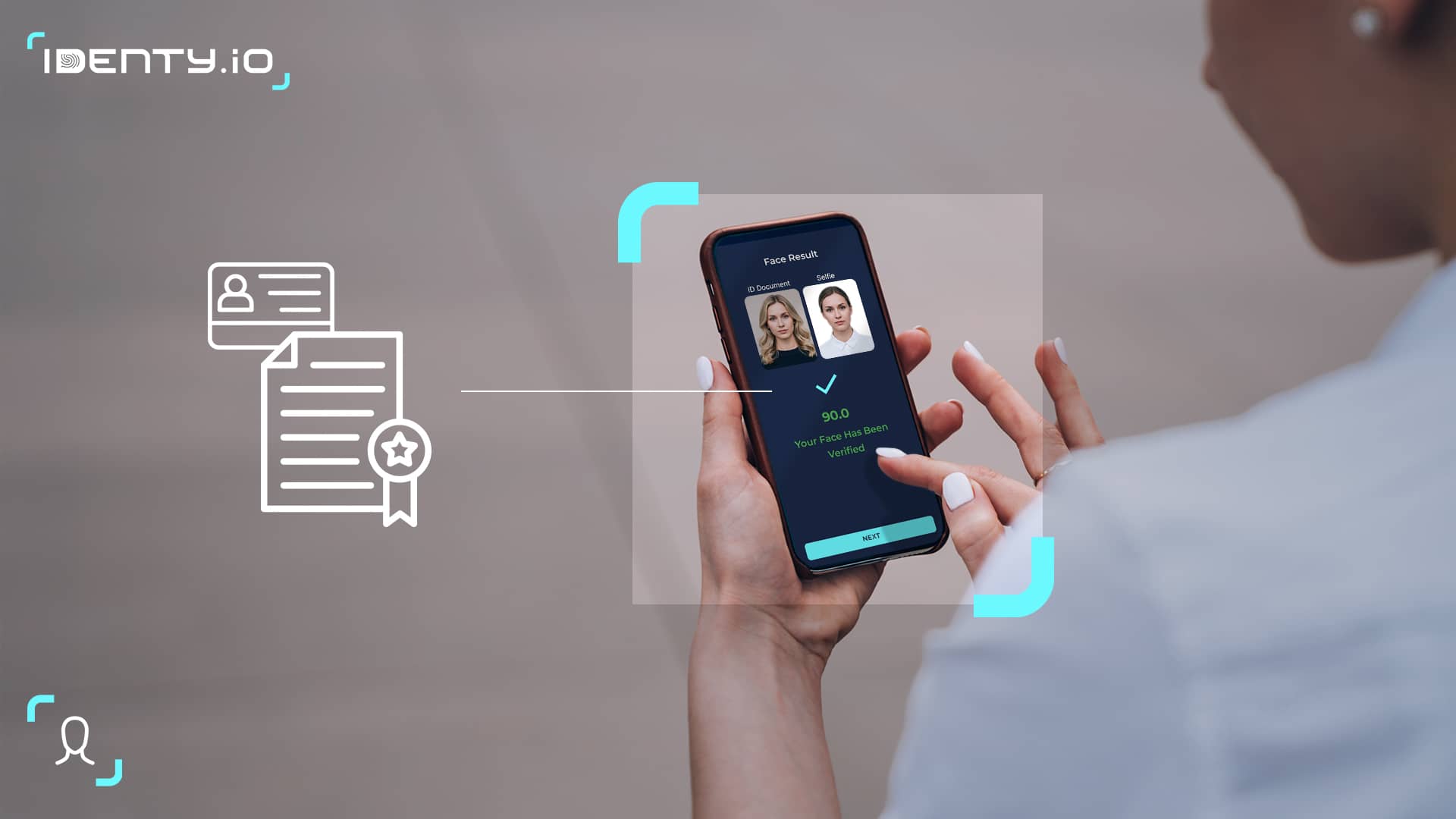
One high-profile example is the Internal Revenue Service’s attempt to use facial recognition for its online taxpayer accounts. In 2021 and 2022, the IRS verified users by matching a selfie to their photo ID before granting access to tax records. This biometric verification aimed to prevent identity theft and fraud in IRS e-services, while also moving toward more privacy-preserving models based on on-device biometric processing and strict data minimization principles, aligned with GDPR and FIDO standards. Following public backlash over privacy concerns, the IRS introduced an alternative path: taxpayers could opt for a live video interview with an agent instead of providing a selfie.
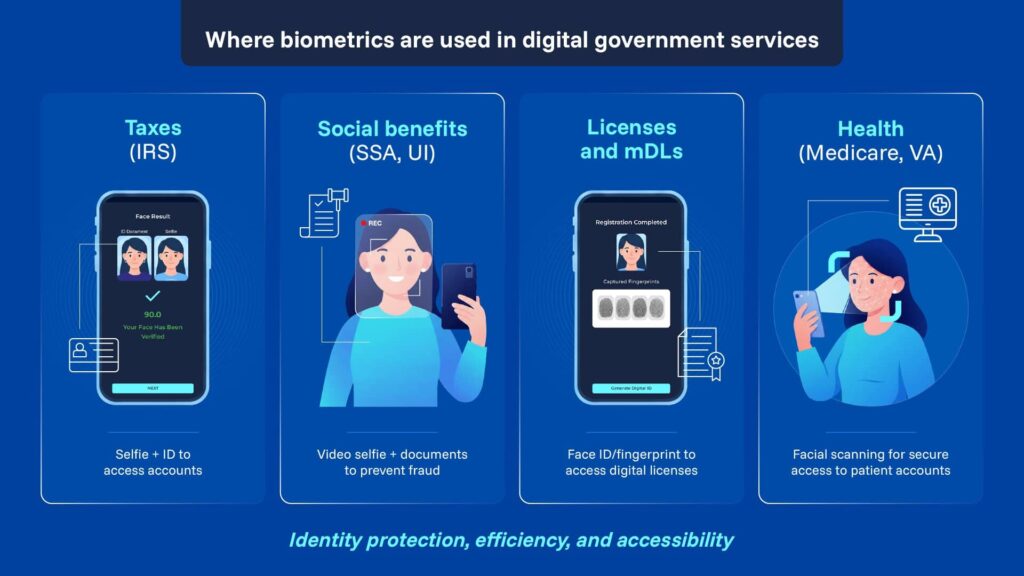
The agency also announced it would transition to Login.gov (a government-run sign-on service) for authentication, reducing reliance on third-party facial recognition. This case illustrates a public-private partnership using facial recognition to achieve high-trust identity assurance for e-government, primarily for fraud prevention and account security.
Get a tailored demo of our contactless biometric platform and see how it fits your specific use case.
Biometrics for governments: Multi-Factor authentication and biometric proofing at the Social Security Administration
The Social Security Administration (SSA) has also moved toward stronger digital identity proofing, including biometrics. Since 2020, SSA has implemented Identity Assurance Level 2 (IAL2) verification for “my Social Security” online accounts. This process uses a combination of document upload and a video selfie (facial recognition) to confirm the user’s identity, meeting federal high-assurance standards. The purpose is to protect benefits and personal data from fraud, as traditional methods like knowledge-based questions proved inadequate against identity thieves. In 2024, SSA announced an overhaul of its verification procedures: users must either verify online (with multi-factor and biometric checks) or appear in person at a field office. This “no phone, no simple PIN” policy was driven by escalating identity theft in benefits (e.g. direct deposit rerouting fraud). SSA has begun transitioning to Login.gov as well, for example, people with older SSA logins were asked to migrate to Login.gov by late 2024. In parallel, Login.gov itself introduced an option to take a photo of an ID and a selfie for identity verification, showing how government platforms are incorporating facial biometric checks internally.
This blend of biometric technology and multi-factor authentication is designed to strengthen security across the SSA’s digital services, reflecting broader best practices in biometrics for governments, while still providing alternative verification options, such as in-person proofing, to ensure accessibility and inclusivity
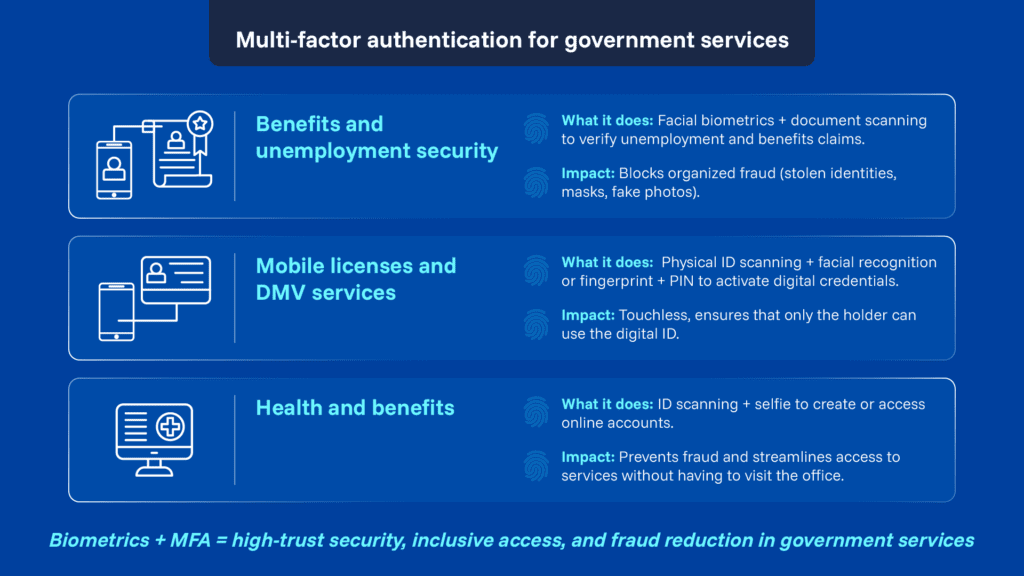
Biometric identity verification in state unemployment and public benefit systems to prevent fraud
Many state agencies administering unemployment insurance (UI) and other benefits deployed biometric identity verification in the past few years, largely to combat the surge in fraud during the COVID-19 pandemic. Over 30 U.S. states adopted biometric verification, which uses facial recognition and document scanning, as a gatekeeper for unemployment claims and other relief services. For example, the California Employment Development Department (EDD) requires claimants to verify identity, uploading a driver’s license and a selfie, to ensure they are not imposters. This contactless biometric process helped block organized fraud (stolen identities, people using masks or look-alike photos) in the UI system.
Get a tailored demo of our contactless biometric platform and see how it fits your specific use case.
Contactless biometric identity verification for DMV Services and mobile Government IDs
Activation screen for Florida’s Smart ID app, a mobile driver’s license that uses biometric verification. Users scan their physical ID and then use facial or fingerprint recognition to activate and use the digital credential.
State Departments of Motor Vehicles (DMVs) have begun rolling out mobile driver’s licenses (mDLs) and digital ID apps that incorporate biometric verification for security. For instance, Florida’s Department of Highway Safety and Motor Vehicles is piloting Florida Smart ID, a smartphone app that serves as a digital driver’s license.
To set up the digital ID, users scan the front and back of their physical license and then must perform a facial recognition step, plus set a PIN, to link the digital credential to their identity. The app offers a contactless way to prove identity or age , at a traffic stop or store , by displaying a QR code for verification after the user unlocks their digital ID with face or fingerprint biometrics. This ensures that only the rightful license holder can present the ID (the biometric check confirms the person using the app is the same person on the license). States like Arizona, Oklahoma, and Delaware have already deployed similar mobile ID solutions. Arizona’s Mobile ID app, for example, stores a digital license that can only be accessed via the phone owner’s Face ID or fingerprint; it even lets users share a limited data subset (e.g. proof of age 21+) without revealing full details. These DMV-driven initiatives illustrate biometric “liveness” verification in action, providing high assurance of someone’s identity remotely, while improving user convenience.
The primary purpose is to extend official IDs into digital form securely: preventing fraud (e.g. a stolen phone won’t yield your ID without your face/fingerprint) and enabling online and contactless transactions that require ID. Public-private partnerships are key here as well, with state DMVs teaming up with tech providers to implement facial verification and other biometrics for identity proofing.
As a result, a growing number of states are creating trusted digital identity platforms where a DMV-issued credential in your phone is as trustworthy as a physical ID card, backed by biometric authentication.
Biometric identity verification for government healthcare and benefits access
Beyond taxation and licensing, biometric identity verification is making inroads in health and social services. A recent example is the Medicare program: in late 2025 the Centers for Medicare & Medicaid Services announced that Medicare.gov will integrate verification for patients by 2026. Medicare beneficiaries will have the option to use the process (scanning an ID and taking a selfie) to create or access their online accounts. The goal is to add a high-trust, multi-factor login that reduces fraud in Medicare’s online services and streamlines user access across agencies. The purpose is both fraud prevention and user convenience: for example, verifying a new Medicare enrollee’s identity via a quick selfie and ID scan can prevent someone else from hijacking their account, while also eliminating the need to visit an office or remember complex IDs. However, agencies are proceeding with caution-offering alternatives like in-person verification for those uncomfortable with biometrics, and subjecting vendors to federal standards and oversight. Overall, in the last 2, 3 years the U.S. government’s digital services have increasingly adopted biometric identity verification (especially facial recognition) as a cornerstone of high-assurance authentication, working a
ongside traditional methods to enhance security and trust in e-government platforms.
Get a tailored demo of our contactless biometric platform and see how it fits your specific use case.
Bibliography
SSA ID verification overhaul sparks backlash over accessibility and security | Biometric Update: https://www.biometricupdate.com/202503/ssa-id-verification-overhaul-sparks-backlash-over-accessibility-and-security
Verify my identity | Login.gov: https://www.login.gov/help/verify-your-identity/overview/
Employment Development Department Issues Unemployment Insurance and Disability Insurance Updates: https://edd.ca.gov/es/about_edd/archived-news-releases-2022/news-22-12/
Florida looks to implement mobile identification options by end of year: https://www.wuft.org/transportation/2022-02-24/florida-looks-to-implement-mobile-identification-options-by-end-of-year
On-demand webinar: Digital identity proofing for public good: The role of the state DMVs | Biometric Update: https://www.biometricupdate.com/202304/on-demand-webinar-digital-identity-proofing-for-public-good-the-role-of-the-state-dmvs
IRS Statement — New features put in place for IRS Online Account registration; process strengthened to ensure privacy and security | Internal Revenue Service: https://www.irs.gov/newsroom/irs-statement-new-features-put-in-place-for-irs-online-account-registration-process-strengthened-to-ensure-privacy-and-security