

Table of Contents
ToggleThe gambling industry is experiencing tremendous growth, with forecasts indicating that the global market will reach $744.8 billion by 2028 according to a recent IGamblingIQ report. However, this expansion also attracts malicious actors seeking to enrich themselves by committing fraud. These criminal activities have also registered an exponential increase in parallel with the gambling industry itself, registering an upsurge of up to 73% from 2022 to the end of 2024. These activities, which are becoming increasingly sophisticated thanks to technological advances such as deepfakes, have an estimated annual cost of $1 billion.
The main entry point for the vast majority of frauds affecting gambling stems from a lack of identity verification. If companies lack a robust identification system, users take advantage of this vulnerability and hide behind their anonymity to commit various types of criminal acts. Thus, the threat environment in the online gambling industry is multiple and complex, as it can impact against the platforms themselves and their users, but also against individuals who have never taken part in these sites, but whose data has been stolen, for example, via phishing.
Bonus abuse is the most common type of fraud in the online gambling industry. In 2025, it accounted for 65.9% of total fraud and cost operators an average of 15% of their annual profits. This type of fraud involves the misuse of welcome promotions offered by online bookmakers to attract new customers. To commit this fraud, a user registers multiple times with false identities to obtain the welcome bonus. These accounts may also be created using stolen or synthetic identities. In some cases, criminals use virtual machines or emulators to simulate the use of different devices, hide their IP address, and create multiple accounts from the same location.
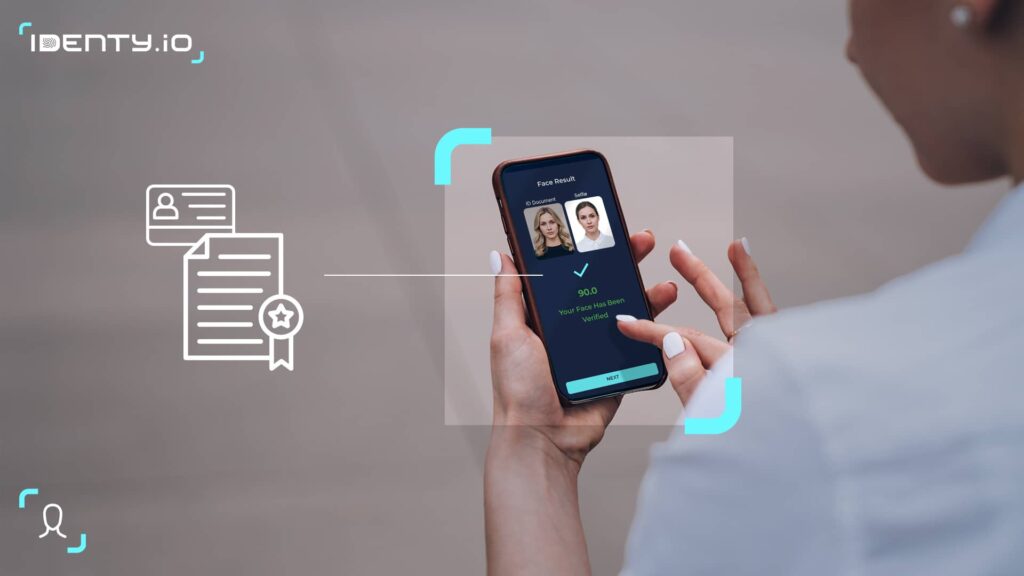
Biometric identification is the most useful and accurate tool to stop this type of gambling fraud because it is a non-transferable form of verification that ensures each user has a unique account and prevents them from creating additional accounts to profit from promotional bonuses. Identy.io’s solutions add an extra layer of security thanks to liveness detection in its contactless biometric scanners. Photos or videos cannot fool it.
Bonus abuse is intrinsically linked to multi-accounting, a technique based on creating multiple accounts to alter the online game in various ways by controlling different accounts. For instance, multi-accounting can be used to circumvent deposit limits or collude in peer-to-peer (P2P) games. In these games, betting can be manipulated by coordinating moves on different accounts to redistribute winnings, inflate jackpots, or force legitimate players to withdraw. Unlike bonus abuse, which profits from casino promotions without requiring active participation in the platform, multi-accounting compromises the integrity of the game and regulatory compliance. This generates economic losses and can affect the perception of legitimate players.
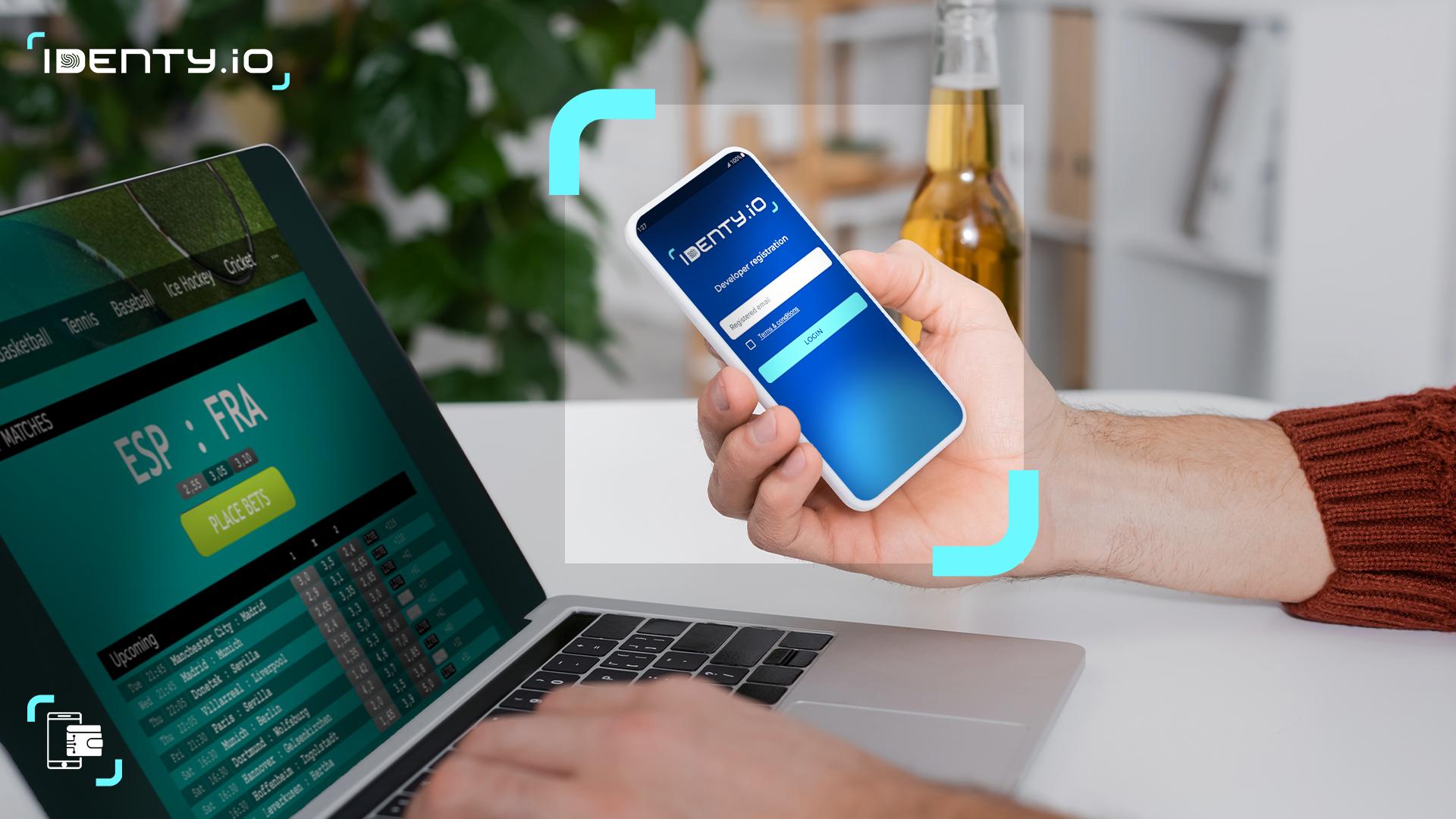
However, preventing fraudsters from using this technique requires the same solution: a robust biometric identification system that links a user to their unique biometric information, even if they change devices. Identy.io’s solution can be easily integrated into the online casino system via SDK and performs the entire identification process to ensure secure, fraud-free use.

Secure access and avoidance of penalties for misuse with biometric verification
Another common type of fraud is account takeover, in which fraudsters steal legitimate users’ data and use it to take control of their accounts. This allows them to engage in malicious activity and misuse. Online casinos, in turn, face the problem of underage users who use false identities to access the site.
The consequences of fraud for igambling platforms are severe and extend beyond direct financial losses, such as bonus abuse, improper chargebacks, and the investigation and mitigation of fraud incidents. They may also face regulatory sanctions for the fraudulent use of their systems for money laundering or for allowing minors to use the site. Not only are fines in the millions of dollars relevant, but they may also lose their license and the ability to operate. If users detect fraudulent practices, they will gradually lose confidence in the platform, perceiving it as insecure or unfair. Consequently, users will abandon the platform, resulting in a loss of income.
Thus, Identy.io offers online gambling platforms a complete identity verification suite through biometrics. This suite incorporates important technological advances, such as passive liveness testing. This feature drastically reduces the possibility of accessing users’ personal information, even when synthetic personalities generated by artificial intelligence or exact replicas of fingerprints in silicone molds are presented. Users do not need to interact with the system in a specific way or carry out predefined actions, such as moving their heads.
Unlike other market alternatives, Identy.io’s solutions store all user information on their cell phones. Users only need a camera and flash, not the latest generation of terminals. This avoids the need to exchange information with cloud servers, reducing the risk of theft or leaks that could be used for online fraud.
Identy.io solutions also comply with the highest security standards, such as those proposed by the US NIST (National Institute of Standards and Technology), by supporting eKYC (“Know Your Customer Digitally”) processes and AML (anti-money laundering) frameworks, as well as meeting the ISO 30107-3 standard on liveness, ensuring the security and accuracy of its portfolio of biometric identity management applications.