
Table of Contents
ToggleIdenty.io launches Identity Risk Assessment on November 11
A few years ago, a fake face was easy to spot: blurry edges, skin that was too smooth, a gaze that didn’t quite match. Today, an AI-generated image or video can get past anyone without raising suspicion — and the gap between what AI can create and what the human eye can detect keeps widening every year.
Three beliefs that no longer hold true
“Fake documents are rare. This doesn’t affect us.”
In reality, 50% of today’s identity fraud already involves forged documents — and AI-generated synthetic documents grew by 311% in a single year (Sumsub, 2024–2025).
“Deepfake fraud is still a small, emerging risk.”
Deepfake fraud attempts multiplied 22-fold in three years, rising from 0.1% to 6.5% of all recorded fraud attempts (Signicat, European Identity & Fraud Report 2025).
“This will level off. It won’t get much worse.”
AI-enabled fraud losses in the U.S. are projected to reach $40 billion by 2027, growing at 32% a year (Deloitte / U.S. government forecast). And in 2025 alone, the FBI reported $893 million in losses directly tied to AI-enabled fraud — the first time in its 26-year history that this category has been broken out separately in its annual report.
Why this affects you directly
Deepfakes are no longer a social media curiosity. They’re used for impersonation, to open accounts in someone else’s name, and to bypass remote identity verification. And when a process relies on someone looking at a face and approving it, that person becomes the only barrier between a genuine identity and fraud.
If you struggle to tell real from fake, you’re not alone: an academic study published in the Journal of Cybersecurity Education, Research and Practice found that nearly 2 out of 3 people (66%) failed to correctly classify a sequence of just 4 videos as real or AI-generated.
The good news is that technology can solve this. Identy.io counters injection attacks with three specific layers of defense:
• Deepfake and injection attack detection built directly into the capture process.
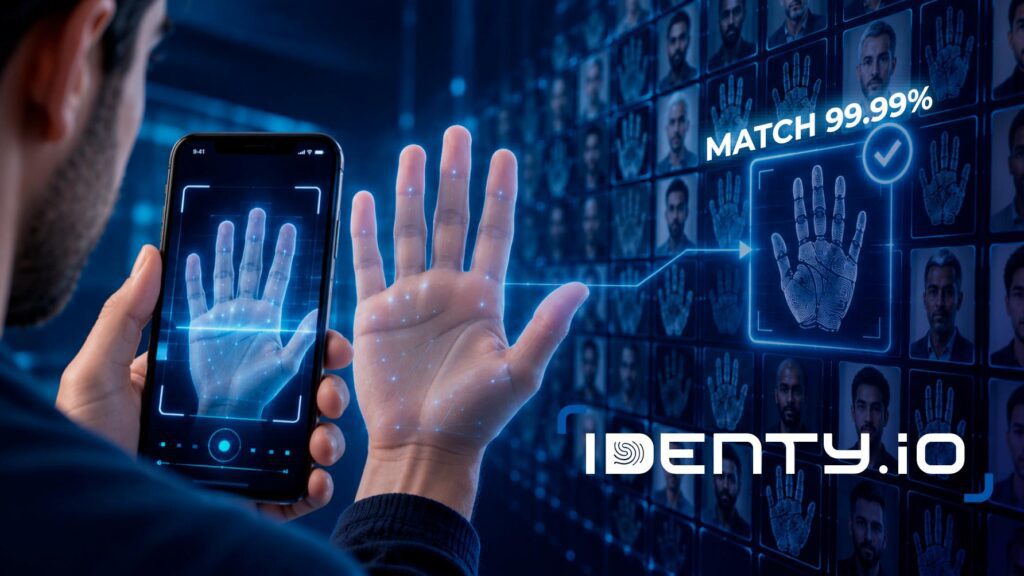
• Multimodal verification: instead of relying on face biometrics alone, fingerprint is added. This matters because facial images are everywhere online and on social media — anyone can get hold of one to attempt fraud. A high-quality fingerprint, on the other hand, is far harder to obtain without direct access to the person.
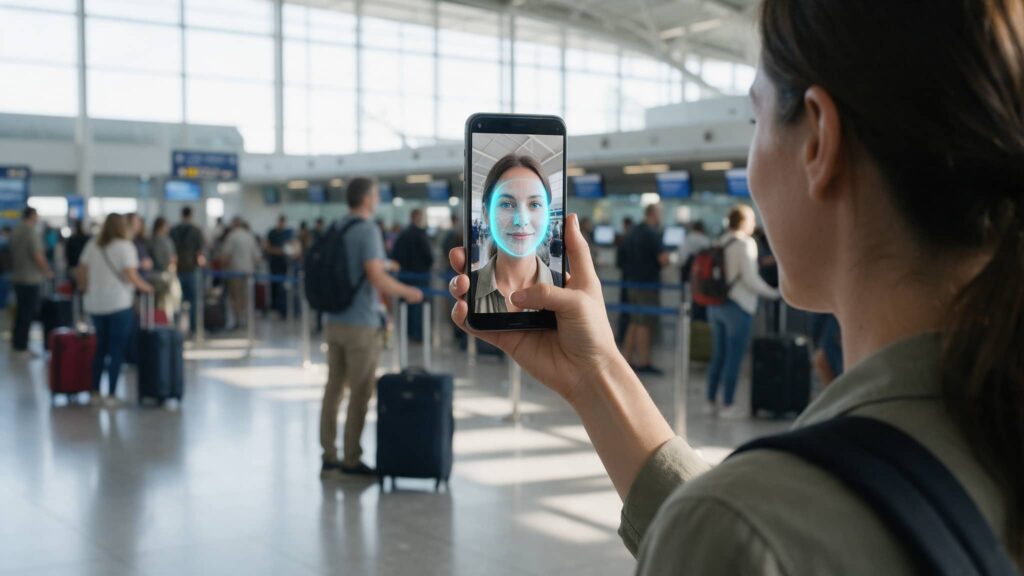
• On-device biometric matching: verification happens on the user’s own phone, not on an external server. This means stealing data isn’t enough to commit fraud — an attacker would need the person’s physical phone in hand, which makes large-scale attacks virtually impossible.
Identity Risk Assessment: measure your own exposure
That’s why we’re launching Identity Risk Assessment: a portal where you can measure, with hard data, how exposed your judgment is to AI-generated content. If your organization still relies on manual review to verify identities, your results will give you a realistic view of that process’s margin of error.
How it works:
- Go to the Identity Risk Assessment site.
- Review each image or video and decide: is it real or AI-generated?
- When you’re done, get your score and risk level: how likely you are to be fooled by fake content.
It takes less than 2 minutes. When you finish, share your score with your team — and compare how prepared everyone really is.
In the end, identity isn’t something technology can invent — it’s something only you can be. That’s why we built this platform: to raise awareness of how important you are in the verification process. No copy, no document, no video can replace you. You are at the center of your own identity. You are the key.
Capture once. Verify with confidence. Reuse with control.