

Table of Contents
ToggleCrime remains one of the world’s most persistent social plagues. While theft and fraud continue to drain the global economy, crimes against personal integrity and freedom have become a top global priority—particularly in Latin America.
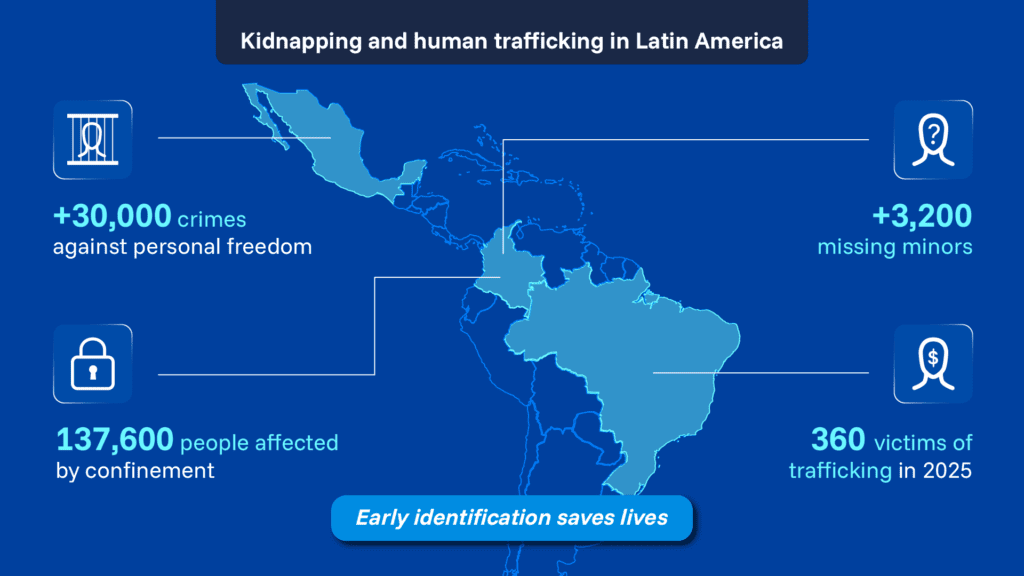
In Mexico, for instance, more than 30,000 crimes against personal freedom were reported last year—a figure that is likely much higher given that many victims never come forward. In Colombia, an estimated 137,600 people suffered from “confinement”—the restriction of free movement by armed or terrorist groups—while over 3,200 minors remain missing according to the Unit for the Search for Persons Deemed as Missing. Meanwhile, in Brazil, human trafficking affected over 360 victims in 2025 alone.
The motives behind these crimes are varied, but most are driven by financial gain. “Express kidnappings” force victims to withdraw large sums from banks or ATMs. In other cases, extortion is the sole goal, while human trafficking seeks to maximize profit through the ongoing exploitation of victims, who often come from vulnerable or undocumented populations.
Biometrics as a Shield Against Crime
In many cases, criminals targeting personal freedom begin their activities online. Social media, dating apps, and online gaming serve as hunting grounds where predators lure potential victims through deception—often offering fake jobs or financial support—to obtain personal information that is later used for extortion.
In response to this social crisis, biometric technology is emerging as a global security standard to protect personal freedom in high-risk situations. Identy.io works alongside social organizations such as My Family ID and The Exodus Road, providing proprietary technology with a noble purpose: reducing crime and facilitating the rescue of victims.
One of the biggest hurdles when reporting a missing family member—whether due to kidnapping or trafficking—is providing actionable data that allows for identification if they cross a border or conduct a financial transaction. This is especially difficult because criminals frequently issue forged documents or clone a victim’s identity to move them far from their home. How can we fight back?
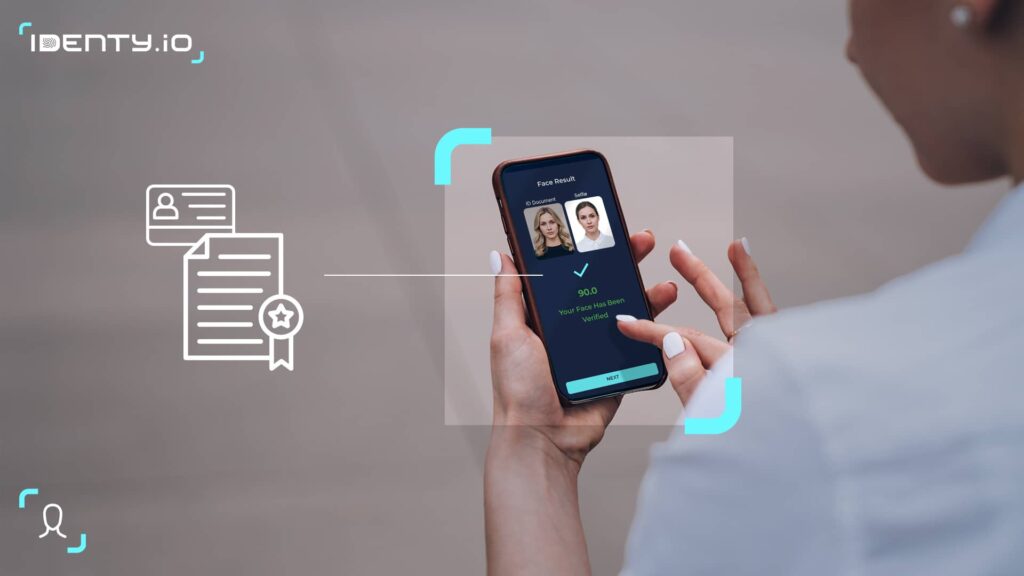
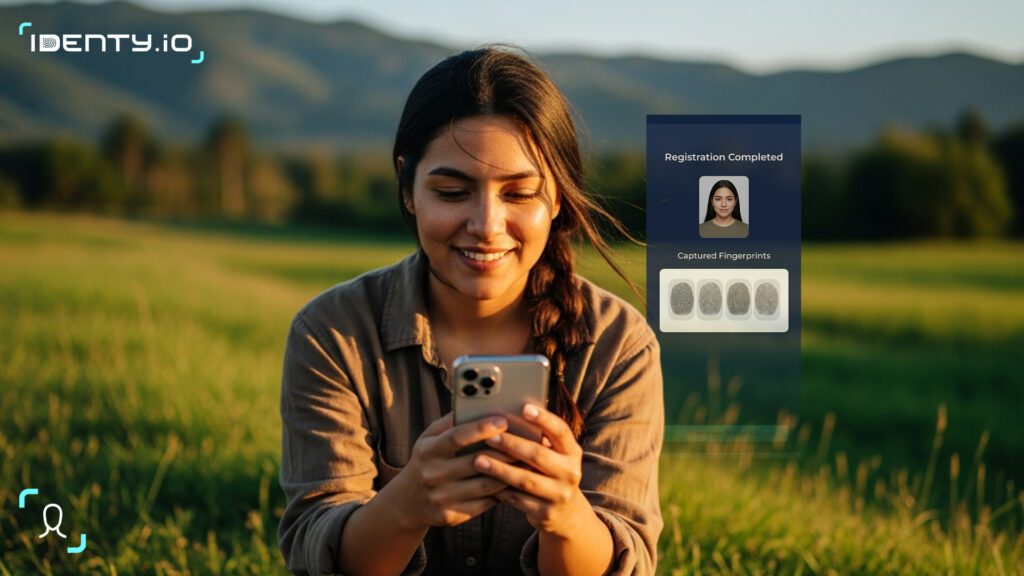
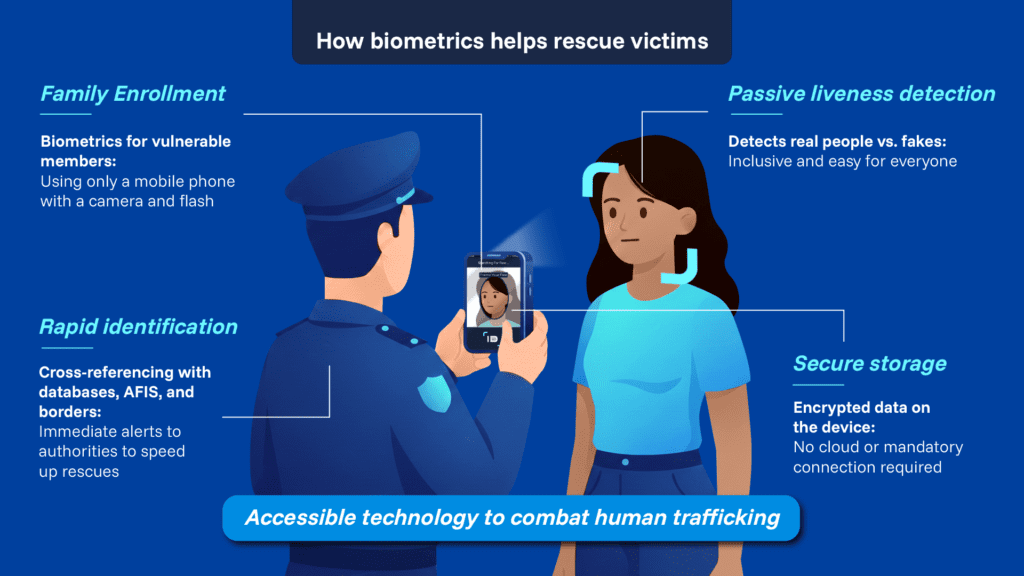
Identy.io technology allows families to capture the biometric information of all their members, with a special focus on minors, the elderly, and individuals with intellectual disabilities. Using only a mobile phone equipped with a camera and flash, families can securely store digital credentials on their own devices. If a disappearance occurs, these credentials can be handed over to law enforcement. These captured records are processed and encrypted on the phone and are fully compatible with Automated Fingerprint Identification Systems (AFIS) and government databases, enabling real-time cross-referencing.
The Key to Reducing Rescue Times
In critical situations, every minute saved can be the difference between a successful rescue and a prolonged tragedy. By cross-referencing biometric data against centralized government and public databases, authorities can accelerate identification—even if the victim’s identity has been tampered with or if they have been involved in an accident.
Furthermore, credentials captured by Identy.io can be checked against border control databases or shelter records. This triggers alerts for authorities the moment a reported missing person is detected, regardless of the physical documentation they carry. The technology also supports “age progression,” allowing authorities to recreate what a victim’s face might look like after time has passed if a kidnapping is unfortunately prolonged.
Technology Within Everyone’s Reach
For biometric technology to be truly effective, it must be accessible to everyone, regardless of age, physical condition, or technical skill. Identy.io’s solutions prioritize ease of use through Passive Liveness Detection. Unlike other market solutions, this technology authenticates a user without requiring specific actions like turning the head or blinking.
Using AI, the system detects subtle skin or eye movements and how light reflects off the surface to distinguish a real person from a digital double, high-definition image, or silicone mold. This is vital when capturing biometric data from small children, the elderly, or people with intellectual disabilities who may struggle with complex instructions.
Additionally, Identy.io processes all biometric data on the device itself. This means fingerprints can be captured anywhere without the need for specialized scanners or high-speed internet. This is a game-changer for remote regions and vulnerable communities where connectivity is often unreliable.
Finally, a high-end smartphone isn’t necessary. Any device with a camera (5MP or higher) and a flash can capture biometric data. By removing the technological barrier, anyone—regardless of their economic status or location—can protect their loved ones. Technology continues to serve people, ensuring the most basic right of all: personal integrity.