

Table of Contents
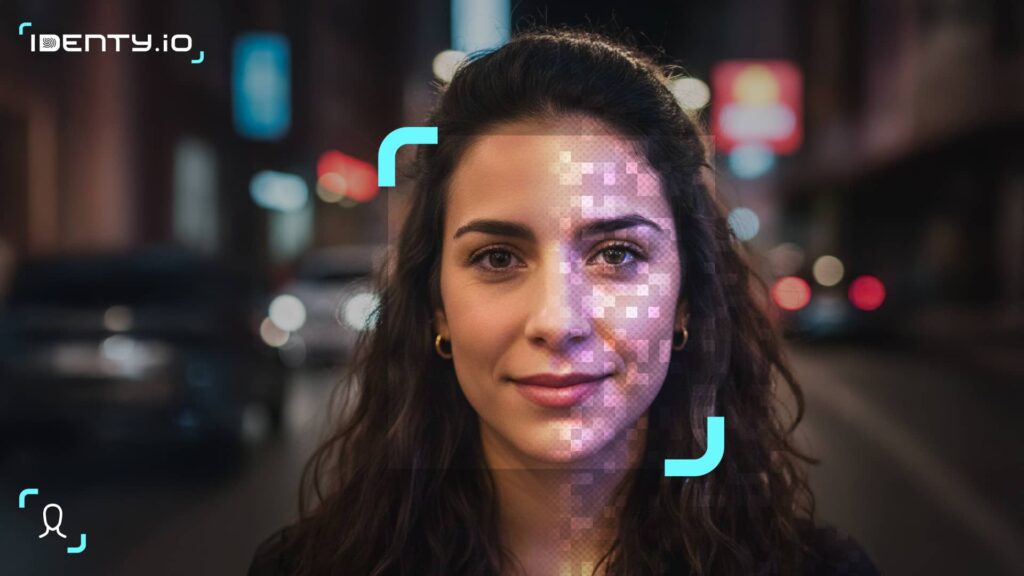
ToggleIn a world where digital onboarding, banking, and authentication are rapidly becoming facially driven, ensuring that the face presented during biometric verification belongs to a live person, not a photo, video, or deepfake, is critical. This is the role of face liveness detection. It confirms that the camera is capturing a real human being in real time, helping prevent identity fraud, account takeovers, and regulatory breaches.
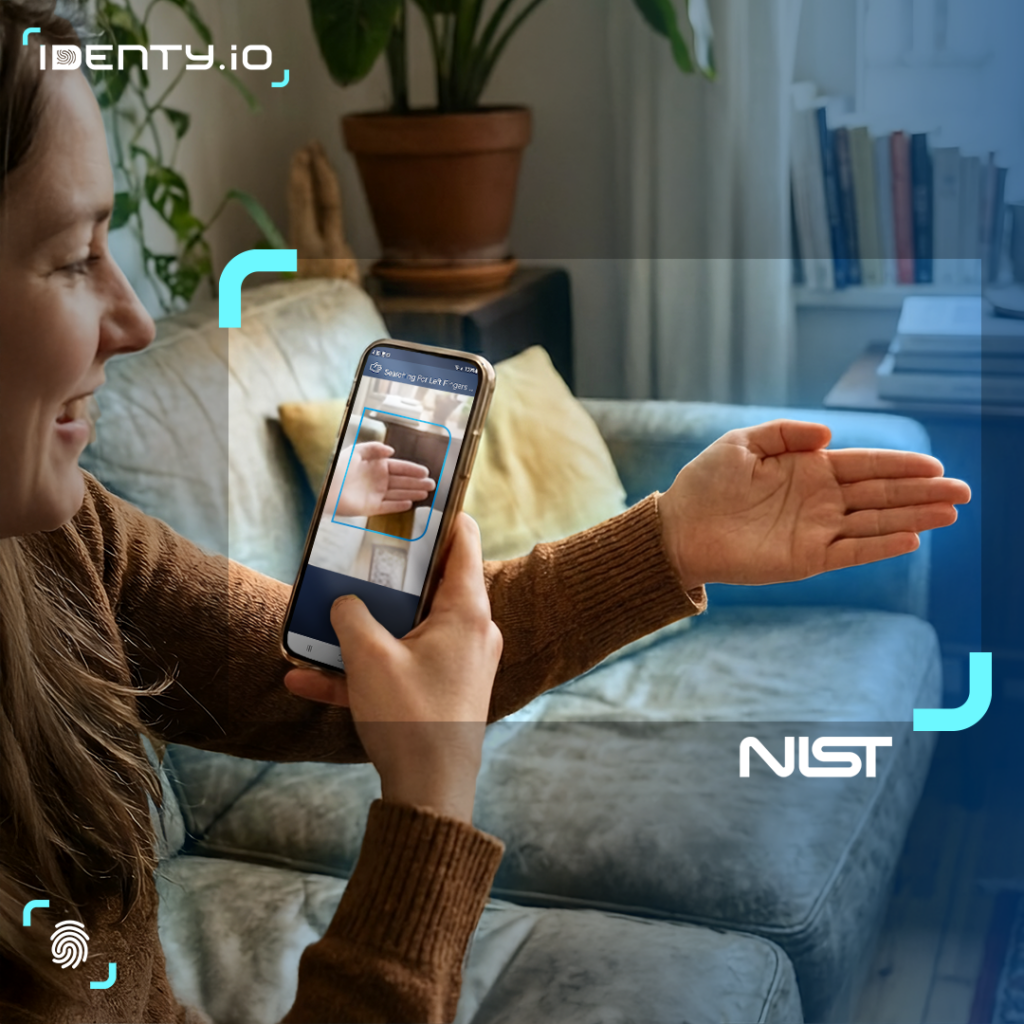
Liveness detection has become a standard part of face recognition workflows, particularly in sectors where trust and compliance are essential. Fraudulent attacks on biometric solutions are growing more advanced, using high-resolution printouts, AI-generated media, and 3D masks. Liveness detection helps block these attempts and complements other biometric methods like fingerprint biometric recognition, enabling organizations to meet security, privacy, and user experience goals simultaneously.
Deepfakes are becoming more sophisticated, increasing the risk of fraud and identity manipulation in digital environments. Download our 10-step guide to learn how to detect threats early and protect your organization with proven best practices.
What is face liveness detection?
Face liveness detection is a security process used in facial recognition systems to determine whether the presented face is live and physically present. The goal is to prevent “presentation attacks,” where attackers try to fool systems using fake images, videos, masks, or synthetic media.
There are two primary types of liveness detection:
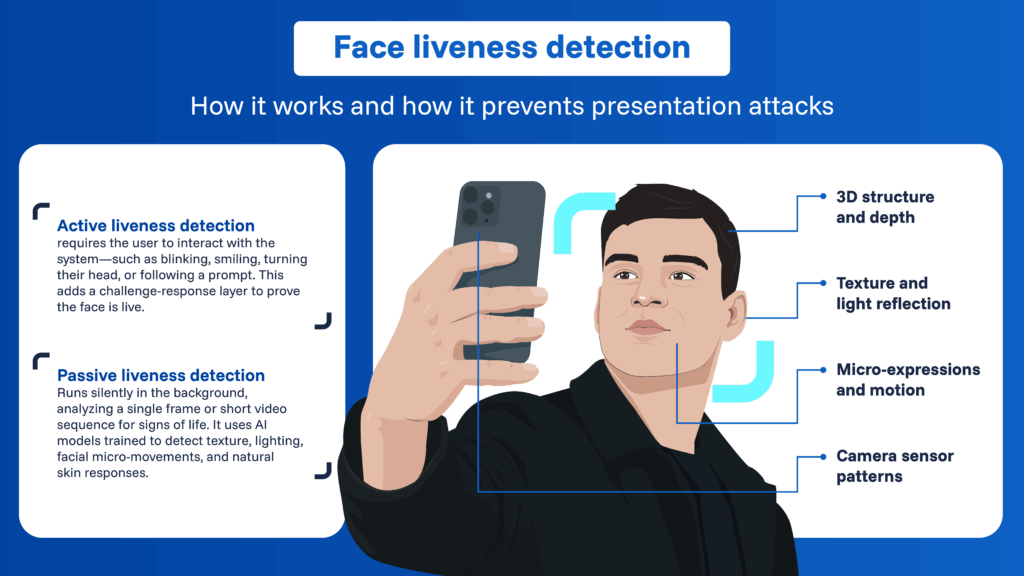
- Active liveness detection: requires the user to interact with the system—such as blinking, smiling, turning their head, or following a prompt. This adds a challenge-response layer to prove the face is live.
- Passive liveness detection: runs silently in the background, analyzing a single frame or short video sequence for signs of life. It uses AI models trained to detect texture, lighting, facial micro-movements, and natural skin responses.
Some vendors combine both approaches, starting with passive detection and escalating to active challenges if needed. This improves both usability and fraud prevention.
Learn how Identy.io strengthened mobile security in the banking sector with advanced fingerprint biometrics and seamless user experience.
How does liveness detection work?
Modern liveness detection systems use artificial intelligence and computer vision to analyze multiple aspects of the image or video feed:
- 3D structure and depth: A live human face has depth that changes slightly as the person or camera moves. Flat photos do not. Even with a standard camera, systems can infer depth by analyzing perspective shifts in facial landmarks.
- Texture and light reflection: Real skin reflects light differently than paper, plastic, or screens. AI models detect inconsistencies in how surfaces reflect under ambient or device lighting.
- Micro-expressions and motion: Subtle, involuntary facial movements—like eye micro-blinks, nostril flares, or lip tremors—signal that the face is alive. Video replays or masks often fail to reproduce these accurately.
- Camera sensor patterns: Some systems identify screen replays or digital injections by analyzing sensor-level noise or anomalies in the video stream.
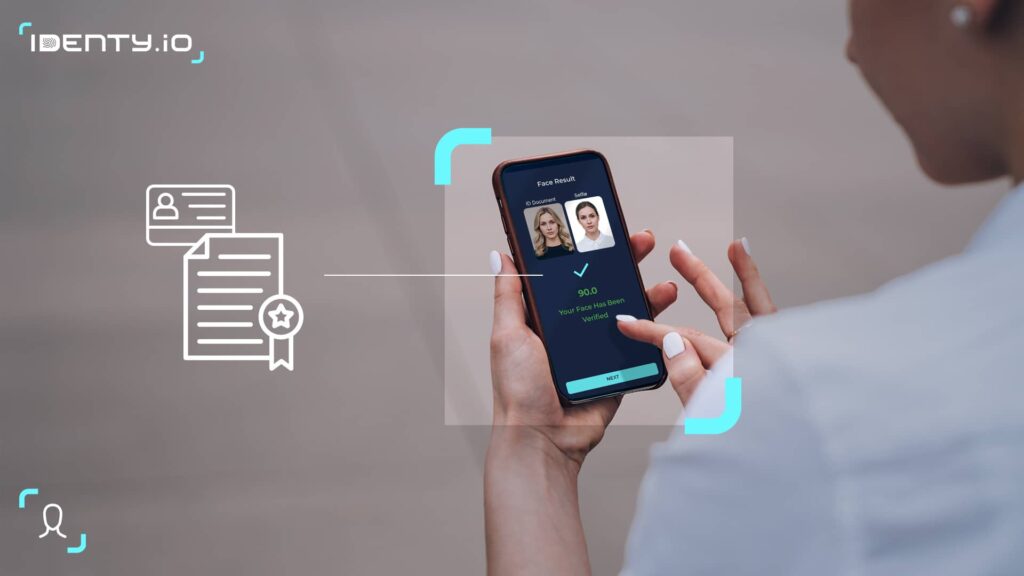
By combining hundreds of these signals, AI models assign a liveness score to the session. If the score falls below a threshold, access is denied.
What kinds of fraud does it prevent?
Face liveness detection defends against multiple types of attacks, including:
- Printed photos: Even high-quality printouts fail due to lack of depth and motion.
- Video replays: Pre-recorded footage of a person’s face may look realistic but lacks spontaneity and natural behavior.
- 3D masks: Silicone or resin masks can mimic facial features but usually miss key thermal, textural, or behavioral cues.
- Deepfakes: AI-generated videos or synthetic faces can be convincing but often break under temporal or texture analysis.
These spoofing techniques are increasingly easy to deploy, so liveness detection is essential to maintaining trust in face-based authentication.
How does it complement fingerprint authentication?
Fingerprint biometrics are widely regarded as a reliable and mature form of authentication, especially in controlled environments. However, as threats evolve, many systems now rely on multi-factor or multi-modal authentication, combining different biometric and non-biometric factors.
Face liveness detection fits naturally into this model. It does not replace fingerprint scanning but adds a layer of active fraud resistance. While modern fingerprint sensors often include their own liveness features (e.g., detecting sweat pores or pulse), face liveness detection offers the advantage of remote usability—ideal for mobile onboarding or customer authentication.
Used together, fingerprint and face liveness checks create a robust identity framework that is difficult to spoof in practice.
Get a tailored demo of our contactless biometric platform and see how it fits your specific use case.
Why does this matter for CTOs?
For CTOs building secure digital platforms, biometric security is no longer optional. Regulations like eIDAS, PSD2, and GDPR increasingly expect companies to verify users in a secure, consent-driven, and fraud-resistant manner.
Face liveness detection:
- Enhances compliance by meeting presentation attack detection (PAD) standards such as ISO/IEC 30107-3
- Reduces fraud losses from account takeovers and synthetic identity attacks
- Protects user privacy by limiting exposure to data leaks via spoofed sessions
- Boosts trust in digital onboarding, KYC, and passwordless authentication flows
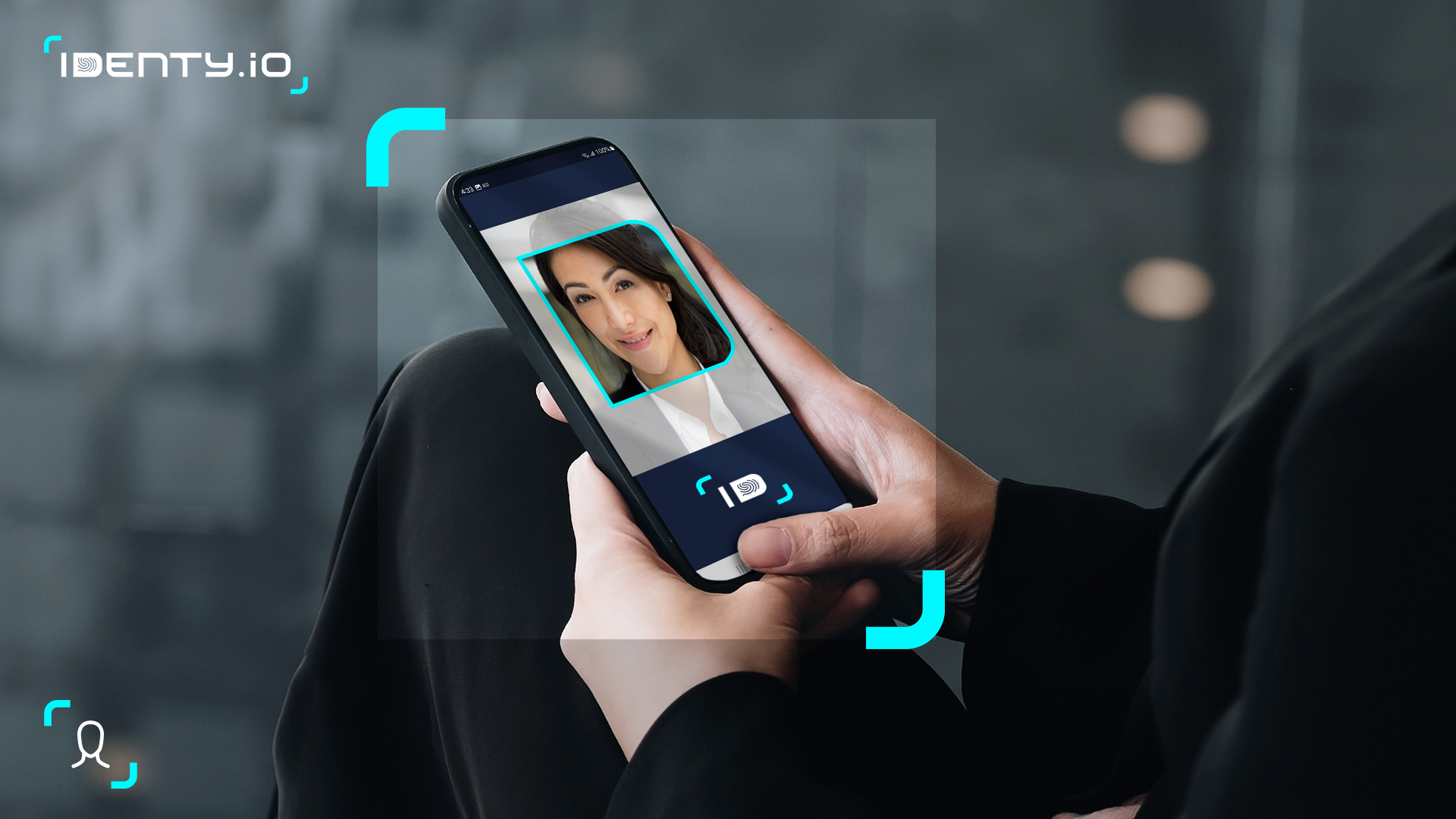
By selecting a liveness detection solution that works with commodity hardware (like mobile phone cameras), CTOs can improve security without adding friction to the user experience.
Face liveness detection is a vital tool for modern biometric systems. It stops attackers from using photos, videos, or synthetic faces to impersonate users. By combining AI, camera data, and behavioral signals, it verifies that a live human is present, without requiring dedicated hardware. Most importantly, it complements fingerprint and other biometrics to create stronger, fraud-resistant identity systems.
In an era where deepfakes and biometric attacks are rapidly evolving, liveness detection is a must-have layer in any security-conscious digital identity strategy.
References: