Table of Contents
ToggleIn an age of data breaches and identity theft, traditional passwords no longer provide enough protection. As digital security evolves, multimodal biometrics, the use of two or more biometric identifiers, are emerging as the future of secure authentication.
What are multimodal biometrics?
Unlike unimodal systems that rely on a single identifier (like a fingerprint or face), multimodal biometric systems combine multiple forms of biometric data, such as:
- Fingerprint biometrics
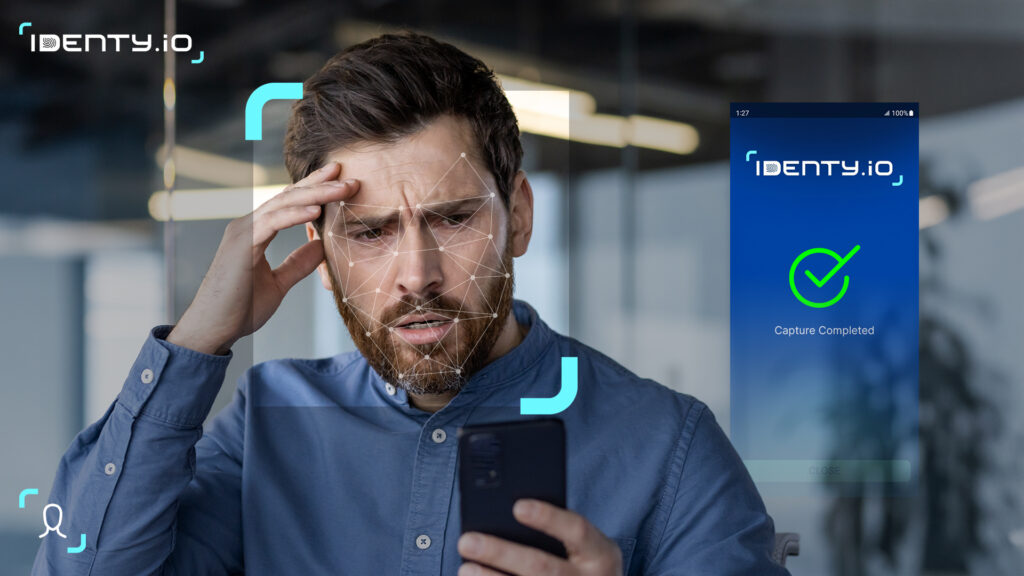
- Facial recognition software
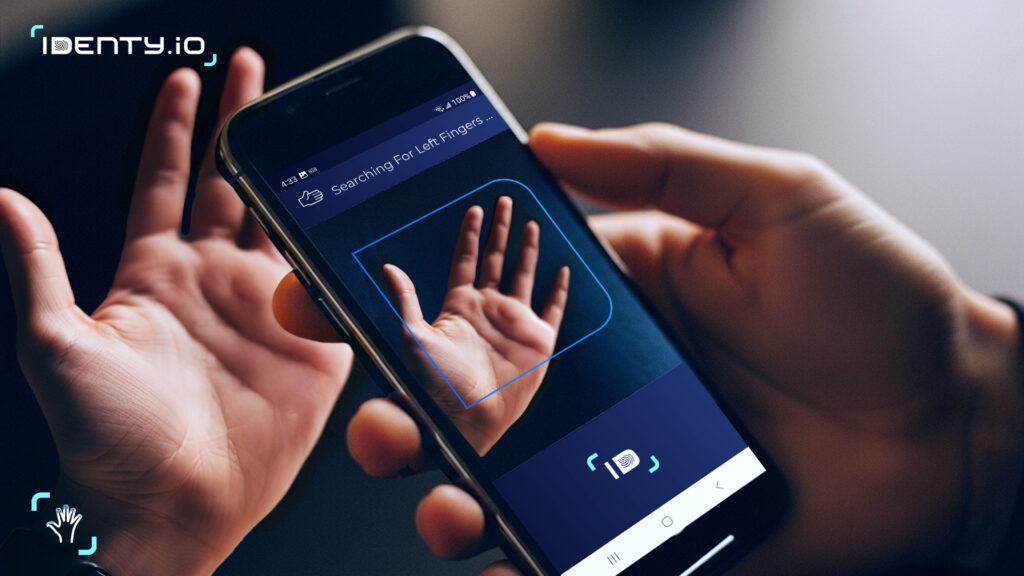
- Palm biometrics
- Behavioral patterns (typing rhythm, gait, etc.)
By requiring more than one form of identification, these systems drastically reduce the chances of identity fraud or unauthorized access.
Why multimodal is more secure
Multimodal biometrics solve some of the biggest challenges in authentication:
- Reduced false positives/negatives: using multiple inputs minimizes errors that may occur with a single biometric trait
- Resistance to spoofing: it’s harder for attackers to mimic two or more traits than just one
- Fallback options: if one modality fails (e.g. wet finger), another can be used (e.g. facial scan), increasing system reliability
This layered security makes multimodal systems particularly useful in high-risk environments or for protecting sensitive data.
Key technologies in use
Modern multimodal biometric systems often combine:
- Fingerprint + face ID: common on smartphones and laptops
- Voice + behavioral biometrics: used in call centers and banking apps
- Iris scan + fingerprint: adopted in national ID systems and border control
Emerging technologies include heart-rate-based authentication, palm-vein scans, and AI-enhanced facial recognition, which improve accuracy even in challenging lighting or noisy conditions.
Multimodal biometrics: Real-world applications
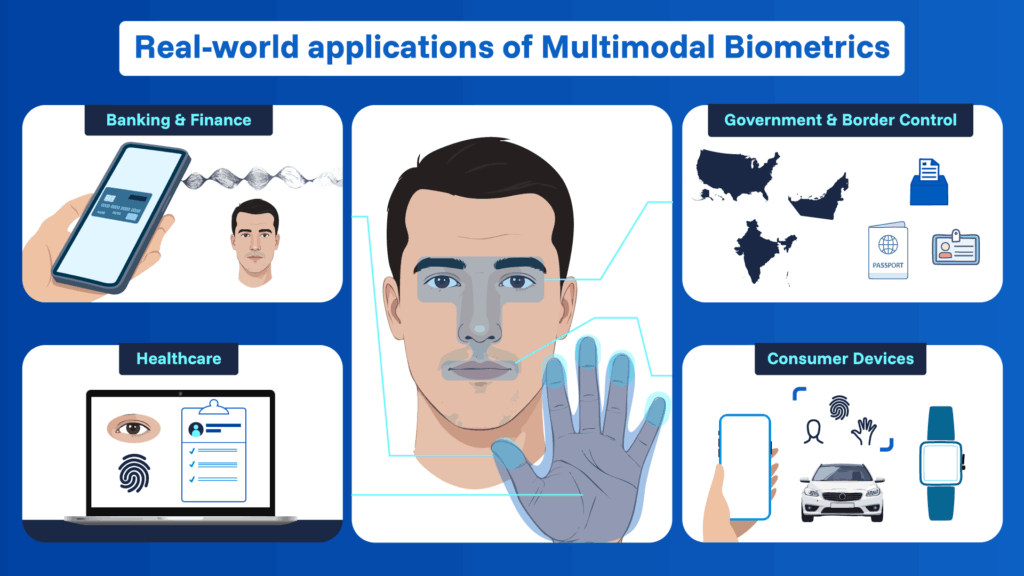
Multimodal biometrics are already being used across sectors:
Multimodal biometrics on Banking and finance
Banks use voice and facial recognition together to verify customers during mobile transactions or phone calls. This prevents fraud while offering a seamless user experience.
Multimodal biometrics on Healthcare
Hospitals combine fingerprint and iris scanning to identify patients accurately and protect medical records from unauthorized access.
Multimodal biometrics on Government and border control
Countries like India, the US, and the UAE have adopted multimodal biometric ID systems for national identification, voter registration, and passport control.
Multimodal biometrics on Consumer devices
Phones, smartwatches, and even vehicles now integrate multiple biometrics, offering users both security and convenience.
Despite the advantages, some challenges remain:
- Privacy concerns: biometric data is sensitive. If compromised, it can’t be changed like a password
- Cost: installing and maintaining multi-sensor systems is more expensive than single-biometric setups
- Standardization: different vendors may use incompatible systems, making integration complex
To address these issues, developers must follow strict data protection laws (like GDPR or CCPA) and prioritize ethical, transparent data use.
The future of digital authentication
As deepfakes, synthetic identities, and cyberattacks grow more sophisticated, relying on a single security layer is no longer enough. Biometrics solutions are not only harder to bypass but also enable frictionless security, keeping users safe without disrupting their digital experience.
With advances in AI, edge computing, and mobile sensors, we can expect faster, more accurate, and more privacy-preserving multimodal systems in the coming years.
Multimodal biometrics are paving the way toward a passwordless, secure digital future. Whether you’re a business, developer, or tech-savvy user, now is the time to explore how these technologies can protect your assets and streamline authentication.
Ready to upgrade your security?
Start evaluating biometric authentication options today to stay ahead of evolving cyber threats.
Bibliography
- National Institute of Standards and Technology (NIST). “Face Recognition Vendor Test (FRVT)”
- Biometric Update – Daily news and research on biometric systems. https://www.biometricupdate.com/
- Grand View Research –“Biometric Technology Market (2023 – 2030)”. https://www.grandviewresearch.com/industry-analysis/biometrics-industry