


Table of Contents
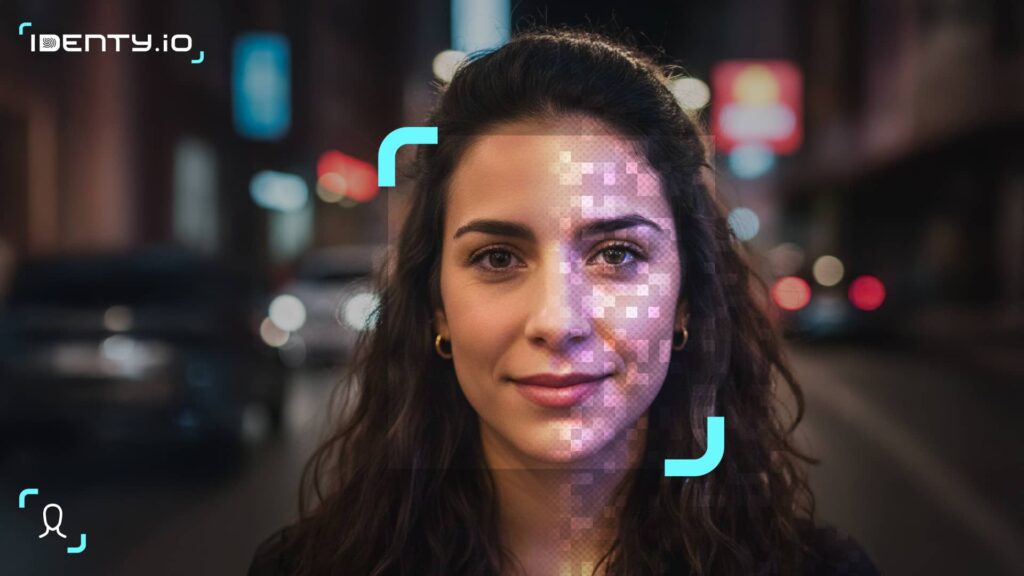
ToggleDeepfakes, AI-generated images, video or audio mimicking real people, threaten digital trust across fintech, banking, government and insurance sectors. Sophisticated fraudsters use deepfakes for voice or video phishing, identity theft and impersonation, undermining user confidence and business credibility. Organizations must deploy real-time detection tools and employee training to mitigate these risks. Leading solutions combine advanced AI liveness checks with smooth user experience, meet regulatory standards and scale to millions of transactions. For example, the Identy.io mobile biometric platform integrates on-device deepfake detection alongside passive liveness checks. Certified identity frameworks like the FIDO Alliance Face Verification program now explicitly evaluate deepfake resistance. This report analyzes threat trends and technology options, focusing on business impact, compliance and selecting “best deepfake detection software” for enterprise-grade identity security.
Deepfakes are becoming more sophisticated, increasing the risk of fraud and identity manipulation in digital environments. Download our 10-step guide to learn how to detect threats early and protect your organization with proven best practices.
Business risks of Deepfake fraud
Generative AI has dramatically expanded the scale and realism of identity fraud. Recent industry research warns that deepfakes have “dramatically undermined trust in digital media and digital identity verification, with profound implications for fraud”. Synthetic identity attacks ,for example, a fake CEO video call authorizing a bogus wire transfer, can cost firms millions. Consumers also express growing unease: a FIDO study found over half of surveyed users worry about deepfakes in online identity checks, even as many prefer face biometrics for sensitive transactions. In regulated fields like finance, weak identity verification exposes firms to compliance violations (e.g. KYC/AML rules) and reputational damage. In short, deepfakes threaten business continuity, brand trust and regulatory standing. To protect these assets, enterprises must layer defense-in-depth: not only detecting manipulation but also training staff to recognize AI-augmented social engineering.
Real-Time Deepfake detection and protection
Cutting-edge solutions use AI to scan live audio/video streams and flag fakes on the fly. For instance, some tools apply real-time deepfake protection software that analyzes video calls frame-by-frame to spot inconsistencies (blinks out of sync, audio lip-sync errors, etc.). One provider describes its tool as instantly verifying “whether you’re speaking with a real person or a deepfake – in real time, with just one click”. In practice, detection may involve multi-layer analysis (visual, temporal and even blockchain-based provenance). The goal is seamless integration: security runs passively in the background so genuine users aren’t disrupted, while attackers are blocked.
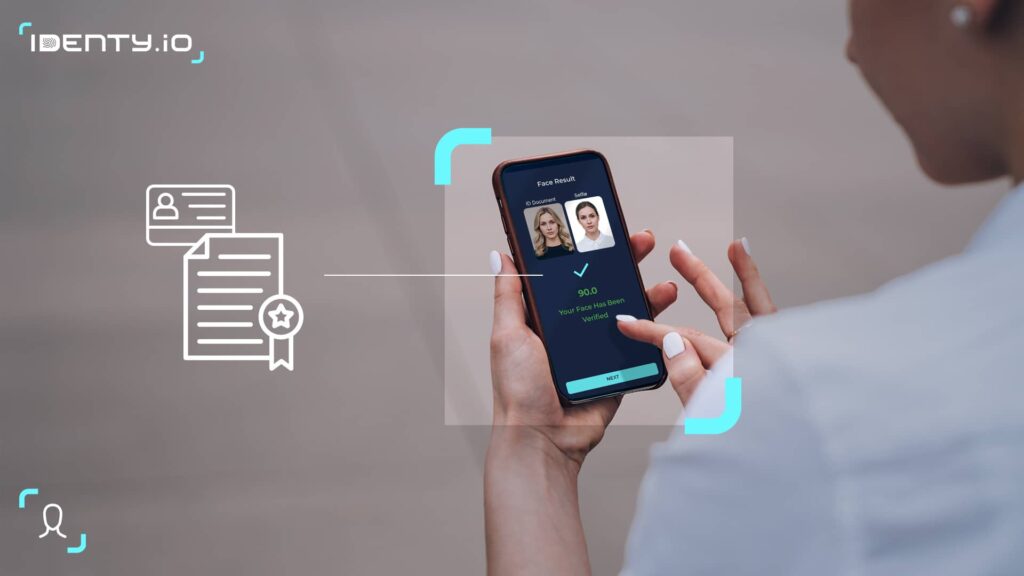
Today’s mobile identity platforms illustrate this approach. For example, Identy.io’s mobile biometric software includes a deepfake detection layer that performs visual and temporal analysis on-device to identify AI-generated content. It even detects “injection” attacks (where fake media is inserted into the video stream) and combines this with passive liveness checks. By processing everything on the user’s device, Identy.io minimizes delays and data exposure, demonstrating that robust protection and good user experience can coexist. Any evaluation of best deepfake detection software should therefore consider factors like detection accuracy, latency and impact on legitimate users, alongside threat coverage (e.g. face, voice, and video channels).
Get a tailored demo of our contactless biometric platform and see how it fits your specific use case.
Deepfake phishing simulation training
In parallel with technical detection, firms are proactively training employees. Deepfake phishing simulation software lets security teams safely rehearse AI-powered voice/video attacks. For example, a simulated workflow might deliver a phishing email directing an employee into a fake video call, where a cloned-voice avatar urges an urgent action. Users who fall for it get immediate micro-training to recognize such scams in the future. As one industry guide notes, this specialized training “safely rehearses AI-generated voice and video social-engineering attacks”. By integrating these simulations into broader security awareness programs, organizations build human resilience to deepfake lures. While these tools don’t detect live fraud, they are an important part of risk management, transforming employees into an informed last line of defense.
Compliance and industry standards
Given regulatory scrutiny of biometric ID, deepfake defenses must align with standards. Bodies like the EU Agency for Cybersecurity (ENISA) already report rising deepfake “injection attacks” in remote identity proofing. The FIDO Alliance has launched a Face Verification certification that explicitly tests for deepfake/spoof resilience. Certified solutions must meet ISO standards (e.g. ISO/IEC 30107 for liveness) and demonstrate low false acceptance even under adversarial AI attacks. This gives assurance to CMOs and CTOs that vendor claims are independently validated. For example, Identy.io designs its products around these criteria, boasting “on-device AI for detecting spoofing, deepfakes, and injection attacks and compliance with NIST and ISO guidelines.
Moreover, data protection and KYC regulations (GDPR, PSD2, etc.) favor solutions that minimize personal data use. On-device processing, as Identy.io emphasizes, means raw biometric data never leaves the user’s device. This architecture both reduces breach risk and often meets privacy-by-design expectations. When selecting a system, security leaders should verify alignment with relevant standards: e.g. NIST 800-63-3 for digital ID, ISO 30107 for presentation attack detection, and FIDO2/WebAuthn for passwordless flows. Compliance-ready architectures avoid future rework as rules evolve.
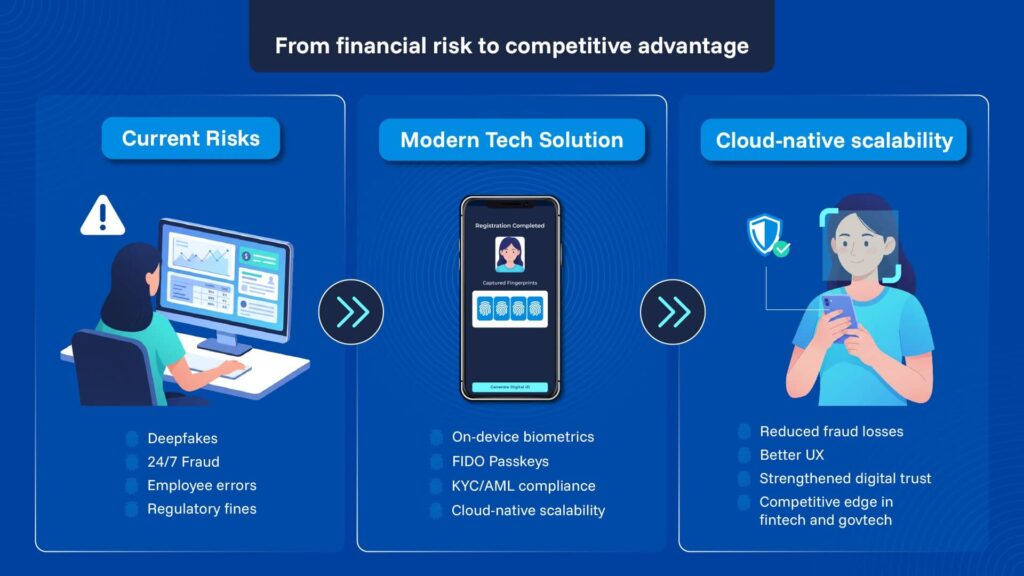
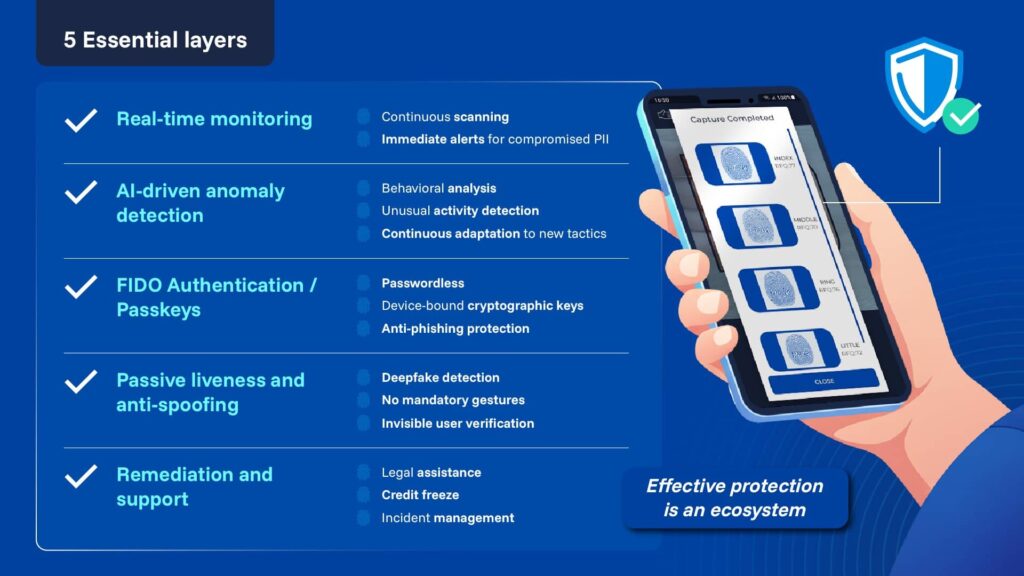
The best deepfake detection solutions strike the right balance between security, trust and usability. They use a layered defense, combining passive liveness and spoof checks, AI analysis of media streams, and employee training, to address sophisticated impersonations. They scale to millions of transactions without adding latency or false alerts that frustrate users. Critically, they are built on open standards and certifications, assuring regulators and customers alike.
Business leaders should compare options on these dimensions, not by brand name. As an example, Identy.io’s platform shows how deepfake countermeasures can be built into a smooth onboarding flow. A digital wallet or banking app using such a solution can verify identities in seconds while flagging fake videos in real time. Ultimately, investing in advanced detection software protects revenue and reputation. Enterprises that proactively adopt these technologies demonstrate commitment to digital trust and prepare for an AI-driven threat landscape.
Get a tailored demo of our contactless biometric platform and see how it fits your specific use case.
Bibliography
- FIDO Alliance
- European Union Agency for Cybersecurity (ENISA)
- National Institute of Standards and Technology (NIST)
- ISO/IEC 30107 standards
- BiometricUpdate news
- MIT Technology