

Capture Trust

Identy.io provides biometric authentication on mobile phones, for secure and user-friendly identity verification, enabling government and corporate customers to grow operations with a cost-effective suite of products.

Digital identity verification: Use cases in banks

Banks and fintechs are rapidly digitizing their services, making robust digital identity verification essential to prevent fraud and comply with regulations. As financial transactions move online, verifying that each customer is who they claim to be is crucial for meeting Know Your Customer (KYC) requirements and protecting against identity theft.

What is digital proof of identity and how to apply it in KYC

Identity fraud is no longer a back-office concern. With the EU’s AMLR (Anti-Money Laundering Regulation) entering its implementation phase and eIDAS 2.0 rolling out the European Digital Identity Wallet across Member States, the way organizations verify users has changed for good. At the same time, generative AI has lowered the

When machines see too much: protecting emotions in face recognition

Our faces are becoming digital keys. They unlock phones, let us board planes, and grant us access to secure spaces. Facial recognition is fast becoming central to how we prove who we are in the digital age. But there’s a hidden twist: modern systems don’t just recognize identity—they can also

Fingerprint biometric capture

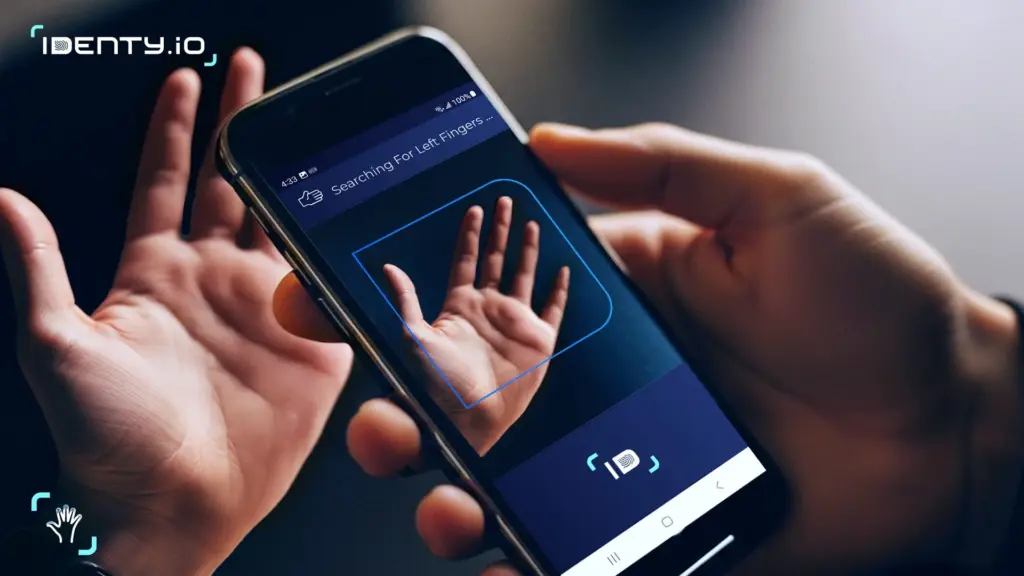
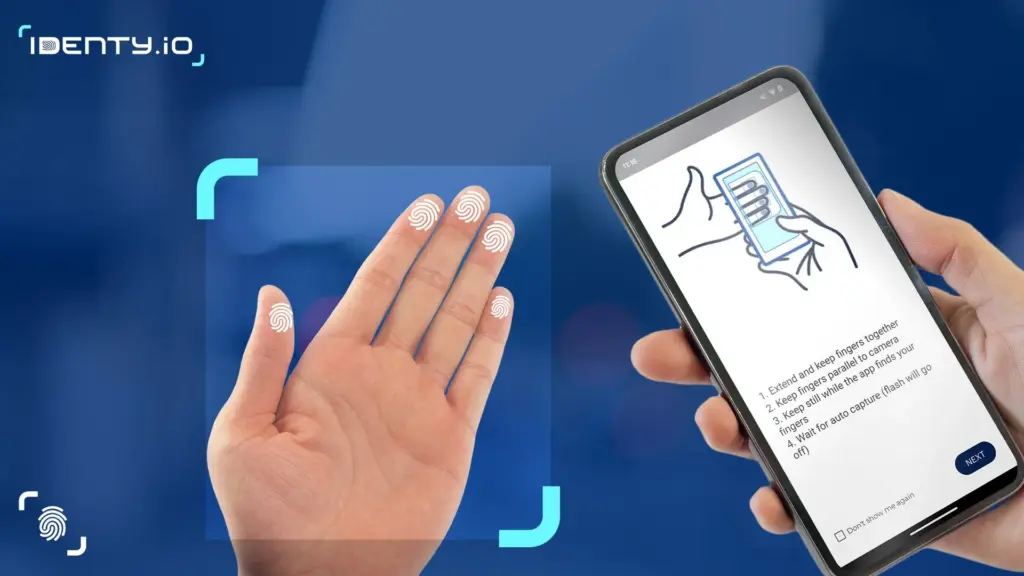
Fingerprint biometrics identify people by the unique patterns of ridges and minutiae on their fingers. When a fingerprint is scanned, software converts the ridges and valleys into a digital image and then extracts distinctive features (minutiae) to form a biometric template. Later, a new fingerprint sample is compared against this

Accurate fingerprint biometrics solution

Fingerprint biometrics rely on capturing a person’s unique fingerprint ridge patterns for identity verification. This method is highly reliable and widely trusted. In fact, NIST’s testing found top fingerprint-matching algorithms achieved about 98.6% accuracy with a single finger and ~99.9% with four or more fingers. In practice, adding more fingers

Identy.io achieves top NIST biometric certification results

Cases of fraud caused by identity theft continue to grow worldwide. In the US alone, detected cases of identity theft increased by 148% between April 2024 and March 2025, according to the “2025 Trends in Identity Report” published by the Identity Theft Resource Center (ITRC).  This study also reveals that

Face liveness detection: how it works and how it prevents biometric fraud

In a world where digital onboarding, banking, and authentication are rapidly becoming facially driven, ensuring that the face presented during biometric verification belongs to a live person, not a photo, video, or deepfake, is critical. This is the role of face liveness detection. It confirms that the camera is capturing

Multimodal biometrics: the future of digital authentication

In an age of data breaches and identity theft, traditional passwords no longer provide enough protection. As digital security evolves, multimodal biometrics, the use of two or more biometric identifiers, are emerging as the future of secure authentication. What are multimodal biometrics? Unlike unimodal systems that rely on a single

Face and fingerprint Identification in Banking and Fintech

Biometric identification in banking and fintech has become one of the most secure and efficient tools. Face and fingerprint recognition technologies are reshaping how financial institutions verify identities, prevent fraud, and authenticate users bringing convenience and compliance together. For companies like Identy.io, which in 2024 deployed its fingerprint biometric solution

How face detection works: principles and applications

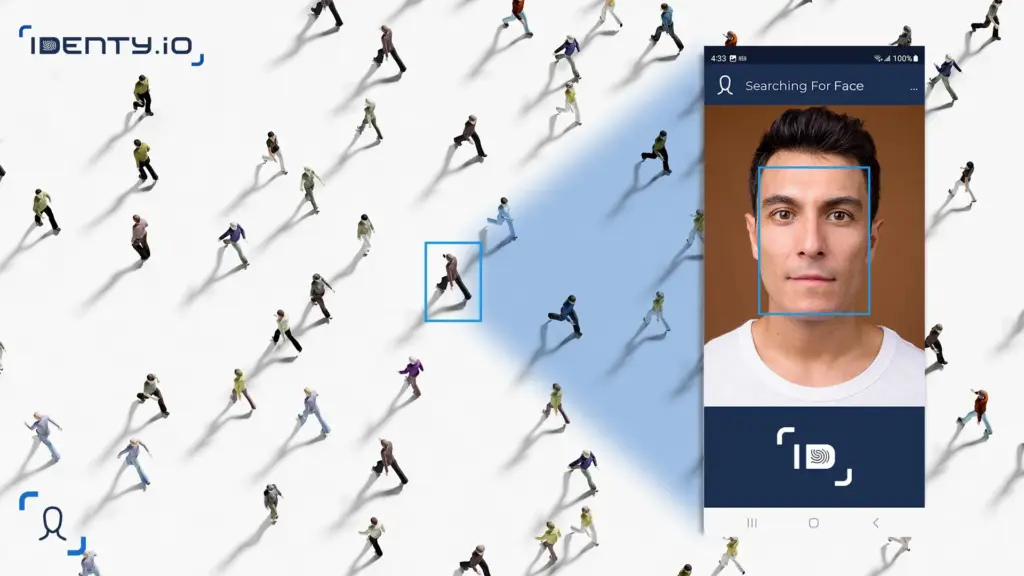
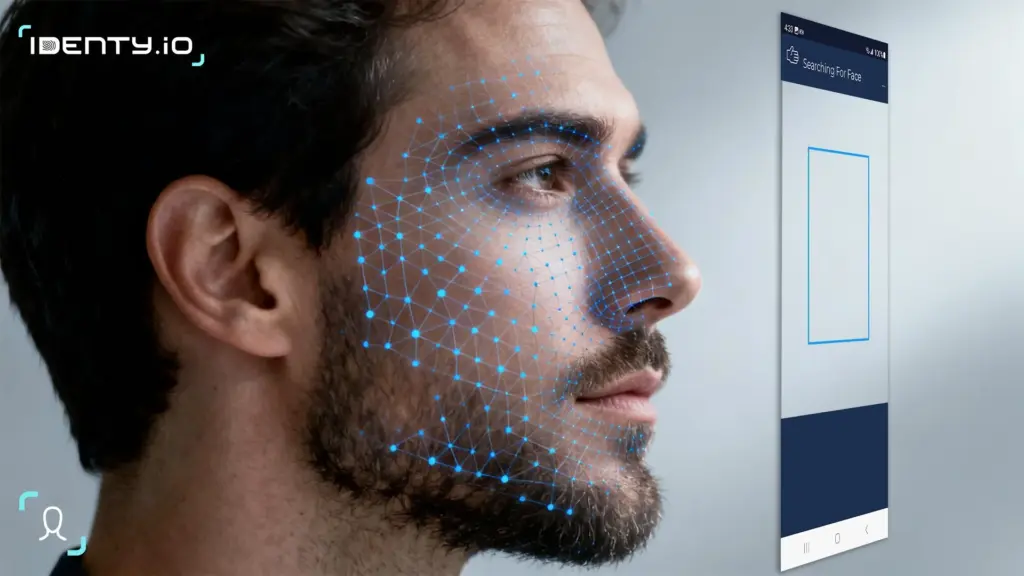
Face detection is the foundation of modern biometric systems. It allows software like Identy.io to automatically identify and locate human faces in images or video streams. While face recognition determines who a person is, face detection answers whether a face is present and where. Today, this technology powers everything from

Main differences between Face ID vs facial recognition software

Facial recognition has become central to modern digital security but not all systems work the same way. The most familiar example, Apple’s Face ID, is designed for personal device authentication. In contrast, facial recognition software such as Identy.io serves a much broader purpose: verifying users’ identities in banking, government, and